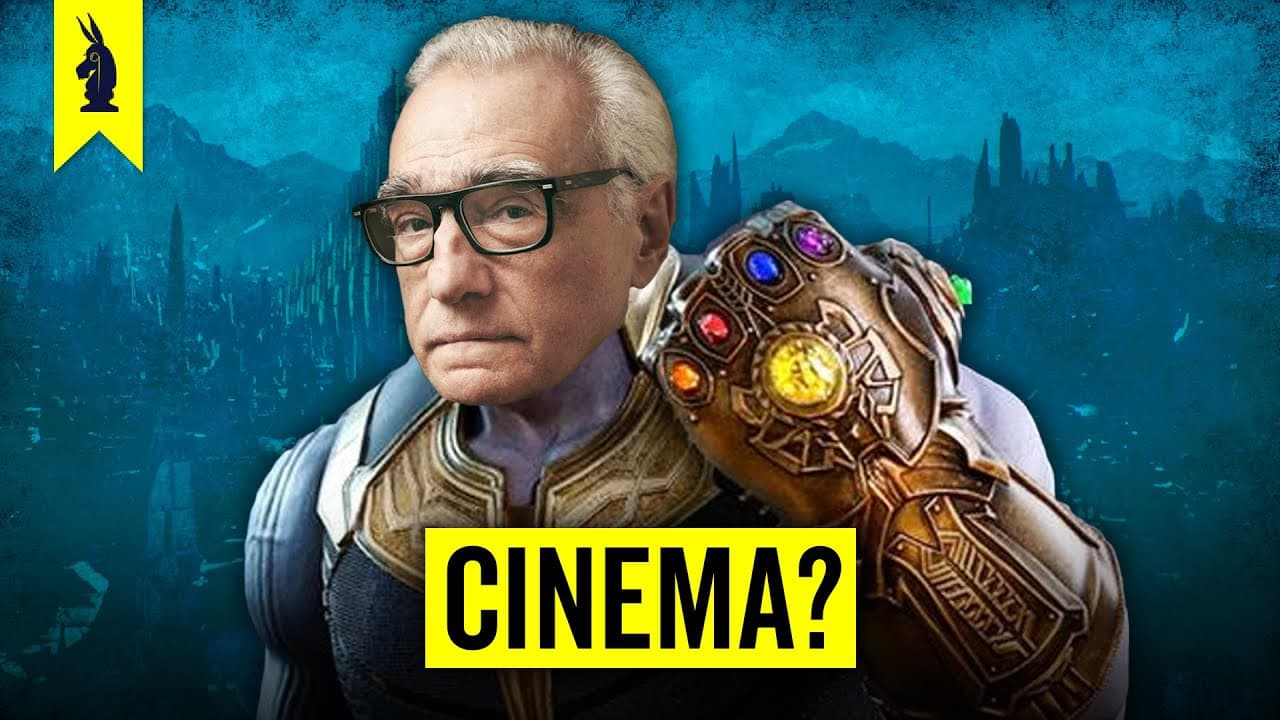
Did Marvel Kill Cinema?
TL;DR
Martin Scorsese critiques Marvel films as lackluster compared to traditional cinema, sparking debate on artistic value.
Transcript
- This video is brought to you by Surfshark VPN. (dramatic music) What's up, Wisecrack? Michael here, and today, we're gonna settle one of the most contentious feuds in Hollywood once and for all. Marvel movies: deep or dumb? Okay, not quite, but if you're a fan of both Martin Scorsese films and the MCU, you might have felt a bit spurned by your fi... Read More
Key Insights
- 🎦 Martin Scorsese's critiques of Marvel films evoke a broader discussion about the value of popular cinema versus high art.
- ⌛ The historical context reveals how cinema and theater have evolved in cultural significance, reflecting societal values over time.
- 😑 There is a potential for merging high artistic expression with commercially successful films, as seen with directors like Chloe Zhao.
- 😘 The MCU's efforts to tell emotional stories challenge the binary view of high versus low culture, suggesting not all popular films lack substance.
- 🥺 The perception of theater as a place for the masses shifted in the 20th century, leading to a cultural divide that still resonates today.
- ✋ Shakespeare’s legacy illustrates that popular appeal doesn’t preclude high artistic value, paralleling modern cinematic debates.
- 🫥 Modern filmmakers are increasingly blurring the lines between different cultural hierarchies, promoting inclusivity in cinematic appreciation.
Install to Summarize YouTube Videos and Get Transcripts
Explore YouTube Video Summarizer or Get YouTube Transcript Extractor
Questions & Answers
Q: What are Scorsese's main criticisms of Marvel films?
Scorsese argues that Marvel movies lack emotional depth and genuine artistic revelation, suggesting they cater primarily to commercial interests rather than pushing cinematic boundaries. He believes these films don't encourage emotional risks or complex storytelling, reducing cinema to mere mass entertainment.
Q: How does the history of theater relate to Scorsese's views on modern cinema?
The video outlines how theater transitioned from a communal experience meant for the masses to an exclusive domain of the upper class. This historical context highlights how popular films, like Marvel's, reflect a similar mass appeal that some elites dismiss as inferior to "high art."
Q: What is the significance of Shakespeare in this discussion?
Shakespeare is presented as an example of high art that was once accessible and popular among all social classes. His work, filled with humor and mass appeal, challenges the notion that great art must be exclusive, paralleling the contemporary debates about the MCU's place within cinema.
Q: How might Chloe Zhao's direction of an MCU film challenge Scorsese's views?
Zhao, known for her artistic films, may embody the potential for blending high artistic values with the blockbuster format. Her unique approach could demonstrate that mainstream cinema can still convey deep emotional and psychological experiences, possibly proving Scorsese's dichotomy between high and low art outdated.
Q: What analogy does Scorsese use to describe Marvel movies?
Scorsese likens Marvel films to theme parks, suggesting that they prioritize entertainment and spectacle over the profound exploration of human experiences that he associates with true cinema, implying a loss of risk and emotional depth in favor of safe, commercially viable stories.
Q: How do the Russo brothers connect with Scorsese's preferred cinematic style?
The Russo brothers, directors of "Captain America: The Winter Soldier," aimed to create a film influenced by 70s thrillers—a style that Scorsese admires. Their intent to explore complex themes showcases that not all MCU films fit into Scorsese's critique, as some strive for deeper meaning.
Q: Is it possible to appreciate both high art and popular films?
The video suggests that rather than categorically dismissing popular films, one can appreciate their artistic merit, thus blending the realms of high culture and mass entertainment. This approach could make room for a more inclusive understanding of cinema that celebrates various artistic expressions.
Q: What does the distinction between high and low culture imply for today's cinema?
The distinction reinforces outdated hierarchies that dismiss popular films as inferior. Engaging with the rich cultural landscape of mass entertainment can pave the way for a broader appreciation of artistic creativity, suggesting that audiences should embrace diverse cinematic experiences without elitism.
Summary & Key Takeaways
-
The video explores Martin Scorsese's criticisms of Marvel movies, arguing that they prioritize commercial success over artistic integrity, likening them to theme park attractions.
-
It addresses the historical evolution of cinema and theater, emphasizing how high art and popular entertainment have been viewed differently over the decades, often creating cultural hierarchies.
-
The discussion highlights the possibility of blending high art with popular films, featuring directors like Chloe Zhao who could bridge the gap between these two cinematic worlds.
Read in Other Languages (beta)
Share This Summary 📚
Summarize YouTube Videos and Get Video Transcripts with 1-Click
Try YouTube Summary with ChatGPT & Claude or YouTube Transcript Generator