How to Make Glycerol from Vegetable Oil Step-by-Step
TL;DR
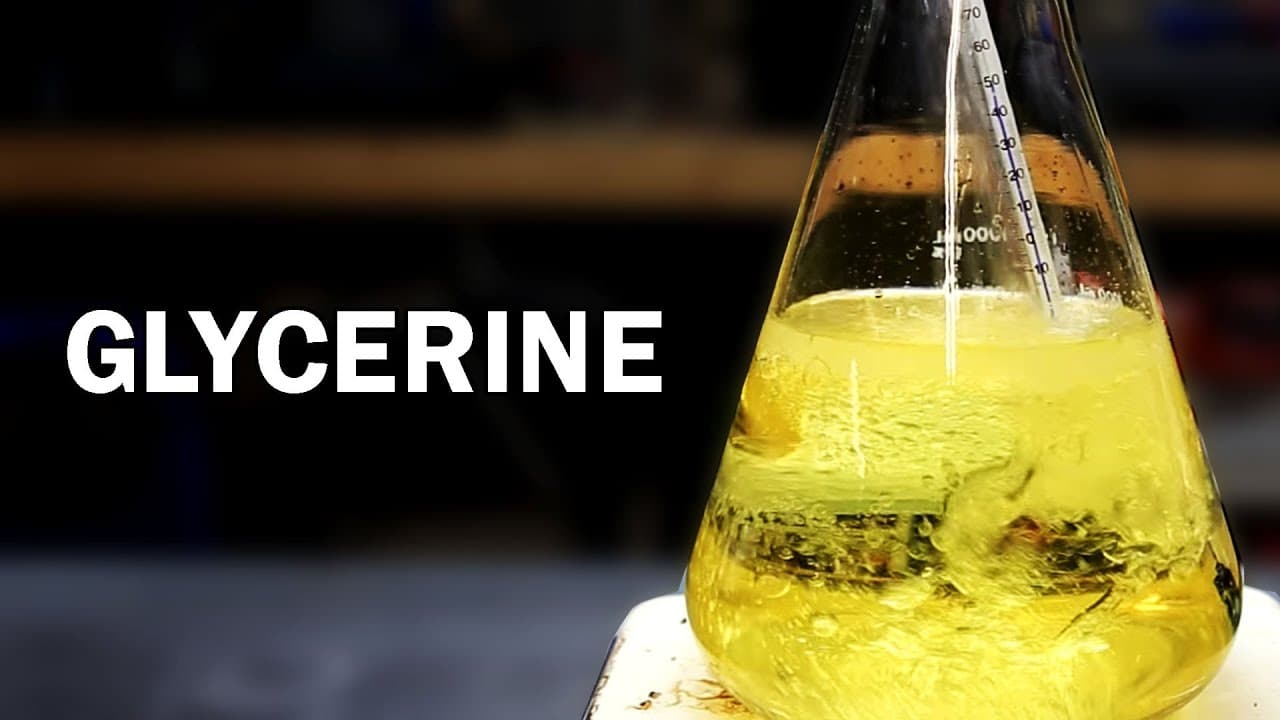
To make glycerol from vegetable oil, perform a transesterification reaction by mixing vegetable oil with a methanol and sodium hydroxide solution at 50 degrees Celsius. After stirring, allow the mixture to settle to separate glycerol from biodiesel, then acidify, adjust the pH, and dehydrate to obtain pure glycerol.
Transcript
Glycerol, which is also known as glycerin, has a wide range of uses. Some of the most common uses are in food products and pharmaceuticals. Biologically, glycerol is used for the storage of fat. The glycerol serves as a backbone and links to three different fatty acid molecules. The combination of the three fatty acids and the glycerol backbone is ... Read More
Key Insights
- 😋 Glycerol, also known as glycerin, is widely used in food products and pharmaceuticals.
- 🛢️ The preparation and isolation of glycerol can be achieved through the traditional method of producing biodiesel from vegetable oil.
- 😥 The process involves transesterification, settling, acidification, pH adjustment, evaporation, and decolorization.
- 💪 Strong stirring is necessary to mix methanol and vegetable oil, which are immiscible.
- 😘 The glycerol separates into a lower layer during settling, while the upper layer consists of biodiesel.
- 😥 The pH of the glycerol solution is adjusted using small amounts of dilute sodium hydroxide or hydrochloric acid.
- 💦 Evaporation is used to remove excess water and increase the concentration of glycerol.
Install to Summarize YouTube Videos and Get Transcripts
Explore YouTube Video Summarizer or Get YouTube Transcript Extractor
Questions & Answers
Q: What is the role of glycerol in the body?
Glycerol is used to store fats in the body and serves as a backbone for linking three fatty acid molecules in triglycerides.
Q: Why is strong stirring necessary when combining methanol and vegetable oil?
Methanol and vegetable oil are immiscible, but strong stirring helps mix them together and facilitate the transesterification reaction.
Q: Why is settling and separation required after the transesterification reaction?
The mixture separates into a lower layer of glycerol and an upper layer of biodiesel, which must be removed to isolate the glycerol.
Q: How is glycerol purified and decolorized?
Glycerol is dissolved in methanol, activated charcoal is added to remove impurities, and molecular sieves are used to absorb any remaining water.
Summary & Key Takeaways
-
Glycerol, also known as glycerin, is commonly used in food products and pharmaceuticals and is stored as fat in the body.
-
The video showcases the traditional method of producing glycerol from vegetable oil, without emphasizing biodiesel.
-
The process involves transesterification, settling, acidification, pH adjustment, evaporation, and decolorization.
Read in Other Languages (beta)
Share This Summary 📚
Summarize YouTube Videos and Get Video Transcripts with 1-Click
Try YouTube Summary with ChatGPT & Claude or YouTube Transcript Generator
Explore More Summaries from NileRed 📚

Summarize YouTube Videos and Get Video Transcripts with 1-Click
Try YouTube Summary with ChatGPT & Claude or YouTube Transcript Generator