How to Profit with Swing Trading Strategy
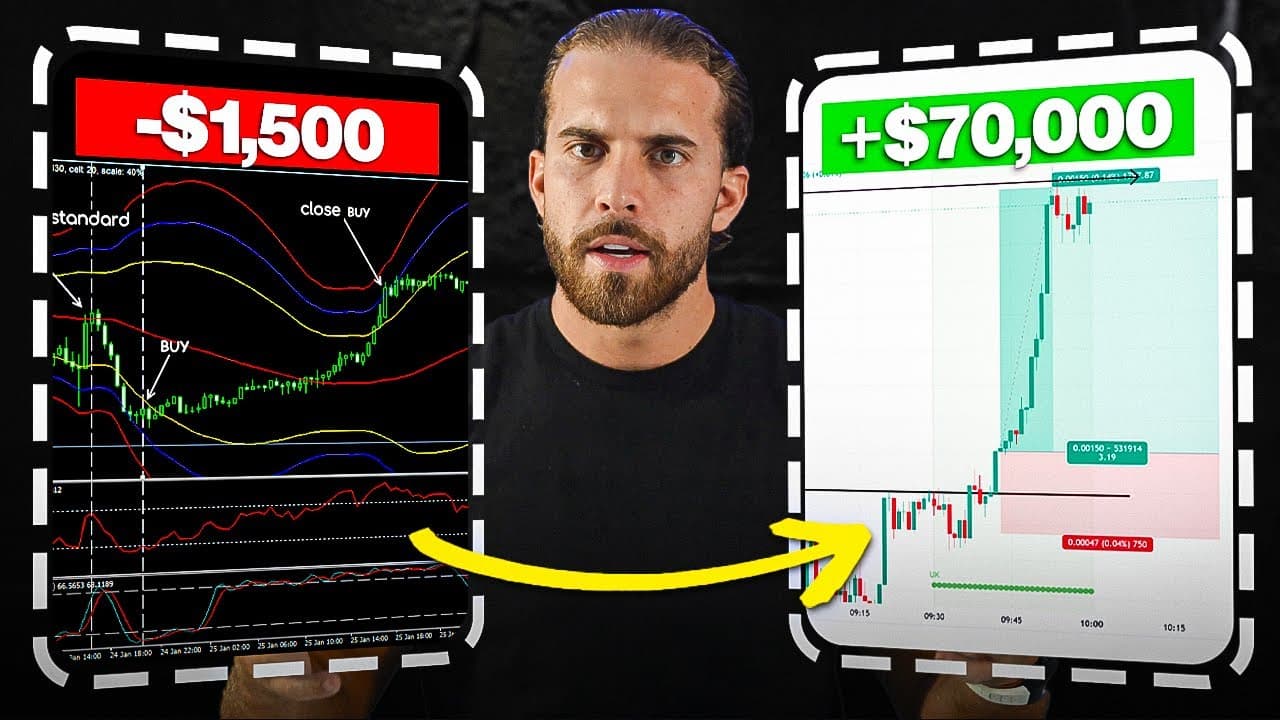
TL;DR
Swing trading involves identifying high-probability setups using higher time frames, allowing traders to set and forget their trades with minimal stress. By trading with the trend, swing traders benefit from larger take profits and reduced risk, making it a suitable strategy for those seeking consistent and stress-free trading outcomes.
Transcript
identify high probability setups in 15 minutes or less take a trade whether it's a buyer or sell you put your stop loss for your take profit and then you just have to forget you can literally go to work at the gym maybe do whatever you want all you have to do is occasionally just check up on the trade to see if it's hit your take profit and then tw... Read More
Key Insights
- Swing trading uses higher time frames to identify trends, offering larger take profits.
- Trading with the trend reduces the risk of losing trades in swing trading.
- Swing trading is less stressful due to its set-and-forget approach.
- Scalping involves quick trades within hours, often seen as high-risk by new traders.
- Day trading involves entering and exiting trades within the same day.
- Intraday trading holds trades longer than day trading, using four-hour and daily zones.
- The primary con of swing trading is the patience required, with fewer trades taken weekly.
- Swing trading emphasizes trading with the trend for higher win rates.
Install to Summarize YouTube Videos and Get Transcripts
Explore YouTube Video Summarizer or Get YouTube Transcript Extractor
Questions & Answers
Q: How does swing trading differ from scalping?
Swing trading differs from scalping by focusing on higher time frames and longer trade durations, often spanning days or weeks. This approach allows traders to align with market trends, offering larger take profits and reduced risk. In contrast, scalping involves quick trades within hours, aiming for small profits from short-term market movements, often seen as high-risk and stressful.
Q: What is the main advantage of swing trading?
The main advantage of swing trading is its stress-free nature, as it allows traders to set and forget their trades. By using higher time frames to identify trends, swing traders benefit from larger take profits and reduced risk. This approach requires minimal time commitment and offers a consistent and reliable trading strategy for those seeking long-term profitability.
Q: Why is patience important in swing trading?
Patience is crucial in swing trading because it involves waiting for high-probability setups and aligning with market trends. Traders may only take a few trades per week, requiring them to resist the urge to trade frequently. This patience allows traders to capitalize on larger market movements, resulting in higher win rates and more significant profits compared to frequent, smaller trades.
Q: How does swing trading reduce risk?
Swing trading reduces risk by aligning trades with the prevailing market trend, using higher time frames for analysis. This approach minimizes the chances of being stopped out by short-term market fluctuations. By setting and forgetting trades, swing traders avoid the stress of constant monitoring and impulsive decision-making, leading to more consistent and profitable outcomes.
Q: What time frames are used in swing trading?
Swing trading primarily uses higher time frames such as weekly and daily charts to identify trends and areas of interest. Traders may also use four-hour and two-hour charts for more precise trade entries. By focusing on these time frames, swing traders can align their trades with the broader market trend, increasing the likelihood of successful outcomes.
Q: How does swing trading align with market trends?
Swing trading aligns with market trends by using higher time frames to identify the prevailing market direction. Traders focus on buying or selling in accordance with the trend, using key support and resistance levels on daily or weekly charts. This trend-following approach increases the probability of successful trades and allows traders to capitalize on larger market movements.
Q: What is the role of stop loss in swing trading?
In swing trading, a stop loss is used to limit potential losses by setting a predefined exit point if the market moves against the trade. It is typically placed above or below key areas of interest identified on higher time frames. By using a stop loss, swing traders protect their capital and maintain discipline, ensuring that losses are controlled and do not erode profits.
Q: How can swing trading be profitable with minimal effort?
Swing trading can be profitable with minimal effort by using a set-and-forget approach. Traders identify high-probability setups using higher time frames, set their trades, and allow them to play out without constant monitoring. This strategy leverages market trends for larger take profits, reducing stress and time commitment while maintaining a high probability of success.
Summary & Key Takeaways
-
Swing trading leverages higher time frames to identify trends, allowing traders to set and forget their trades. This approach increases the likelihood of winning by aligning with market trends, offering larger take profits and reducing stress. Traders benefit from minimal time commitment and reduced risk, making swing trading a preferred strategy for many.
-
Scalping and day trading differ from swing trading by focusing on shorter time frames and quicker trades. While scalping involves fast trades within hours, day trading completes trades within a day. Swing trading, however, uses higher time frames, emphasizing trend alignment for larger profits and reduced risk.
-
The main advantage of swing trading is its stress-free nature, as trades are set and forgotten, requiring minimal monitoring. However, the strategy demands patience, as fewer trades are taken weekly. By following market trends and using higher time frames, swing trading offers a reliable and profitable approach.
Read in Other Languages (beta)
Share This Summary 📚
Summarize YouTube Videos and Get Video Transcripts with 1-Click
Try YouTube Summary with ChatGPT & Claude or YouTube Transcript Generator
Explore More Summaries from fxalexg 📚





Summarize YouTube Videos and Get Video Transcripts with 1-Click
Try YouTube Summary with ChatGPT & Claude or YouTube Transcript Generator