Is Jesus Almighty God According to the Bible?
TL;DR
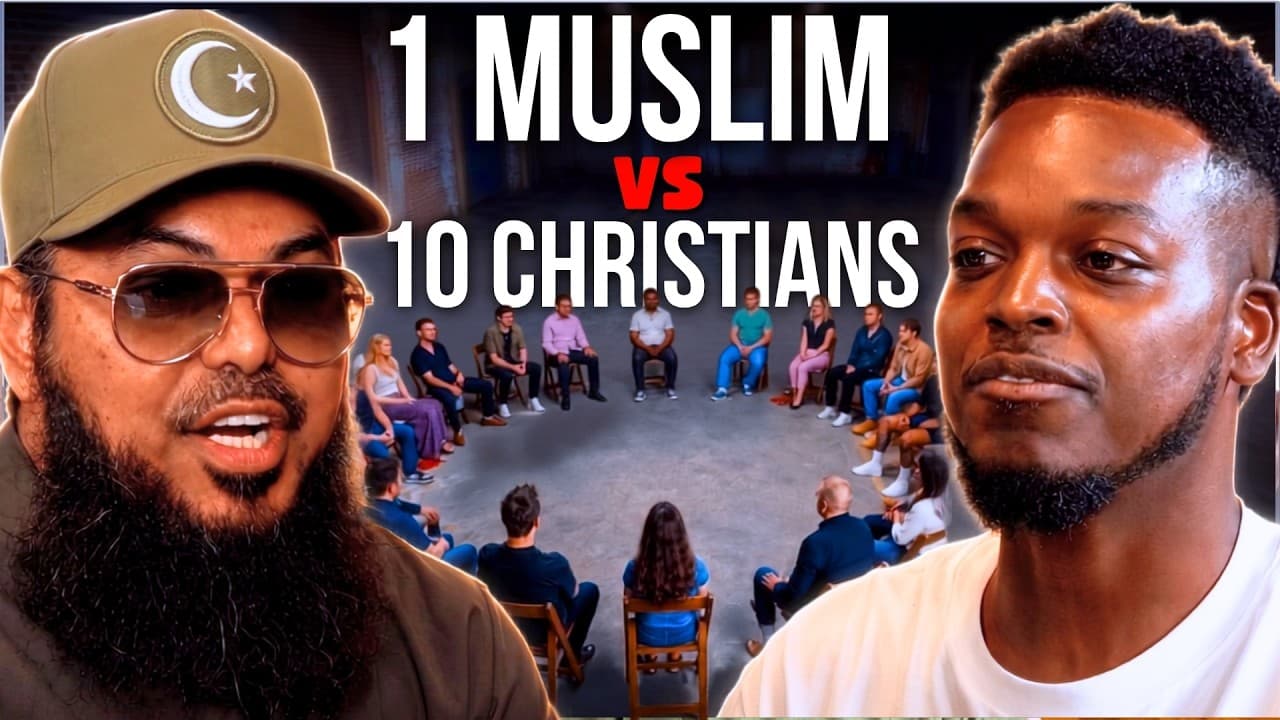
The debate explores whether Jesus is considered Almighty God in the Bible, with arguments centered on scriptural interpretations, the Trinity, and Jesus' divinity. Participants use various Bible verses to support their claims, highlighting differences in understanding between Christian and Muslim perspectives. The discussion also touches on the preservation of the Bible and the mention of Muhammad in biblical texts.
Transcript
According to the Christian Bible, after he's been and resurrected in heaven after being glorified, he still says, "My God." So Jesus here, as you just admitted, unqualified, claims to be the first and the last. So by your own admission, can you admit that even by Islamic standards, Jesus claims to be God? These people who were Jewish scholars, peop... Read More
Key Insights
- The debate focuses on whether Jesus is identified as Almighty God in the Bible.
- Participants reference various Bible verses, including John, Revelation, and Isaiah, to support their arguments.
- The discussion includes interpretations of the Trinity and Jesus' divinity.
- Muslim participants argue that Jesus' statements in the Bible show a distinction from Almighty God.
- Christian participants argue that Jesus' claims and actions in the Bible affirm his divinity.
- The debate also touches on the preservation and authenticity of biblical texts.
- There is a discussion on whether the name Muhammad is mentioned in the Bible.
- The debate highlights differing interpretations and theological perspectives between Christianity and Islam.
Install to Summarize YouTube Videos and Get Transcripts
Explore YouTube Video Summarizer or Get YouTube Transcript Extractor
Questions & Answers
Q: How do Christian and Muslim perspectives differ on Jesus' divinity?
Christian perspectives often view Jesus as Almighty God, citing biblical passages that describe his divine nature and actions, such as forgiving sins and being one with the Father. Muslim perspectives, however, emphasize verses where Jesus distinguishes himself from God, arguing that he is a revered prophet but not divine. This theological difference is rooted in the Christian belief in the Trinity versus the Islamic view of strict monotheism.
Q: What biblical verses are commonly cited to argue Jesus is God?
Verses from John, such as John 1:1, John 8:58, and John 10:30, are frequently cited, where Jesus is described as the Word, claims pre-existence before Abraham, and states unity with the Father. Revelation 22:13 is also cited, where Jesus identifies as the Alpha and Omega. These verses are interpreted by Christians to affirm Jesus' divine nature and equality with God.
Q: How do participants address the authenticity of biblical texts?
The debate includes discussions on the authenticity and preservation of biblical texts, with some participants arguing that certain verses were added in later manuscripts. Christian participants often refer to early church fathers and historical manuscripts to support the consistency of biblical teachings, while others highlight discrepancies and textual variations to question the Bible's preservation.
Q: What role do early church authorities play in the debate?
Early church authorities, such as church fathers, are referenced by Christian participants to support the interpretation of Jesus as divine. These authorities are considered pivotal in establishing early Christian doctrine and are used to validate the consistency of biblical teachings. However, the authority of these figures is sometimes questioned by those who argue for textual variations and later additions in the Bible.
Q: Is the name Muhammad mentioned in the Bible?
The debate briefly touches on whether Muhammad is mentioned in the Bible, with some participants arguing that certain biblical passages may allude to him. However, this claim is contentious and often debated, with others asserting that there is no direct mention of Muhammad in the biblical texts. This aspect of the debate highlights the differing interpretations and theological implications between Christianity and Islam.
Q: What is the significance of the Trinity in this debate?
The Trinity is a central concept in the debate, with Christian participants arguing that the Father, Son, and Holy Spirit are distinct yet unified in essence and will. This theological framework supports the claim that Jesus is Almighty God. In contrast, Muslim participants reject the Trinity, emphasizing strict monotheism and interpreting biblical verses to show Jesus as a distinct and subordinate figure to God.
Q: How does the debate address Jesus' role and function in the Bible?
The debate explores Jesus' role and function by examining his statements and actions in the Bible. Christian participants argue that Jesus' ability to forgive sins, accept worship, and claim unity with the Father indicates his divine role. Muslim participants focus on verses where Jesus expresses submission to God's will, arguing that these demonstrate his role as a prophet rather than a divine being.
Q: What are the theological implications of Jesus being Almighty God?
If Jesus is acknowledged as Almighty God, it affirms the Christian doctrine of the Trinity, where Jesus shares in the divine nature and authority of God. This belief impacts Christian worship and the understanding of salvation. Conversely, rejecting Jesus as Almighty God aligns with Islamic theology, which views Jesus as a prophet and upholds strict monotheism, impacting interfaith dialogues and religious identity.
Summary & Key Takeaways
-
The debate examines whether the Bible identifies Jesus as Almighty God, with participants citing verses from John, Revelation, and Isaiah. Christian participants argue that Jesus' claims and actions affirm his divinity, while Muslim participants highlight distinctions between Jesus and God in the Bible.
-
The discussion includes interpretations of the Trinity, with Christian participants emphasizing the unity of will between the Father, Son, and Holy Spirit. Muslim participants argue that Jesus' statements in the Bible show he is not Almighty God.
-
The debate also explores the preservation and authenticity of the Bible, with participants discussing potential textual additions and the role of early church authorities. The mention of Muhammad in the Bible is also debated, highlighting differing theological perspectives.
Read in Other Languages (beta)
Share This Summary 📚
Summarize YouTube Videos and Get Video Transcripts with 1-Click
Try YouTube Summary with ChatGPT & Claude or YouTube Transcript Generator
Explore More Summaries from Digital Social Hour Podcast by Sean Kelly 📚

Summarize YouTube Videos and Get Video Transcripts with 1-Click
Try YouTube Summary with ChatGPT & Claude or YouTube Transcript Generator