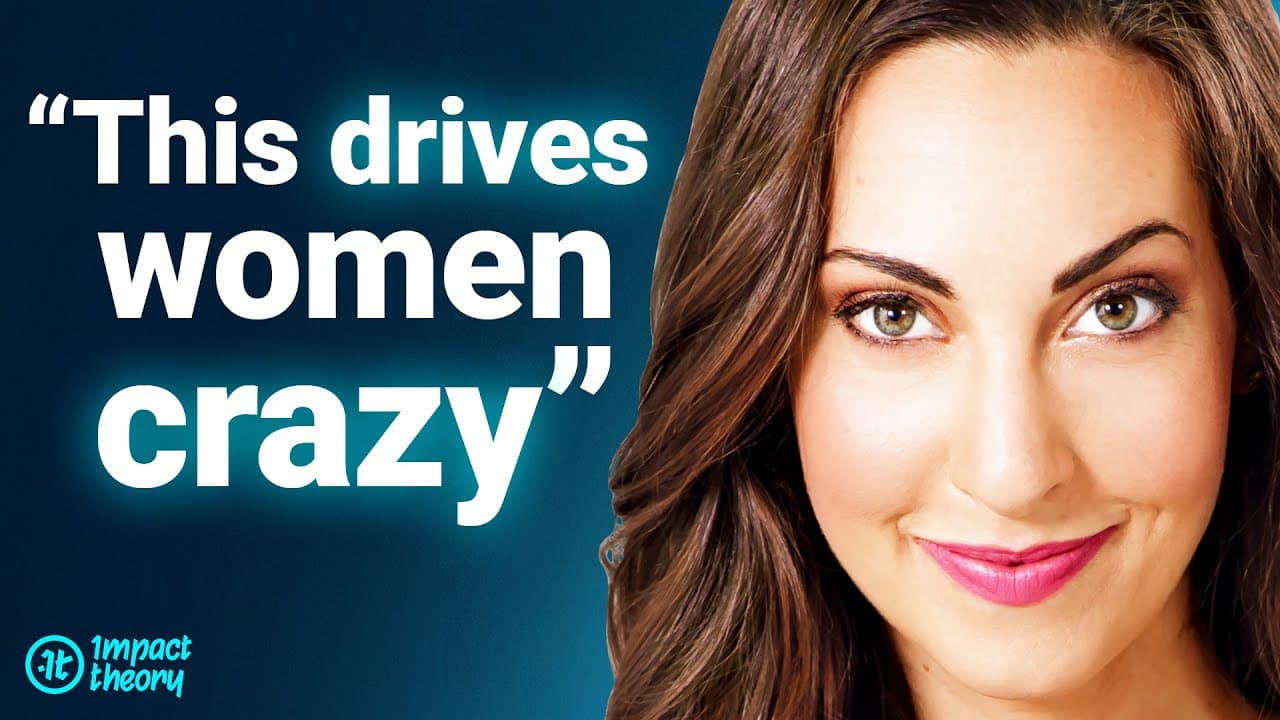
How Does Charisma Blend Warmth and Competence? | Vanessa Van Edwards
TL;DR
Charisma comes from balancing likability with power, according to Vanessa Van Edwards. Warmth signals that you are friendly, compassionate, and trustworthy, while competence shows that you are capable, powerful, and impressive. Because people first assess whether they can trust you and then whether they can rely on you, both qualities matter. Read on for practical ways to sequence these cues in conversations, video calls, and emails.
Transcript
right now i think my deepest fear is actually i have this like opportunity fomo so i constantly have this fear that i'm like missing opportunities i think that's one of the reasons i wrote this book and one reason i'm obsessed with cues is because i am terrified that i am missing things i feel like i missed the memo on social interactions right lik... Read More
Key Insights
- 😨 Fear of missing opportunities can drive one's obsession with cues and understanding social interactions.
- ⚖️ Balancing warmth and competence is crucial for establishing charisma and gaining trust.
- 🥌 Nonverbal cues, like body language and vocal tone, can communicate trust, warmth, and credibility.
- ⛑️ Addressing cues and emotions can help navigate misunderstandings and connect more effectively with others.
- 😌 The power of cues lies in their ability to reveal hidden emotions and intentions, allowing one to make better judgments and connections.
- 🥺 Focusing on creating positive, warm, and engaging experiences through cues can lead to better relationships and improved confidence.
- 😨 Understanding and utilizing cues effectively can help one overcome fears and improve their social interactions and communication skills.
Install to Summarize YouTube Videos and Get Transcripts
Explore YouTube Video Summarizer or Get YouTube Transcript Extractor
Questions & Answers
Q: What is charisma according to Vanessa Van Edwards?
Vanessa Van Edwards defines charisma as the perfect blend of being likable and powerful. The charismatic sweet spot combines warmth, being friendly, compassionate, and trustworthy, with competence, being capable, powerful, and impressive.
Q: Why can competence without warmth undermine charisma?
Competence alone can make someone appear impressive and capable but also cold, intimidating, and difficult to approach. Van Edwards says that competence without warmth leaves people feeling suspicious because likability is what softens power.
Q: What do people assess when they first meet someone?
According to Van Edwards, the first question people ask is whether they can trust the other person. They assess whether that person is on their side or poses a physical or emotional threat.
Q: What do people assess after deciding whether someone is trustworthy?
The next question is whether they can rely on the person. This is where competence cues help demonstrate capability alongside the warmth that established trust.
Q: Can warmth and power be communicated at different times?
Yes. Van Edwards says research indicates that warmth and power can be chronological, so they do not always need to appear simultaneously. A person can establish warmth first and then demonstrate competence.
Q: How can an email balance warmth and competence?
Van Edwards recommends making the subject and opener warm, with the opening line potentially reinforcing that tone. The body can then emphasize competence, while the sign-off can be chosen according to the situation.
Q: What did the politician-clip study suggest about charisma?
Participants watched short clips of unfamiliar politicians and rated their warmth, likability, trustworthiness, dominance, power, and capability. Politicians who displayed only warmth or only power ranked low on the charisma scale; warmth without power was also described as less compelling, convincing, and memorable.
Q: How can word choice influence behavior?
Van Edwards says reading words such as “collaborate” can make people more collaborative, while reading “power” can make them more powerful. She also describes a study that added achievement-oriented words such as “win,” “succeed,” “master,” and “achieve” to otherwise similar test directions.
Summary & Key Takeaways
-
Author shares her deepest fear of missing opportunities and feeling underestimated, which led her to write the book and explore the power of cues.
-
The book discusses the concept of charisma, which is the perfect blend of likability and power, and how likability is crucial to establishing trust and warmth in social interactions.
-
The author emphasizes the importance of balancing warmth and competence, as solely demonstrating competence without warmth can lead to suspicion and hinder charisma.
Read in Other Languages (beta)
Share This Summary 📚
Summarize YouTube Videos and Get Video Transcripts with 1-Click
Try YouTube Summary with ChatGPT & Claude or YouTube Transcript Generator
Explore More Summaries from Full Episodes of Impact Theory 📚

Summarize YouTube Videos and Get Video Transcripts with 1-Click
Try YouTube Summary with ChatGPT & Claude or YouTube Transcript Generator