How I’m Preparing for the Economic “Supercycle”
TL;DR
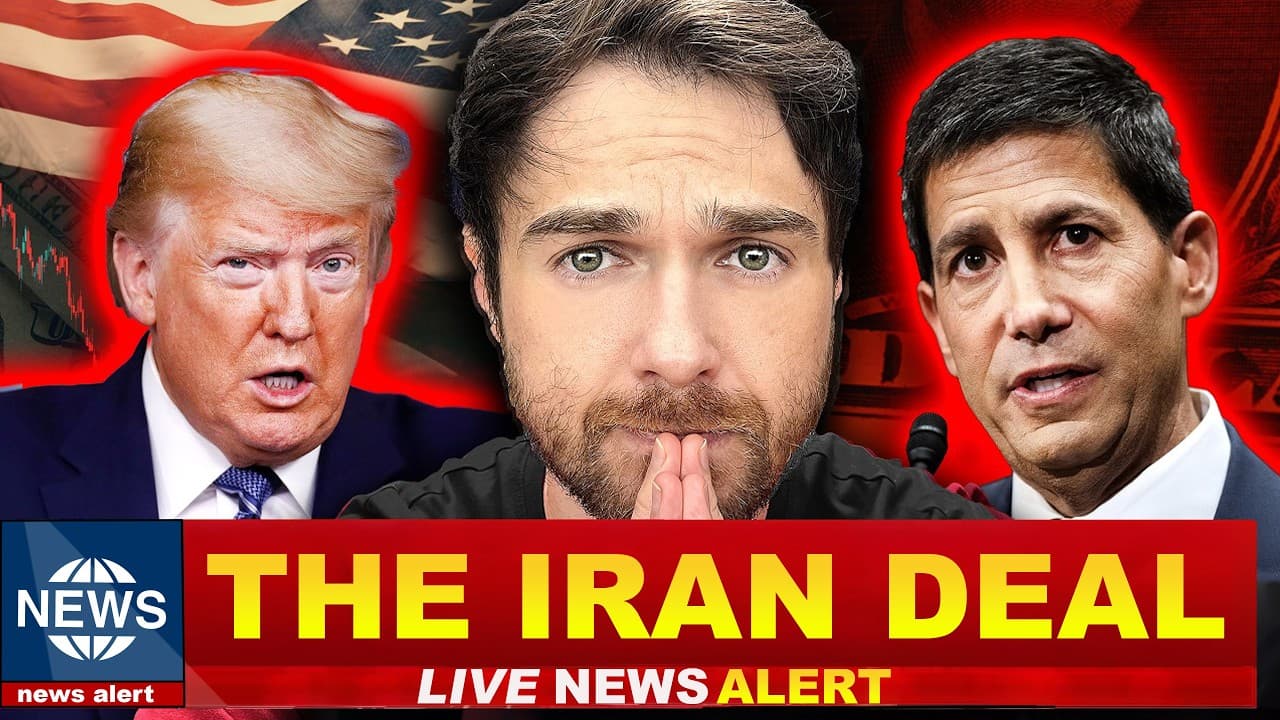
The preparation strategy centers on watching Kevin Walsh’s first Federal Reserve meeting for signals about short-term rate cuts, balance-sheet reduction, and bank deregulation. The proposed plan would loosen the supplemental leverage ratio so banks can hold more Treasury bonds while the US refinances $8 trillion in bonds. Iran tensions and oil prices remain major risks, so read on for the specific signals and possible outcomes to watch.
Transcript
So, the deal between Iran and the United States has allegedly been agreed to and will supposedly be signed on Friday of this week. Now, there's still a lot of details that could make the deal go south, but if it goes through, it means the next phase of the master plan can finally begin. >> The US and Iran have reached a framework to end the fightin... Read More
Key Insights
- Kevin Walsh's first Federal Reserve meeting is pivotal for future economic policy direction.
- The CME Fed Watch tool indicates a 97.4% chance of no change in the federal fund rate.
- Gold's recent performance below the 200-day moving average suggests potential market shifts.
- Kevin Walsh's plan involves lowering short-term interest rates and deregulating banks.
- Deregulation would allow banks to hold more Treasury bonds, easing economic pressures.
- Geopolitical tensions, particularly with Iran, could disrupt Walsh's economic strategies.
- The Iran deal is critical to stabilizing oil prices and controlling inflation.
- The US must refinance $8 trillion in bonds amid rising interest rates and geopolitical risks.
Install to Summarize YouTube Videos and Get Transcripts
Explore YouTube Video Summarizer or Get YouTube Transcript Extractor
Questions & Answers
Q: How is Andre Jick preparing for the economic “supercycle”?
Andre Jick is watching Kevin Walsh’s first Federal Reserve meeting for guidance about interest rates, the Fed’s balance sheet, and bank regulation. He is also monitoring gold, the bond market, the Iran agreement, and oil prices because they could signal which direction markets take.
Q: Why is Kevin Walsh’s first Federal Reserve meeting important?
The transcript says Walsh’s comments could determine what happens to interest rates, the stock market, and arguably the broader economy. Although the CME FedWatch tool shows roughly a 97.4% chance of no change to the federal funds rate, the market may react more to what Walsh says than what he does.
Q: What is Kevin Walsh’s proposed three-step economic plan?
Step one is lowering short-term interest rates to make borrowing cheaper and support economic growth. Step two is shrinking the Fed’s balance sheet to push long-term rates higher and steepen the yield curve. Step three is loosening bank capital requirements so banks can hold more Treasury bonds.
Q: Why does the plan call for a steeper yield curve?
A steeper yield curve would let banks borrow cheaply at short-term rates and earn more at the long end. The transcript describes that difference, or spread, as a traditional source of bank profits.
Q: What is the supplemental leverage ratio, or SLR?
The SLR is described as a post-2008 financial-crisis rule requiring banks to keep a capital buffer against total assets, including Treasury bonds. According to the transcript, this requirement limits how many Treasuries banks can hold even though Treasuries are considered very safe.
Q: How could loosening the SLR affect Treasury bonds?
Loosening or removing the relevant capital requirements would allow banks to hold substantially more Treasury bonds. The proposed policy is intended to support the bond market and help address pressure from refinancing $8 trillion in US bonds.
Q: What happened when Treasuries were temporarily exempted from the SLR?
When the Fed temporarily exempted Treasuries from the SLR calculation in 2020, banks quickly put more money into Treasuries and the bond market functioned smoothly. After the exemption expired in March 2021, banks reduced their Treasury holdings, and the transcript says the bond market reacted poorly.
Q: What market and geopolitical risks could disrupt the plan?
Gold closed below its 200-day moving average for three consecutive days, its longest such streak since October 2023, which the speaker treats as a possible market signal. The proposed Iran agreement also remains uncertain, and continued tensions could keep oil prices and inflationary pressure elevated.
Summary & Key Takeaways
-
Kevin Walsh's first Federal Reserve meeting is crucial as it may set the tone for future economic policies. The meeting will focus on interest rate decisions and their impact on the economy. Walsh's strategy involves lowering short-term interest rates and easing banking regulations to stimulate growth.
-
Geopolitical tensions, particularly with Iran, pose a significant risk to economic stability. The closure of the Strait of Hormuz has driven oil prices up, complicating efforts to manage inflation. The success of Walsh's plan hinges on resolving these tensions to stabilize the economy.
-
The US faces a challenging economic landscape, needing to refinance $8 trillion in bonds while managing rising interest rates. Deregulating banks to hold more Treasury bonds could ease pressures. However, geopolitical risks and market dynamics make this a complex and uncertain endeavor.
Read in Other Languages (beta)
Share This Summary 📚
Summarize YouTube Videos and Get Video Transcripts with 1-Click
Try YouTube Summary with ChatGPT & Claude or YouTube Transcript Generator
Explore More Summaries from Andrei Jikh 📚
Summarize YouTube Videos and Get Video Transcripts with 1-Click
Try YouTube Summary with ChatGPT & Claude or YouTube Transcript Generator