What Is Women's Suffrage in US History?
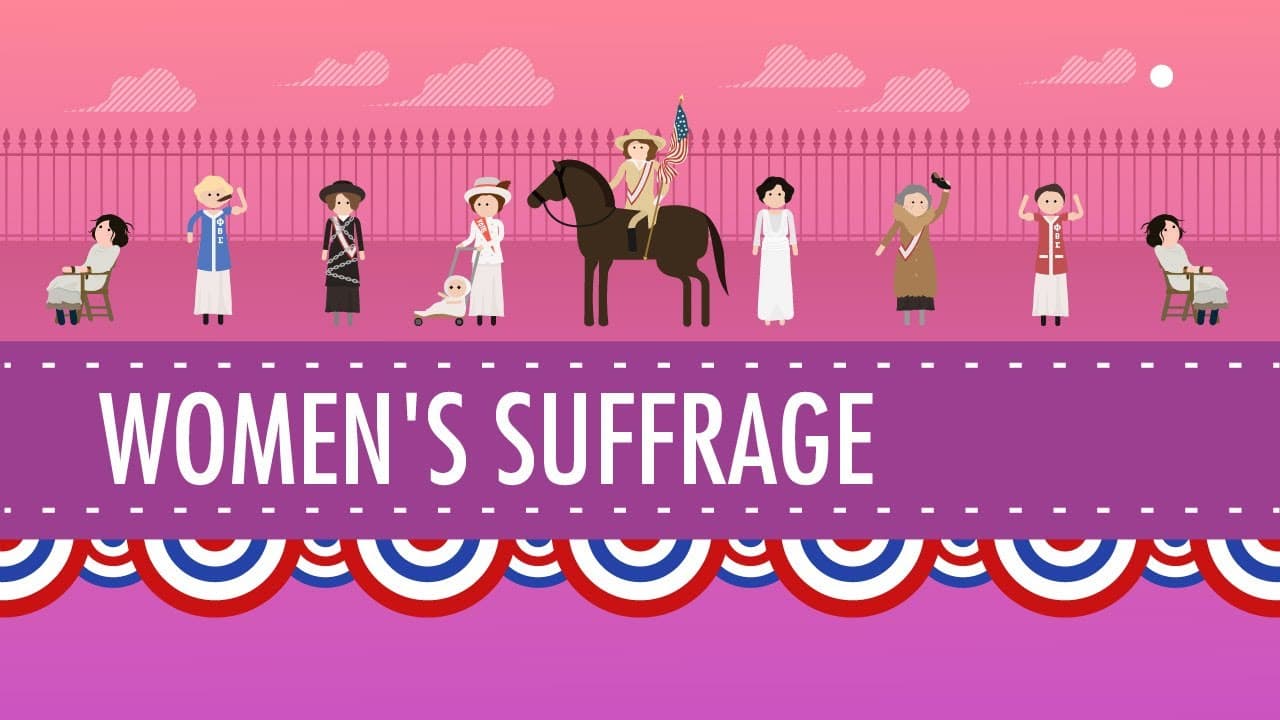
TL;DR
Women's suffrage in the United States culminated in the 19th Amendment, granting women the right to vote in 1920. However, the movement was part of a broader push for women's rights during the Progressive Era, which included economic, political, and social reforms. Key figures like Alice Paul and Margaret Sanger advocated for both suffrage and women's autonomy.
Transcript
Episode 31: Feminism and Suffrage Hi, I’m John Green, this is Crash Course U.S. history and today we’re going to talk about women in the progressive era. My God, that is a fantastic hat. Wait, votes for women?? So between Teddy Roosevelt, and Woodrow Wilson, and all those doughboys headed off to war, women in this period have sort of been footnoted... Read More
Key Insights
- Women's suffrage was achieved with the 19th Amendment in 1920, granting women the right to vote.
- The Progressive Era saw women gaining economic and political opportunities, including the right to own property and work for wages.
- The Women's Christian Temperance Union, led by Frances Willard, was pivotal in advocating for women's voting rights.
- Florence Kelley led the National Consumers League, promoting consumer boycotts against products made with exploitative labor.
- Birth control advocacy, led by figures like Margaret Sanger, was crucial for women's autonomy and public health.
- Settlement houses, like Jane Addams' Hull House, were central to the social work movement, aiding immigrant integration.
- Alice Paul and the National Women's Party used radical tactics to push for suffrage, including protests and hunger strikes.
- The suffrage movement was fragmented, with some leaders using nativist arguments to further their cause.
Install to Summarize YouTube Videos and Get Transcripts
Explore YouTube Video Summarizer or Get YouTube Transcript Extractor
Questions & Answers
Q: How did women gain the right to vote in the US?
Women gained the right to vote in the United States through the passage of the 19th Amendment in 1920. This achievement was the culmination of decades of activism and advocacy by suffragists who organized, protested, and lobbied for women's enfranchisement. Key figures like Alice Paul and organizations such as the National Women's Party played pivotal roles in this movement.
Q: What role did the Women's Christian Temperance Union play in women's suffrage?
The Women's Christian Temperance Union (WCTU), led by Frances Willard, played a significant role in advocating for women's suffrage. The WCTU believed that granting women the right to vote would help pass laws to curb alcohol consumption, as men were unlikely to vote against it. The organization was instrumental in organizing women and promoting the idea that women's votes were essential for social reform.
Q: What was the impact of birth control advocacy during the Progressive Era?
Birth control advocacy during the Progressive Era had a profound impact on women's rights and public health. Advocates like Margaret Sanger and Emma Goldman promoted birth control as a means for women to control their reproductive lives, enjoy sexual freedom, and participate more fully in the workforce. This movement also intersected with issues of free speech and brought women from different social classes together in a common cause.
Q: Who was Jane Addams and what was her contribution to social work?
Jane Addams was a key figure in the Settlement House movement and a pioneer in the field of social work. She founded Hull House in Chicago in 1889, which served as a community center for immigrants, providing education, healthcare, and support. Addams' work helped establish social work as a profession and highlighted the role of women in addressing social issues and advocating for reform.
Q: What were the challenges faced by the suffrage movement?
The suffrage movement faced numerous challenges, including internal fragmentation and opposition from both men and women. Some leaders used nativist arguments, which alienated potential allies. The movement also had to contend with societal norms that restricted women's roles to domestic spheres. Despite these obstacles, suffragists employed various strategies, from peaceful lobbying to radical protests, to achieve their goals.
Q: How did the Progressive Era change women's roles in the workforce?
During the Progressive Era, more women entered the workforce, gaining economic independence and challenging traditional gender roles. Technological advancements created new job opportunities, particularly in office work and telephone operation. This shift allowed women to assert their autonomy and contributed to broader social changes, including increased demands for political rights and participation in public life.
Q: What was the significance of the National Women's Party?
The National Women's Party, led by Alice Paul, was significant for its militant approach to securing women's suffrage. The party organized protests, picketed the White House, and endured imprisonment to draw attention to their cause. Their efforts, particularly during World War I, highlighted the injustices faced by women and pressured the government to support the 19th Amendment, ultimately securing the right to vote.
Q: Why did the Equal Rights Amendment fail after the 19th Amendment?
The Equal Rights Amendment (ERA) failed after the 19th Amendment due to opposition from women's groups that feared it would negate protective labor laws. These groups, including the League of Women Voters, argued that the ERA might undermine existing benefits for women workers. The lack of consensus among women's organizations and broader societal resistance to gender equality contributed to the amendment's failure.
Summary & Key Takeaways
-
Between 1890 and 1920, known as the 'women's era,' women gained significant economic and political rights, including suffrage. They became key players in reform movements and the consumer economy, while also advocating for birth control and social work. The 19th Amendment was a major milestone, though other reforms like the Equal Rights Amendment faced resistance.
-
Women's suffrage was part of a larger movement for women's rights during the Progressive Era. Organizations like the Women's Christian Temperance Union and the National Consumers League played crucial roles. Activists like Alice Paul and Margaret Sanger pushed for both voting rights and reproductive autonomy, facing significant opposition but achieving lasting change.
-
The suffrage movement was diverse, with varying strategies and goals. While the 19th Amendment was a landmark victory, it was overshadowed by other issues like Prohibition. Despite setbacks, the era marked a high point for women's activism, laying the groundwork for future advances in gender equality and women's rights.
Read in Other Languages (beta)
Share This Summary 📚
Summarize YouTube Videos and Get Video Transcripts with 1-Click
Try YouTube Summary with ChatGPT & Claude or YouTube Transcript Generator
Explore More Summaries from CrashCourse 📚






Summarize YouTube Videos and Get Video Transcripts with 1-Click
Try YouTube Summary with ChatGPT & Claude or YouTube Transcript Generator