How Fish Navigate Dams Safely
TL;DR
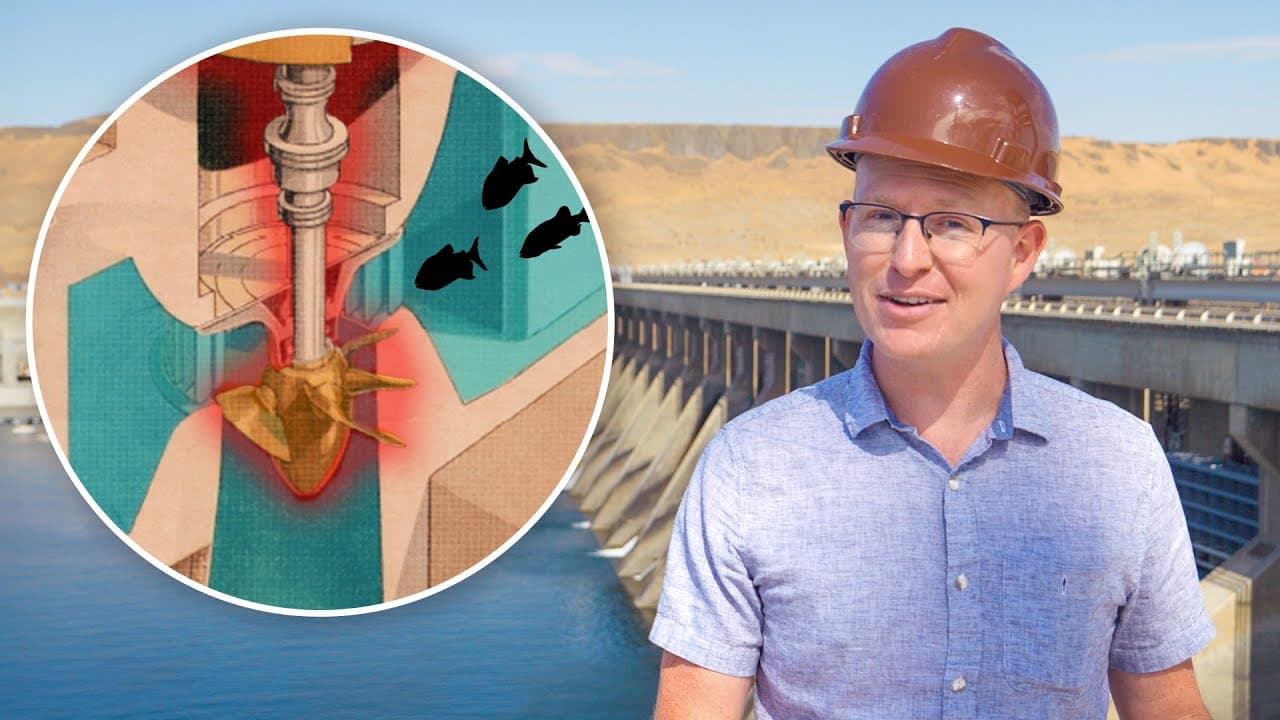
Fish survival through hydro turbines is enhanced by innovative engineering solutions like fish ladders and bypass systems. These structures help fish navigate around dams, minimizing stress and injury, while ongoing research seeks to improve these methods. The balance between human needs and ecological impact is central to dam operations.
Transcript
Most of the largest dams in the US were built before we really understood the impacts they would have on river ecosystems. Or at least they were built before we were conscientious enough to weigh those impacts against the benefits of a dam. And, to be fair, it’s hard to overstate those benefits: flood control, agriculture, water supply for citi... Read More
Key Insights
- Dams provide essential services like flood control and electricity but can impact river ecosystems negatively.
- Fish ladders at dams help migratory fish like salmon swim upstream to spawn, using attraction water to guide them.
- Juvenile fish navigate downstream through spillways and bypass systems to avoid turbine injuries.
- Submersible screens and bypass channels divert fish away from turbines, enhancing their survival.
- Pressure changes in turbines can harm fish; sensor fish help study these effects for safer turbine designs.
- Research at PNNL focuses on improving fish passage systems and understanding fish behavior around dams.
- New turbine designs aim to reduce fish injuries, with studies showing high survival rates for fish passing through.
- Balancing ecological impact and human benefits is a key challenge in dam engineering and management.
Install to Summarize YouTube Videos and Get Transcripts
Explore YouTube Video Summarizer or Get YouTube Transcript Extractor
Questions & Answers
Q: How do fish ladders help migratory fish navigate dams?
Fish ladders are designed to assist migratory fish, such as salmon, in swimming upstream past dams. These structures use attraction water to guide fish toward ladder entrances, where they can swim against a controlled current. Concrete baffles break the dam's height into manageable sections, allowing fish to ascend at their own pace, ultimately aiding their journey to spawning grounds.
Q: What methods are used to help juvenile fish pass downstream at dams?
Juvenile fish benefit from spillways and bypass systems that facilitate safe downstream passage. Submersible screens installed in front of turbines divert fish, preventing them from entering dangerous areas. These screens guide fish into bypass channels, where they are safely transported downstream, minimizing potential injuries from turbine encounters.
Q: Why is pressure change a concern for fish passing through turbines?
Pressure changes in hydro turbines can harm fish, particularly affecting their swim bladders used for buoyancy. As water pressure drops rapidly through turbines, fish can experience stress or injury. Research using sensor fish helps understand these impacts, leading to the development of safer turbine designs that minimize pressure-related injuries to fish.
Q: How does research at PNNL contribute to fish passage improvements?
PNNL conducts extensive research to enhance fish passage systems at dams. This includes developing sensor fish to study turbine impacts, designing safer turbine models, and understanding fish behavior around man-made structures. Their work informs engineering solutions that increase fish survival rates, balancing ecological needs with the benefits of hydroelectric power.
Q: What are the benefits of new turbine designs for fish safety?
New turbine designs prioritize fish safety by reducing injury risks during passage. These designs incorporate features that minimize pressure changes and physical contact with turbine blades. Studies show that such innovations significantly improve fish survival rates, with some reports indicating over 98% survival for fish passing through newly designed turbines.
Q: How do submersible screens function in fish bypass systems?
Submersible screens are critical components of fish bypass systems, positioned in front of turbines to divert fish away from danger. These screens feature narrow slots that allow water to pass while directing fish into bypass channels. Regular maintenance ensures screens remain free of debris, preventing fish from being trapped and enhancing their safe passage downstream.
Q: What role does attraction water play in fish ladders?
Attraction water is crucial in fish ladders, serving to guide migratory fish toward ladder entrances. By creating a strong current and splashing sounds, attraction water mimics natural river conditions, encouraging fish to orient themselves correctly. This method increases the likelihood of fish finding and using the ladder to navigate upstream past dams.
Q: How do researchers track fish movement around dams?
Researchers use advanced tagging and tracking technologies to monitor fish movement around dams. Acoustic tags implanted in fish emit signals detected by receivers, providing precise location data. This information helps scientists understand fish behavior, assess the effectiveness of passage systems, and develop strategies to improve fish survival rates during dam navigation.
Summary & Key Takeaways
-
Fish ladders and bypass systems at dams like McNary help migratory fish navigate safely, minimizing stress and injury. These structures guide fish upstream and downstream, using attraction water and specialized channels. Research and engineering advancements continue to improve these systems, ensuring a balance between ecological preservation and human benefits.
-
Juvenile fish face challenges when navigating downstream past dams. Bypass systems and spillways are designed to help them avoid turbine injuries. Submersible screens divert fish away from turbines, while new turbine designs reduce pressure-related injuries. Research at PNNL aids in developing safer passage methods for fish.
-
Dams provide crucial services but can disrupt river ecosystems. Engineering solutions like fish ladders and bypass systems help mitigate these impacts. Ongoing research at institutions like PNNL focuses on improving fish passage systems and understanding fish behavior, balancing ecological concerns with human needs.
Read in Other Languages (beta)
Share This Summary 📚
Summarize YouTube Videos and Get Video Transcripts with 1-Click
Try YouTube Summary with ChatGPT & Claude or YouTube Transcript Generator
Explore More Summaries from Practical Engineering 📚


Summarize YouTube Videos and Get Video Transcripts with 1-Click
Try YouTube Summary with ChatGPT & Claude or YouTube Transcript Generator