How to Navigate Depression and Find Hope
TL;DR
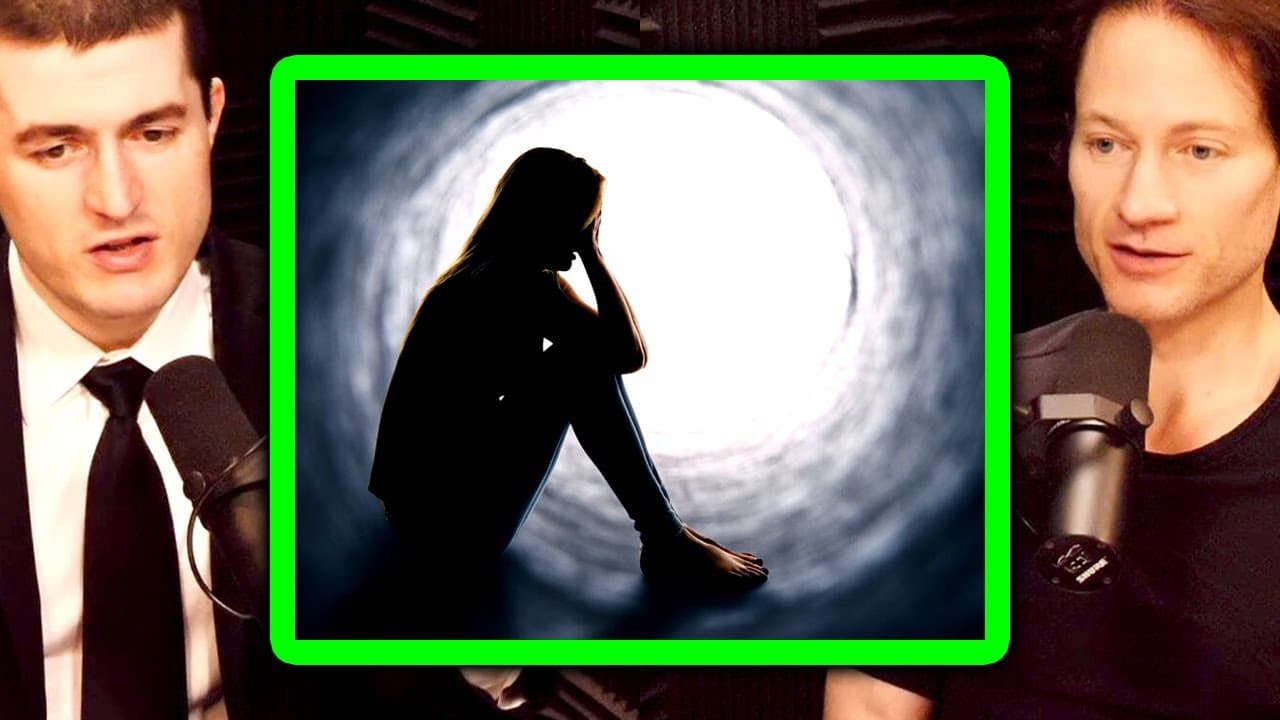
Acknowledging that depressive thoughts are often false realities, the author emphasizes the importance of recognizing the biochemical nature of these states. Moments of joy can emerge unexpectedly, highlighting the complexity of human cognition and the need for better understanding in managing mental health.
Transcript
for you individually though does it make you sad that your brain ends that you die one day very soon that the whole thing that that uh that data source just goes offline sooner than you would like that's a complicated question i i would have answered it differently in different times of my life i you know i had chronic depression for 10 years and s... Read More
Key Insights
- 💗 Growing up in a religious reality can complicate and intensify experiences of depression, creating a conflict between personal desires and predetermined beliefs.
- 🤯 The author's mind is characterized by a brutal and anxiety-ridden environment, with constant self-criticism and regrets.
- 🤞 Brain interfaces offer hope for understanding and managing mental health, especially in dark moments when rationality becomes distorted.
- 💨 Depressive thoughts are biochemical states that can be acknowledged as false realities, paving the way for altered perspectives and potential relief.
- 😃 Moments of joy and gratitude can be experienced despite depressive tendencies, attributed to biochemistry and unique perspectives.
- 🥺 Human cognition is a significant contributor to societal challenges, and quantifying and understanding it can potentially lead to greater stability and improvement in both personal lives and society at large.
- 🧑⚕️ The author emphasizes the importance of scaffolding human intelligence infrastructure to effectively address mental health struggles.
- 🎙️ More videos with Bryan Johnson:
Install to Summarize YouTube Videos and Get Transcripts
Explore YouTube Video Summarizer or Get YouTube Transcript Extractor
Questions & Answers
Q: How does being born into a religious reality impact the experience of depression?
Being born into a religious reality can create a sense of hopelessness when one desires an end to existence but is forced to believe in an afterlife that rewards or penalizes behavior. It adds an additional layer of despair and prevents the acceptance of alternative realities.
Q: How does the author cope with depressive thoughts?
The author acknowledges that depressive thoughts are biochemical states and not a reflection of reality. They remind themselves that these thoughts are not real and focus on the possibility of altering their state through understanding and utilizing brain interfaces or other methods.
Q: What role does data play in understanding and treating depression?
Data can open up possibilities for better understanding the ups and downs of depressive states. It provides opportunities to track and analyze brain activity, helping to develop more effective treatments and interventions, and potentially offering relief during dark moments.
Q: How does the author find joy and gratitude despite their depressive tendencies?
Despite struggles with self-criticism and other challenges, the author experiences moments of deep joy and gratitude for life. They attribute this to biochemistry and a unique perspective that allows them to find joy in small things like looking at a cup. It doesn't align with the rest of their life experiences but brings a profound sense of appreciation.
Summary & Key Takeaways
-
The author shares their experiences with chronic depression and the conflict of being born into a religious reality that contradicts their desire for an end to existence.
-
They highlight the brutal environment of their own mind, filled with anxiety, regrets, and self-criticism.
-
The author expresses both sadness and hope regarding the possibility of their brain eventually ceasing to exist and the potential for a future human conscious experience.
Read in Other Languages (beta)
Share This Summary 📚
Summarize YouTube Videos and Get Video Transcripts with 1-Click
Try YouTube Summary with ChatGPT & Claude or YouTube Transcript Generator
Explore More Summaries from Lex Clips 📚

Summarize YouTube Videos and Get Video Transcripts with 1-Click
Try YouTube Summary with ChatGPT & Claude or YouTube Transcript Generator