How Trump’s Policies Could Reshape Dollar Flows
TL;DR
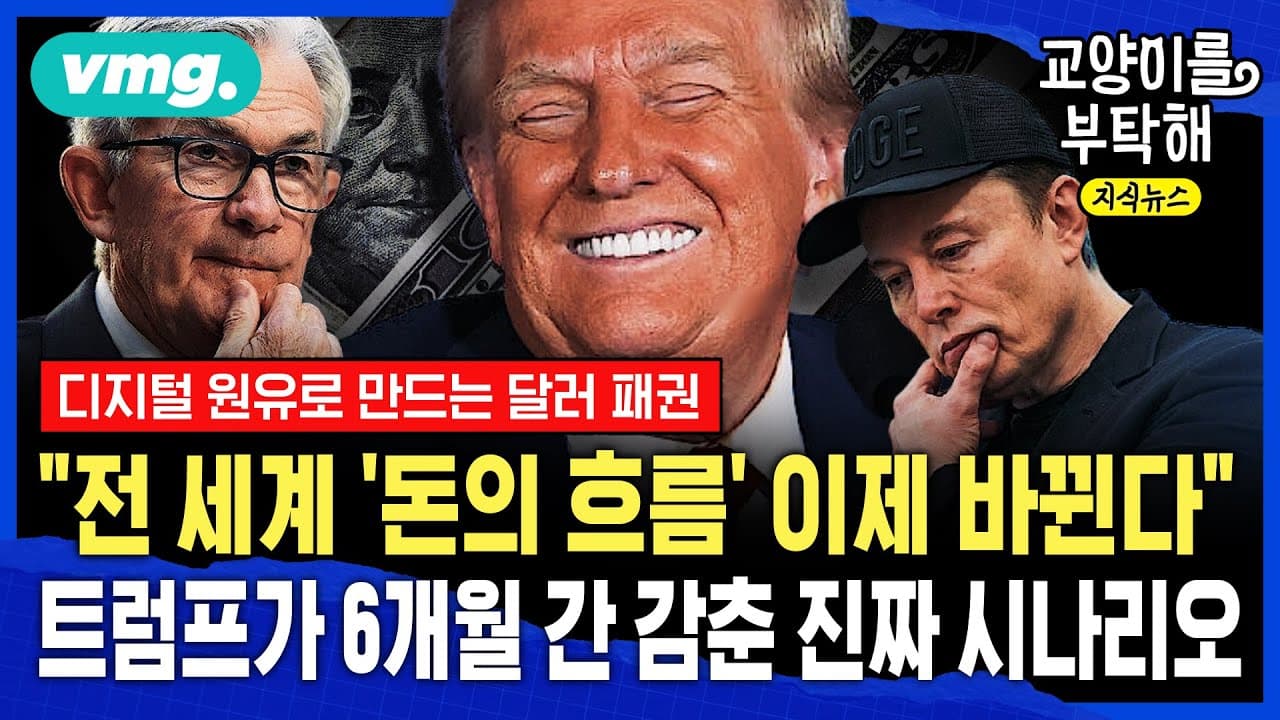
Trump’s tariff, tax-cut, and deregulation agenda is presented as a coordinated strategy, but inflation uncertainty and expanding federal debt could keep US Treasury yields elevated. Stablecoins may provide a counterweight by increasing global demand for dollars and Treasury securities, functioning like a digital version of the petrodollar system and reinforcing dollar dominance.
Transcript
Stablecoins are also one of the means to increase demand for US Treasury bonds, but when I heard about stablecoins, I thought of petro and dollar. Since you have to go through dollars to buy crude oil, everyone has no choice but to buy dollars. Then this naturally increases demand for US Treasury bonds. This will support the dollar from below. Isn'... Read More
Key Insights
- Trump’s economic agenda is built around tariffs, tax cuts, and deregulation. The three policies are presented as complementary because tariff revenue can address fiscal costs, tax cuts can support economic activity, and regulatory easing can respond to financial pressure from rising deficits and interest rates.
- US long-term Treasury yields have stayed elevated for years. The 10-year and 30-year rates rose from roughly 1.5% in 2021 into a range around 4% to 5%, challenging expectations that borrowing costs would quickly return to their earlier low levels.
- Treasury-market volatility is unusually important to the policy outlook. Interest rates have repeatedly moved up and down within a high range, meaning borrowers and investors face uncertainty not only about the level of yields but also about how sharply those yields may change.
- Inflation is a central obstacle to lower interest rates. The US economy remains comparatively strong, while uncertain tariff rates could raise imported-goods prices and make future inflation difficult to predict, leading the Federal Reserve to favor waiting before cutting its policy rate.
- Tariff inflation may be temporary, but that outcome is disputed. Supporters of rate cuts argue that tariffs create a one-time increase because rates are not raised annually, while the opposing view stresses that prolonged inflation has already made consumers and policymakers especially vulnerable to another price shock.
- The US fiscal deficit can place upward pressure on Treasury yields. Expanding debt and interest expenses require more government borrowing, and when demand for funds rises faster than investors’ willingness to lend, the price of money, expressed through interest rates, also rises.
- Traditional Treasury demand has weakened compared with the past. The Federal Reserve has shifted from buying long-term bonds through quantitative easing to quantitative tightening, while tariff conflicts create concern about whether foreign central banks will continue holding or purchasing US government securities.
- Stablecoins can reinforce dollar dominance by generating demand for dollars and Treasury securities. The argument compares them with the petrodollar system, where buying crude oil required dollars, and suggests that a digital equivalent could support the currency as fiscal deficits and debt pressures increase.
Install to Summarize YouTube Videos and Get Transcripts
Explore YouTube Video Summarizer or Get YouTube Transcript Extractor
Questions & Answers
Q: How do tariffs, tax cuts, and deregulation complement one another?
Tariffs, tax cuts, and deregulation are presented as three connected parts of the Trump administration’s strategy. Tax cuts can stimulate economic activity but also enlarge the fiscal deficit. Tariffs can collect additional government revenue, although they may weaken growth and raise prices. Regulatory easing can then reduce financial constraints when larger deficits and higher borrowing needs place upward pressure on interest rates.
Q: Why have US long-term Treasury yields remained high?
US long-term Treasury yields remain high because several pressures operate simultaneously. Inflation has not been fully subdued, the economy continues to create demand for goods, and uncertain tariff rates could produce additional price increases. At the same time, persistent fiscal deficits imply greater Treasury issuance, while some traditional buyers are purchasing fewer bonds. These conditions make rapid declines in long-term rates difficult.
Q: How could tariffs affect US inflation and interest rates?
Tariffs can raise the domestic price of imported goods, with the size of the increase depending on the final rates produced through negotiations. Because those rates are uncertain, policymakers cannot confidently forecast inflation. If prices rise more than expected, the Federal Reserve may find it difficult to reduce its policy rate, which can help keep Treasury yields and broader borrowing costs elevated.
Q: Are tariff-driven price increases necessarily permanent?
Tariff-driven inflation is not necessarily permanent because a tariff can produce a one-time increase in the price level rather than an identical increase every year. However, the transcript presents this as a contested conclusion. Inflation has remained above the Federal Reserve’s target for years, so another price shock could affect expectations and behavior instead of disappearing cleanly after its initial impact.
Q: Why does a growing fiscal deficit raise Treasury yields?
A growing fiscal deficit requires the government to borrow more, including borrowing to cover rising interest expenses. That means issuing additional Treasury securities and increasing demand for available money. If investors are reluctant to supply enough funds at existing rates, the government must offer higher returns. The resulting imbalance between borrowing demand and lending supply pushes the price of money, or interest rates, upward.
Q: Why was the US credit rating downgrade significant?
The downgrade is framed as a judgment about repayment discipline rather than a sudden discovery that the United States has substantial debt. The economy performed strongly over much of the previous decade, yet debt continued growing instead of declining. A proposed large tax-cut bill was described as potentially adding about 3 to 4 trillion dollars in debt over ten years, intensifying concerns about fiscal commitment.
Q: Who traditionally purchased US Treasury securities?
Three major groups traditionally supported demand for US Treasury securities: the Federal Reserve, foreign central banks and governments, and US commercial banks. The Federal Reserve previously bought many long-term securities through quantitative easing, but inflation led it toward quantitative tightening. Tariff disputes also raised questions about foreign demand, particularly from countries that accumulated dollar reserves through exports to the United States.
Q: How could stablecoins strengthen dollar hegemony?
Dollar-linked stablecoins could require users to obtain dollars or dollar-based assets, creating a mechanism comparable to the petrodollar system described in the source. Because crude oil purchases historically required dollars, buyers had to maintain dollar demand. Stablecoins could form a digital version of that arrangement, increasing demand for dollars and Treasury securities while supporting the currency during periods of weakness.
Summary & Key Takeaways
-
The Trump administration’s agenda is described as a three-part structure involving tariffs, tax cuts, and regulatory easing. Tariff revenue could offset some fiscal costs, tax cuts could stimulate an economy weakened by tariffs, and deregulation could reduce pressure created when larger deficits push interest rates upward.
-
US long-term Treasury yields have remained high and volatile compared with their 2021 level. Persistent inflation, uncertainty about negotiated tariff rates, and disagreement over whether tariff-driven price increases will be temporary make rapid policy-rate reductions difficult and encourage the Federal Reserve to wait for clearer evidence.
-
Growing fiscal deficits require additional Treasury issuance, while traditional buyers such as the Federal Reserve and foreign central banks may provide less dependable demand than before. Stablecoins could help fill that gap because acquiring dollar-linked digital assets can generate demand for dollars and Treasury securities, supporting dollar hegemony.
-
The policy framework does not eliminate its own contradictions. Tariffs may weaken growth and raise prices, while tax cuts may stimulate activity but enlarge the deficit. Regulatory easing is presented as the third tool that could reduce financial constraints and help the government manage resulting interest-rate and Treasury-market pressures.
-
The argument compares stablecoins with the petrodollar system. Just as purchasing crude oil through dollars compelled participants to obtain dollars, widespread use of dollar-linked stablecoins could create recurring dollar demand. That demand could naturally extend to Treasury securities and support the currency when fiscal and market pressures encourage weakness.
Read in Other Languages (beta)
Share This Summary 📚
Summarize YouTube Videos and Get Video Transcripts with 1-Click
Try YouTube Summary with ChatGPT & Claude or YouTube Transcript Generator
Explore More Summaries from 비디오머그 - VIDEOMUG 📚






Summarize YouTube Videos and Get Video Transcripts with 1-Click
Try YouTube Summary with ChatGPT & Claude or YouTube Transcript Generator