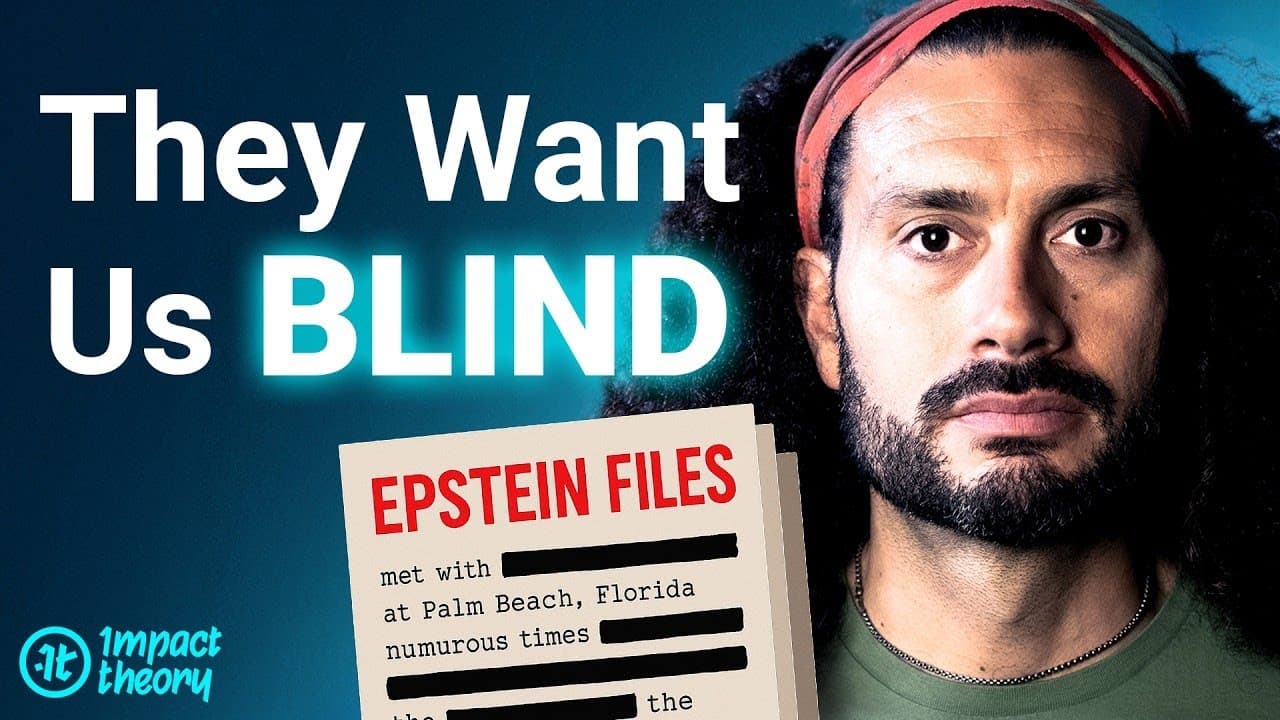
The Epstein Files Reveal Who the Government REALLY Works For | Andrew Bustamente x Tom Bilyeu
TL;DR
Governments use secrets strategically for power and control.
Transcript
jeffrey Epstein's story was never about sex it was an illusion like the dress some see as blue and others see as gold intelligence agencies exploit the same trick they shape what you notice and distort what it means enter compromant the art of collecting dirt to control the powerful today former CIA officer Andrew Bamonte reveals how Epstein style ... Read More
Key Insights
- Jeffrey Epstein's case is less about sex and more about how intelligence agencies use secrets to control powerful figures.
- Secrets have value based on their intensity and the timing of their release, which governments use for leverage.
- The release of information like the Epstein and JFK files is strategically timed for maximum impact and leverage.
- Governments manipulate public perception using mass psychology and strategic information release, as seen in the China spy balloon incident.
- Global power dynamics are shifting with China, Russia, and Iran forming a counterbalance to Western influence.
- Moral flexibility is a tool used by intelligence agencies to achieve desired outcomes, often blurring the lines between right and wrong.
- The US faces challenges in maintaining its global influence as China strengthens its economic and military capabilities.
- Nations prioritize survival and power, often sacrificing moral considerations for strategic gains, as illustrated by historical and current events.
Install to Summarize YouTube Videos and Get Transcripts
Explore YouTube Video Summarizer or Get YouTube Transcript Extractor
Questions & Answers
Q: What is the significance of the Epstein files?
The Epstein files are significant because they represent how intelligence agencies gather compromising information, known as 'kompromat,' on influential figures. This information is used as leverage to control or influence these individuals, making it a powerful tool in geopolitical strategies.
Q: How do governments use the timing of information release?
Governments carefully time the release of information to maximize its impact and leverage. By controlling when secrets are revealed, they can shape public perception, distract from other issues, or gain strategic advantages in negotiations and conflicts.
Q: What role does moral flexibility play in intelligence operations?
Moral flexibility is crucial in intelligence operations, allowing agents to step outside traditional moral boundaries to achieve desired outcomes. This approach prioritizes survival and strategic gains over rigid notions of right and wrong, enabling more effective decision-making in complex situations.
Q: How do global power dynamics influence current geopolitical events?
Global power dynamics are shifting as countries like China, Russia, and Iran form alliances to counter Western influence. This realignment challenges the US's dominance and requires strategic adaptations to maintain its position in the global order, influencing events like the Russia-Ukraine war and Middle Eastern conflicts.
Q: How does the concept of mass psychology apply to government strategies?
Governments use mass psychology to shape public perception and behavior by controlling narratives and the flow of information. This manipulation helps maintain social order and support for government actions, often by creating a unified national identity or rallying against perceived threats.
Q: What challenges does the US face in maintaining its global influence?
The US faces challenges from rising powers like China, which is expanding its economic and military capabilities. The US must adapt to these shifts by reinforcing alliances, addressing economic dependencies, and countering strategic moves by rival nations to maintain its global influence.
Q: Why is the release of the JFK files significant?
The release of the JFK files is significant because it illustrates how governments manage the timing and content of information to control public perception and historical narratives. By releasing information gradually, they can mitigate potential backlash and maintain leverage over sensitive historical events.
Q: What is the impact of China's economic strategies on global power dynamics?
China's economic strategies, such as the Belt and Road Initiative and control over manufacturing and rare earth minerals, strengthen its global influence. These strategies challenge Western economic dominance and create dependencies that shift power dynamics, requiring the US and its allies to reassess their economic and strategic positions.
Summary & Key Takeaways
-
The discussion highlights how intelligence agencies like the CIA use secrets to control powerful individuals and influence global events. The Epstein files serve as a prime example of leveraging sensitive information for strategic advantage.
-
Governments strategically release information to maximize its impact, as seen with the Epstein and JFK files. The timing of these releases is crucial for maintaining leverage and control over public perception and geopolitical narratives.
-
Global power dynamics are evolving, with China, Russia, and Iran forming a counterbalance to Western influence. The US faces challenges in maintaining its dominance, as these nations use economic and military strategies to shift the balance of power.
Read in Other Languages (beta)
Share This Summary 📚
Summarize YouTube Videos and Get Video Transcripts with 1-Click
Try YouTube Summary with ChatGPT & Claude or YouTube Transcript Generator
Explore More Summaries from Tom Bilyeu 📚




Summarize YouTube Videos and Get Video Transcripts with 1-Click
Try YouTube Summary with ChatGPT & Claude or YouTube Transcript Generator