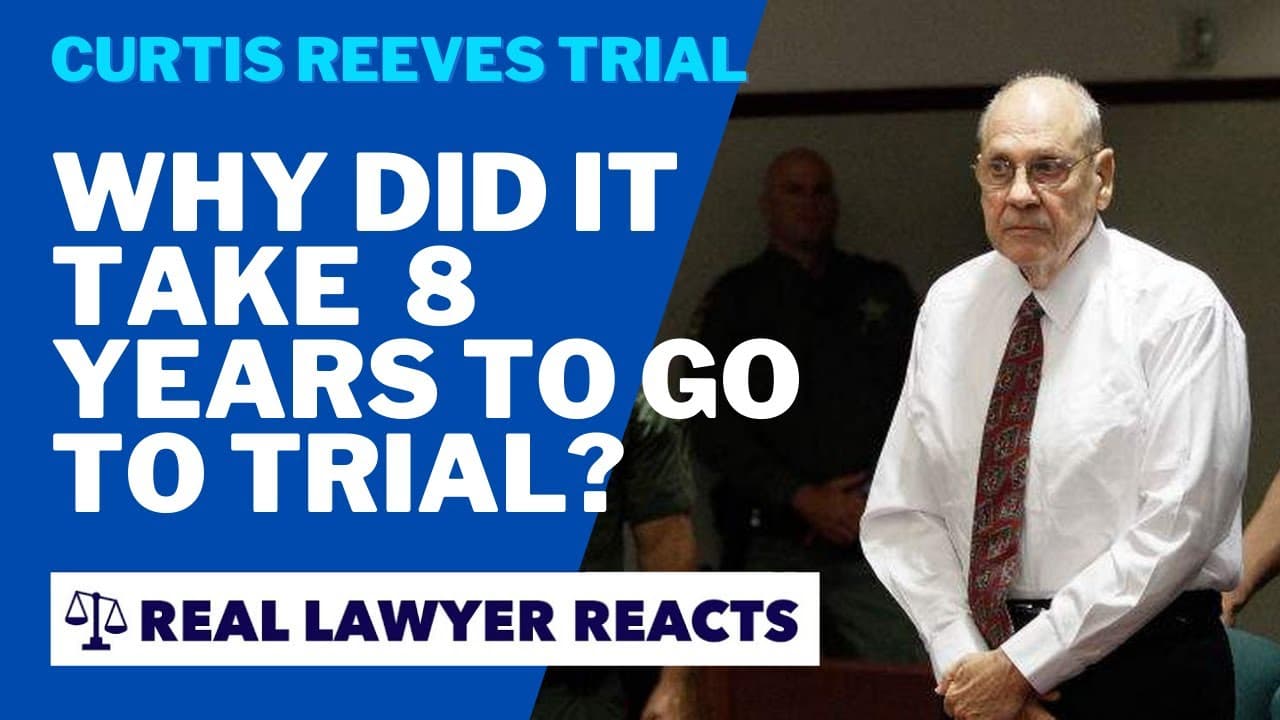
Why Did the Curtis Reeves Case Take 8 Years to Go to Trial?
TL;DR
The Curtis Reeves case took eight years to reach trial because two interlocutory appeals stayed proceedings, Florida’s stand-your-ground law prompted additional litigation, COVID-19 disrupted the courts, and neither side consistently pushed for a speedy trial. Reeves was also out on bond and house arrest during much of the pretrial period. Read on to understand how each delay affected the case and complicated jury selection.
Transcript
welcome back everyone it's the lawyer you know and today i want to provide a quick update answer the most asked question about the curtis reeves case which is going to trial right now former law enforcement officer who shot someone in a movie theater and is now claiming self-defense everybody in the comments of the first video wanted to know why th... Read More
Key Insights
- 🦻 Legal delays in the Curtis Reeves case stemmed from stand your ground hearings, appeals, the pandemic, and the overloaded court system.
- 🧑⚕️ Defense lawyers had reasons for delaying the trial, including the defendant's health and house arrest.
- 💼 Prosecution challenges included managing a busy caseload and the complexities of the case.
- 👮 Changes in Florida's stand your ground law affected the burden of proof and added complexities to the case.
- ✋ The jury selection process in high-profile criminal cases involves thorough questioning to ensure fairness and impartiality.
- 💼 Data on potential jurors is sometimes only available moments before questioning in criminal cases, unlike in civil cases.
- 🪡 The delay in the Curtis Reeves trial highlights systemic issues in the legal process and the need for efficient case management.
Install to Summarize YouTube Videos and Get Transcripts
Explore YouTube Video Summarizer or Get YouTube Transcript Extractor
Questions & Answers
Q: Why did the Curtis Reeves case take eight years to go to trial?
Two interlocutory appeals stopped the case while higher courts considered them, and litigation over Florida’s changing stand-your-ground law added more waiting. COVID-19, packed courts, and neither side strongly pushing for a speedy trial also contributed.
Q: How did the stand-your-ground hearing delay the Curtis Reeves trial?
The stand-your-ground hearing functioned almost like a separate trial and took about a week. After the defense lost, it appealed, staying the criminal case until the appeal was decided; the defense also lost that appeal.
Q: How did Florida’s stand-your-ground law change during the case?
Under the old law, the defendant had to prove self-defense at a stand-your-ground hearing. The new law shifted the burden to the state to prove that the defendant did not act in self-defense.
Q: Did the new stand-your-ground burden of proof apply to Curtis Reeves?
No. The Florida Supreme Court decided that the change did not apply retroactively, so the old law governed because the case happened before the law changed. Reeves therefore did not receive another stand-your-ground hearing under the new burden.
Q: What happened in the appeal over Curtis Reeves’s bail?
The court initially ordered that Reeves receive no bail or bond. The defense appealed, which stayed the case, and won; Reeves was then released on bond and placed under house arrest.
Q: Why might the defense have accepted delays in the Curtis Reeves case?
Reeves was out on bond and house arrest for most of the pretrial period rather than being held in prison. He was over 75 and dealing with multiple health problems, so remaining at home gave the defense less reason to push immediately for trial.
Q: Why did prosecutors not move the case to trial faster?
The prosecutor’s office was described as consistently busy and overworked. When defense attorneys are not pressing for the fastest possible trial, cases can receive less immediate attention, although the lawyer said the attorneys did not deserve most of the blame here.
Q: What made jury selection difficult in the Curtis Reeves trial?
Potential jurors had preconceived opinions about the high-profile case, requiring careful questioning to identify people who could not remain fair and impartial. In criminal cases, lawyers may also receive information about prospective jurors only moments before questioning them.
Summary & Key Takeaways
-
The Curtis Reeves case took 8 years to get to trial due to various factors, including stand your ground hearings and appeals.
-
Both defense and prosecution lawyers had reasons for delaying the trial.
-
The trial is currently in progress, with jury selection facing challenges due to preconceived notions about the case.
Read in Other Languages (beta)
Share This Summary 📚
Summarize YouTube Videos and Get Video Transcripts with 1-Click
Try YouTube Summary with ChatGPT & Claude or YouTube Transcript Generator
Explore More Summaries from Lawyer You Know 📚


Summarize YouTube Videos and Get Video Transcripts with 1-Click
Try YouTube Summary with ChatGPT & Claude or YouTube Transcript Generator