N. R. Narayan Murthy: Do As You Say to Gain Credibility

TL;DR
Leaders gain credibility by matching their actions to the standards they ask others to follow. Effective transformation also requires raising aspirations, replacing pessimistic mindsets with confidence, and treating constraints as opportunities. Organizations advance when leaders combine analytical decisions with ambitious thinking, hard work, sacrifice, customer relevance, and measurable impact.
Transcript
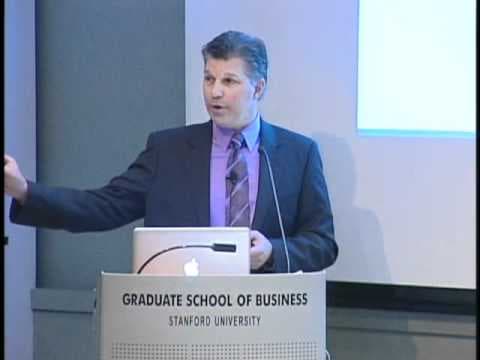
First of all, it's a great privilege to be invited by you people. This invitation, all this feature because my daughter Akshita is in the class of 2006. This is an opportunity for me to look a little bit smarter in front of her, because as you all know, no man is a hero to his children. [LAUGH] Throughout my talk, I'll use the term he to mean both ... Read More
Key Insights
- Leadership is the work of bringing about change or transformation by influencing how people think and behave. Since transformation depends on a transformed mindset, leaders must help employees become more positive, confident, enthusiastic, daring, open-minded, and willing to accept ambitious dreams.
- The mind is an analytical engine that uses data to support appropriate decisions, while mindset consists of conclusions distilled from experience. Murthy connects mindset with aspirations, confidence, perceived possibilities, and behavior, making it a central target for leaders seeking organizational progress.
- Aspiration is the principal fuel for progress because it helps people overcome difficult odds through hard and smart work. Strong aspirations can also encourage personal sacrifice and persuade employees to place the corporation’s interests ahead of their individual interests when pursuing a shared objective.
- Credibility is built through leadership by example because employees closely watch leaders and imitate their conduct. When an organization values cost control, excellence, or customer focus, its leaders must visibly demonstrate commitment to those priorities before expecting employees to make sacrifices for them.
- Constraints can be treated as opportunities rather than fixed reasons for inaction. Leaders must counter internal naysayers who dismiss dramatic proposals as incompatible with the organization’s context, then encourage people to attempt ideas that initially appear difficult or implausible.
- Leadership success depends on combining a broad view of the world with an understanding of how employees view leadership from below. Murthy describes success as taking great ideas and converting them into action through excellence, rather than stopping at vision or analysis.
- Globalization is defined as sourcing capital where it is cheapest, finding talent where it is best available, producing where it is most cost-effective, and selling where markets are, without being constrained by national boundaries. Countries can participate by applying their particular competitive advantages.
- Infosys’s global delivery model divides software work according to its need for customer interaction. Requirements, installation, and rapid-reaction warranty work occur at customer sites, while programming, design, documentation, and long-term warranty work can occur in scalable, process-driven, talent-rich, and cost-competitive development centers.
Install to Summarize YouTube Videos and Get Transcripts
Explore YouTube Video Summarizer or Get YouTube Transcript Extractor
Questions & Answers
Q: How do leaders build credibility with employees?
Leaders build credibility by doing what they expect others to do and visibly demonstrating commitment to shared priorities. Employees watch leaders closely and often imitate their behavior, so values must appear in daily conduct. If leaders demand cost control, excellence, customer focus, hard work, or sacrifice, they must model those standards themselves. This leadership by example creates the trust needed for organizational change.
Q: How can leaders change an organization’s mindset?
Leaders change an organization’s mindset by raising employee aspirations and encouraging people to become positive, confident, enthusiastic, daring, and open-minded. They must challenge pessimism, help employees accept change, and present ambitious dreams as worth attempting. Because mindset influences confidence, perceived possibilities, aspirations, and behavior, changing it enables the broader transformation that leaders are responsible for producing.
Q: Why are aspirations important for organizational progress?
Aspirations provide the motivation required to overcome difficult odds. They encourage people to work both hard and intelligently, make personal sacrifices, and place the corporation’s interests ahead of individual interests. Infosys illustrated this principle by aspiring in 1981, when it had seven people and $130,000 in revenue, to become the most respected corporation among more than 6,500 listed companies in India.
Q: What is the difference between the mind and mindset?
The mind is the analytical engine that uses data to make appropriate decisions. Mindset is the collection of conclusions distilled from experience over time. Murthy links mindset to aspirations, confidence, perceived possibilities, and behavior. Leaders therefore need more than sound analysis. They must also reshape established attitudes so people can approach change with confidence, openness, and ambitious expectations.
Q: How should leaders respond to naysayers in a corporation?
Leaders should confront the pessimism of people who reject dramatic proposals by claiming the organization’s context makes them impossible. Instead of accepting context as a constraint, leaders should treat it as a source of opportunity and persuade employees to try. Progress requires moving beyond convincing but limited possibilities toward plausible ideas that may initially appear impossible, supported by smartness, hard work, and sacrifice.
Q: What is Infosys’s global delivery model?
The global delivery model divides a large software development assignment into categories based on customer interaction. Requirements definition, installation, and rapid-reaction warranty work require a presence at the customer’s site. Programming, design, documentation, and long-term warranty work can be performed in talent-rich, process-driven, scalable, and cost-competitive development centers such as those in India. The model aims to deliver quality software on time and within budgeted costs.
Q: How does a 24-hour productive day benefit customers?
The 24-hour productive day combines the prime working time of customers in the United States with Infosys’s prime working time. This arrangement allows productive activity to continue across locations and effectively gives customers a 24-hour workday. Murthy identifies compressed cycle time as its central benefit, making the approach one of the two major Infosys innovations discussed in the talk.
Q: What makes a corporation more valuable in the marketplace?
A corporation becomes increasingly endearing in the marketplace by remaining relevant to its customers and creating greater impact. These two priorities connect leadership and execution with external value. Ambitious ideas alone are insufficient. Leaders must convert ideas into action through excellence, organize work around customer needs, and ensure that the company’s activities produce meaningful results for the people and markets it serves.
Summary
In this video, the CEO and executive chairman of Infosys shares the lessons he has learned from running the company for the past 25 years. He discusses the opportunities and challenges of globalization, the growth of the company, and the importance of people and transformation in achieving progress. He emphasizes the need for leaders to raise aspirations, overcome naysayers, see constraints as opportunities, and lead by example to instill trust in others. He also highlights the importance of being relevant to customers and making a greater impact to ensure longevity and success in the marketplace.
Questions & Answers
Q: How did the PC revolution and availability of software applications impact the founding of Infosys?
The PC revolution, with the availability of word processors and spreadsheets on inexpensive computers, signaled a growing demand for software applications. Knowing that the demand for customized software development would explode, the founders of Infosys recognized the opportunity to specialize in this area and started the company in 1981.
Q: What is globalization, and how did it create opportunities for Infosys?
Globalization, as defined by the CEO, involves sourcing capital from where it is cheapest, sourcing talent from where it is best available, producing in the most cost-effective locations, and selling where the market is profitable, without being constrained by national boundaries. Infosys realized that India had a clear competitive advantage in customized software development due to the availability of a large number of English-speaking technical talent. This advantage allowed them to offer value in the global market.
Q: What were the inhibitors of growth for Infosys in its first 10 years?
The growth of Infosys in its first 10 years was inhibited by excessive friction to business in India. However, thanks to the economic reforms of 1991, the company experienced a positive change that facilitated its growth.
Q: What are some key achievements and statistics of Infosys today?
Infosys closed the previous year with $2.15 billion in revenue and a net income of over $550 million. The company currently has a market capitalization of approximately $20 billion. It specializes in various industries such as banking and capital markets, retail, and high-tech manufacturing, operating in 38 countries with development centers in seven countries. Infosys has experienced a growth rate of over 40% in the last ten years and has been recognized for its leadership in innovation, employee orientation, and corporate governance.
Q: What are the major innovations of Infosys?
Two major innovations of Infosys are the 24-hour productive day and the global delivery model. The 24-hour productive day allows Infosys to combine the prime time of customers in the US with their own prime time, providing a 24-hour workday and compressed cycle time for customers. The global delivery model involves splitting a large software development task into two groups: customer-facing tasks that require physical presence and non-customer-facing tasks that can be done from cost-effective, talent-rich development centers in countries like India. This model allows Infosys to provide customers with quality software on time and within budget.
Q: How does a leader's perspective shape their success?
The CEO believes that a leader's perspective is shaped to a large extent by how people at the bottom of the organization view the world. Success for a leader is defined by their ability to synthesize both the bird's eye view and the worm's eye view. In other words, a leader must combine a high-level understanding of the organization with an understanding of the daily experiences and perspectives of individuals within it.
Q: What are the primary resources of a corporation, according to the CEO?
The CEO believes that the primary resource of a corporation is its people. He places great importance on the role of employees in driving progress and transformation within an organization. A leader's job is to bring about team or organizational transformation, which requires changing the mindset of people and instilling positive, confident, enthusiastic, daring, and open-minded attitudes towards change and great aspirations.
Q: Why are aspirations important for progress?
Aspirations serve as the main fuel for progress. They help people overcome obstacles, work hard, make personal sacrifices, and prioritize the interests of the organization above their own. Aspirations enable individuals to embrace the idea that a plausible impossibility is better than a convincing possibility. The CEO gives the example of how, despite starting as a small company with limited revenues, Infosys aspired to become the most respected corporation among thousands of listed companies in India, and through their aspirations, they achieved this goal.
Q: How can leaders overcome naysayers and pessimism within the organization?
When proposing something innovative or dramatic, leaders often face opposition from naysayers who cite the context and limitations as constraints. However, a leader must overcome this pessimism and encourage others to give it a try. By emphasizing opportunities within the constraints, a leader can change the narrative and inspire their team to see beyond immediate challenges.
Q: Why is credibility and trustworthiness important for a leader?
Credibility and trustworthiness are crucial for a leader because they make a leader more enduring in the marketplace. A leader must lead by example and demonstrate a commitment to the values and attributes that define the organization. People watch leaders closely and imitate their behavior, so it's essential for leaders to display credibility in all aspects of their work, from cost control to customer excellence. By being the change they want to see in the world, leaders build trust among their teams and stakeholders.
Takeaways
In this talk, the CEO and executive chairman of Infosys highlights the importance of people, transformation, and mindset in achieving progress. He discusses how leaders can raise aspirations, overcome naysayers, and see constraints as opportunities. He emphasizes the significance of credibility and trustworthiness in leadership and the need for leaders to be relevant to customers and make a greater impact. These lessons serve as valuable insights for any corporation navigating the challenges and opportunities of a global marketplace.
Summary & Key Takeaways
-
Narayan Murthy describes corporate transformation as the leader’s primary responsibility. Because transformation begins with people, leaders must reshape mindsets so employees become positive, confident, enthusiastic, daring, and open to change. Higher aspirations give employees the motivation to overcome difficult odds, work intelligently, make sacrifices, and prioritize the corporation’s interests.
-
Credibility is necessary when leaders ask employees to accept difficult changes or personal sacrifices. It is built through consistent leadership by example because employees closely observe and imitate those at the top. Leaders must visibly demonstrate the conduct they expect in areas such as cost control, excellence, customer focus, and commitment to shared values.
-
Infosys recognized opportunities created by expanding software demand and globalization. Its 24-hour productive day joined customer working time in the United States with working time in India. Its global delivery model divided customer-intensive duties from work suited to talent-rich, process-driven, scalable, and cost-competitive development centers, improving value and delivery.
-
Key Insights could not be represented because the specified response schema uses a fixed Summary field ordering.
Read in Other Languages (beta)
Share This Summary 📚
Summarize YouTube Videos and Get Video Transcripts with 1-Click
Try YouTube Summary with ChatGPT & Claude or YouTube Transcript Generator
Explore More Summaries from Stanford Graduate School of Business 📚




Summarize YouTube Videos and Get Video Transcripts with 1-Click
Try YouTube Summary with ChatGPT & Claude or YouTube Transcript Generator