How to Upsell Customers With Reverse Pricing
TL;DR
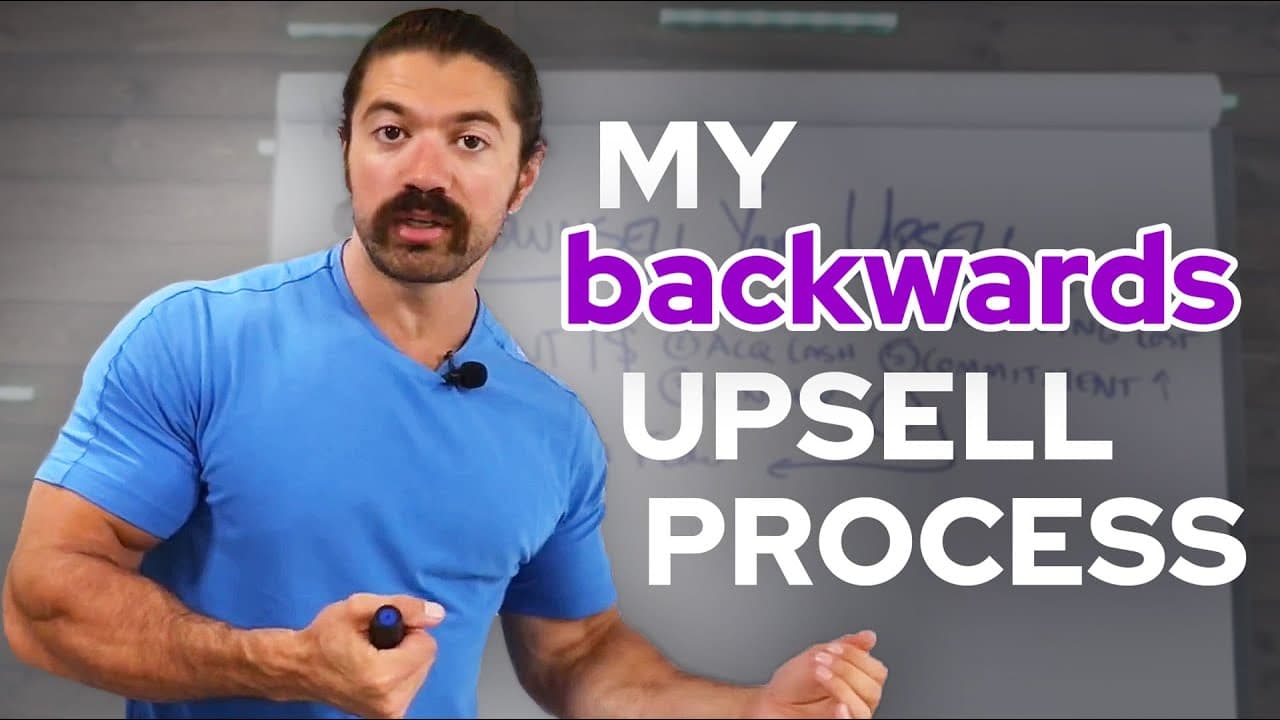
Sell a higher-priced, defined-end program before offering a lower monthly continuity plan. The upfront offer promises a specific outcome, funds acquisition and onboarding, anchors the service's value, and makes continuity feel more affordable. This structure can also attract more committed customers and improve results because qualified buyers are more likely to execute the program successfully.
Transcript
In this video, I'm gonna show you how we've structured our offer flow to ascend customers. All right? So if you're in a service business, you're in a brick-and-mortar business, you're an online business, any type of business that sells service or coaching or whatever of any kind, where you actually have to do something that provides a service to th... Read More
Key Insights
- Customers buy desired outcomes more readily than recurring access. A defined-end program packages the service around a clear promise and limited duration, avoiding the indefinite commitment associated with a membership while giving prospects a more concrete reason to purchase.
- A defined-end offer can support a higher upfront price because its promise and duration make the value easier to understand. Customers may accept a larger one-time payment more readily than an ongoing obligation that continues without a clearly defined endpoint.
- Upfront revenue can finance customer acquisition by supplying immediate cash for marketing. The initial program can potentially break even or generate a profit while creating customers who may later purchase the recurring service, reducing the need to absorb acquisition costs in advance.
- A high upfront price creates an anchor for the later continuity offer. After paying for the initial program, customers can perceive a lower monthly payment as a downsell, even when the recurring agreement eventually represents a larger total purchase.
- Customers evaluate monthly cash flow more heavily than total price. An eighteen-thousand-dollar price can feel intimidating, while fifteen hundred dollars per month can seem manageable, allowing a higher-total-value continuity offer to feel less burdensome after the initial purchase.
- New customers require additional onboarding attention, education, systems, and effort. Charging for a premium upfront program covers those higher initial costs and gives the business resources to over-deliver while teaching customers how to participate successfully in the service.
- Higher prices can increase customer commitment by creating a stronger barrier to entry. Buyers who invest more are presented as more likely to execute the program, while better-qualified prospects have a higher probability of achieving the promised outcome.
- Prospect quality directly affects the effective quality of a service because identical delivery can produce different results for customers with different capabilities. Raising the entry barrier can improve average outcomes, strengthen perceived value, and support a more valuable recurring relationship.
Install to Summarize YouTube Videos and Get Transcripts
Explore YouTube Video Summarizer or Get YouTube Transcript Extractor
Questions & Answers
Q: How does reverse pricing help upsell service customers?
Reverse pricing begins with a higher-priced, defined-end program and follows it with a lower monthly continuity offer. The first purchase anchors the perceived value of the service, while the later monthly payment feels like a downsell. Customers may therefore accept continuity more readily, even when its total ticket is larger than the upfront program.
Q: Why sell a defined-end program before a membership?
A defined-end program focuses on a specific outcome rather than asking customers to accept an indefinite recurring commitment. Its clear promise and limited duration make the offer easier to understand and can justify a higher upfront price. After customers receive the initial result, the recurring service becomes a natural way to continue or expand their progress.
Q: How can an upfront offer fund customer acquisition?
A higher-priced upfront program generates immediate cash that the business can spend on marketing and customer acquisition. The offer can potentially cover the full acquisition expense, break even, or produce a profit before any recurring revenue is collected. Continuity then becomes a subsequent sale rather than the only source available to recover initial marketing costs.
Q: Why does a monthly offer feel cheaper than an upfront price?
Customers tend to notice the effect on current cash flow more than the total contractual price. The transcript contrasts eighteen thousand dollars upfront with fifteen hundred dollars per month, showing how the smaller recurring amount can feel more manageable. This perception can make continuity easier to sell even when its cumulative value exceeds a lower one-time payment.
Q: How does price anchoring improve continuity sales?
Price anchoring establishes the initial reference point customers use to judge later offers. When a customer first purchases a premium defined-end program, a continuity plan with a smaller monthly payment appears inexpensive by comparison. The effect becomes stronger when the recurring service includes more support or benefits than the customer received during the initial program.
Q: How can an upfront program cover onboarding costs?
New customers demand more attention because they must learn the systems, expectations, and behaviors required to use the service effectively. A premium upfront program pays the business during this resource-intensive stage. That revenue allows the company to provide stronger onboarding, over-deliver on the initial experience, and prepare customers to participate successfully in the recurring service.
Q: Why can higher prices create more committed customers?
A higher entry price raises the barrier to participation and can attract customers who are more willing and able to execute the program. The transcript argues that greater financial commitment encourages follow-through. When qualified customers apply the service successfully, they are more likely to reach the promised outcome, improving both results and the service's perceived value.
Q: How does prospect quality affect service quality?
Prospect quality affects outcomes even when the product or service remains identical. A more able customer is described as having a higher likelihood of achieving the intended result than a less able customer. By raising the qualification barrier, a business can serve customers who execute more successfully, thereby improving average outcomes and the effective value of its deliverable.
Summary & Key Takeaways
-
A service business can replace its immediate recurring offer with a defined-end program built around the outcome customers want. Because buyers understand the promise, duration, and one-time commitment, the program can be easier to sell at a higher upfront price than an indefinite membership or recurring service.
-
The upfront program can generate enough cash to cover customer acquisition and onboarding, potentially producing a profit before continuity begins. Its higher price also establishes a value anchor, making the later monthly offer appear less expensive even when the continuity agreement represents a larger total ticket over time.
-
A premium entry price can produce more committed customers who are better prepared to execute the service. Stronger prospects have a greater likelihood of achieving the promised outcome, which improves the effective quality and perceived value of the product while supporting a smoother transition into a broader recurring service.
Read in Other Languages (beta)
Share This Summary 📚
Summarize YouTube Videos and Get Video Transcripts with 1-Click
Try YouTube Summary with ChatGPT & Claude or YouTube Transcript Generator
Explore More Summaries from Alex Hormozi 📚




Summarize YouTube Videos and Get Video Transcripts with 1-Click
Try YouTube Summary with ChatGPT & Claude or YouTube Transcript Generator