Why Genius Doesn't Matter | Taylor Wilson on Impact Theory
TL;DR
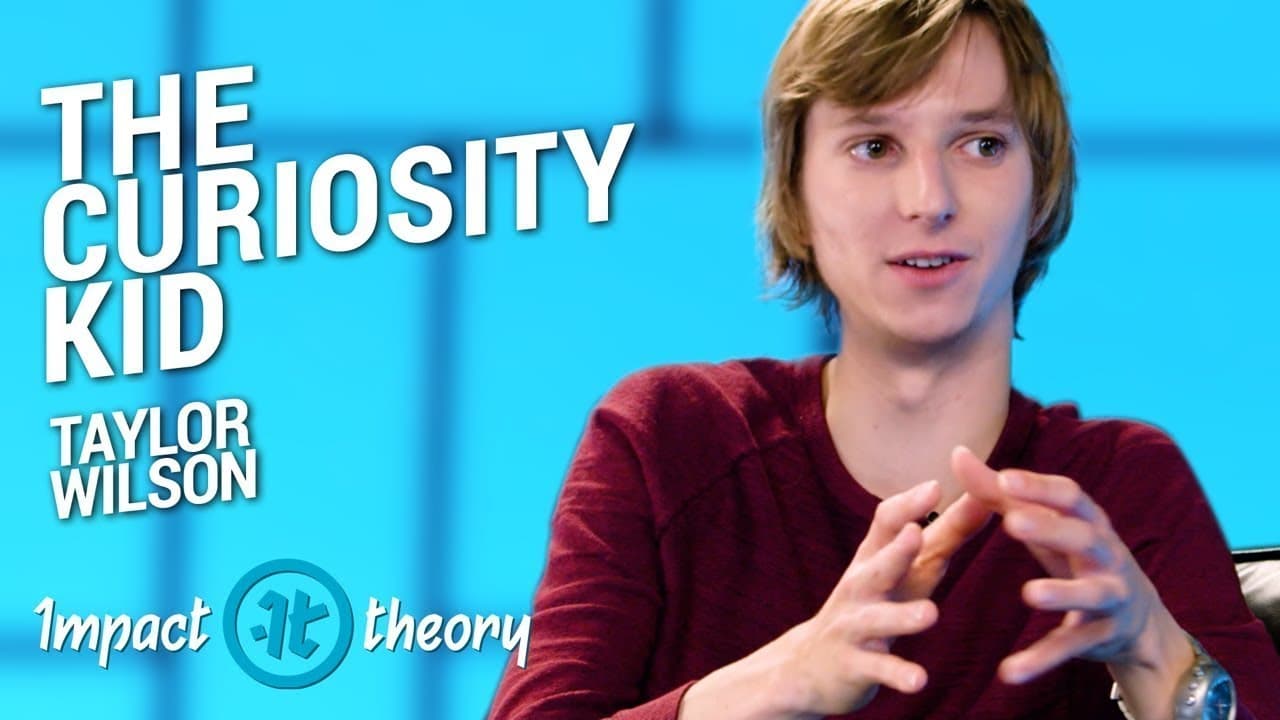
Curiosity and passion are the driving forces behind success, as exemplified by Taylor Wilson, the youngest person to achieve nuclear fusion.
Transcript
the most important thing to me is realizing that you know you can have intellect you can have aptitude and you have to have a whole lot of luck as with all things but at the end of the day what drove my success and continues to drive my success in the success of others just curiosity because if you're not really passionate about it and you're not r... Read More
Key Insights
- 🪛 Curiosity and passion are crucial drivers of success and can help overcome challenges and setbacks.
- 🥺 Failure is an essential part of the scientific process and can lead to unexpected breakthroughs.
- ⛽ Exposure to diverse perspectives and experiences can inspire and fuel innovation.
- 🥹 The future holds great potential for transforming energy production, improving access to information, and advancing technologies in fields like biotechnology and artificial intelligence.
- 👯 Encouraging and supporting young people's passions and curiosity is vital for driving innovation and solving global problems.
- 🤯 Wilson's optimism about humanity's ability to overcome challenges through science and technology is grounded in the belief that the human mind is uniquely equipped to solve problems.
- ⚖️ Balancing knowledge and aptitude with curiosity and passion is more important than natural intelligence or talent in achieving success.
Install to Summarize YouTube Videos and Get Transcripts
Explore YouTube Video Summarizer or Get YouTube Transcript Extractor
Questions & Answers
Q: How did Taylor Wilson become interested in nuclear science and achieve nuclear fusion at such a young age?
Wilson's passion for science and curiosity about the world sparked his interest in nuclear science at a young age. He spent years acquiring knowledge and used the internet to connect with experts in the field. Through perseverance and dedication, he built a nuclear fusion reactor in his garage.
Q: What is Wilson's approach to learning and acquiring knowledge in new fields?
Wilson emphasizes the importance of curiosity and studying the history of a subject to gain a deeper understanding. By understanding the motivations of the pioneers in a field, he believes complex concepts become more accessible.
Q: How does Wilson deal with failure and setbacks in his work?
Wilson sees failure as an integral part of the scientific process and welcomes it as an opportunity for learning and discovery. He embraces failure and uses it to uncover unexpected solutions and insights.
Q: How does Wilson prioritize his various interests and projects?
While Wilson acknowledges that prioritization can be challenging, he emphasizes the importance of impact. He focuses on projects that have the potential to make a significant positive difference in areas such as energy, healthcare, and access to information.
Summary & Key Takeaways
-
At the age of 14, Taylor Wilson achieved nuclear fusion, becoming the youngest person in history to do so.
-
He developed a deep knowledge of various fields of science and engineering, and has since made significant advancements in nuclear power and medical technologies.
-
Wilson's passion, curiosity, and determination have been key factors in his success and continue to drive his pursuit of innovative solutions to global problems.
Read in Other Languages (beta)
Share This Summary 📚
Summarize YouTube Videos and Get Video Transcripts with 1-Click
Try YouTube Summary with ChatGPT & Claude or YouTube Transcript Generator
Explore More Summaries from Full Episodes of Impact Theory 📚


Summarize YouTube Videos and Get Video Transcripts with 1-Click
Try YouTube Summary with ChatGPT & Claude or YouTube Transcript Generator