How to Convert Deep Dream Frames into a Video
TL;DR
To convert Deep Dream frames into a video using Python and OpenCV, specify the codec and video parameters like frames per second and size. Use a loop to read each frame and write it to the video file, ensuring the frame paths are correctly defined based on your setup.
Transcript
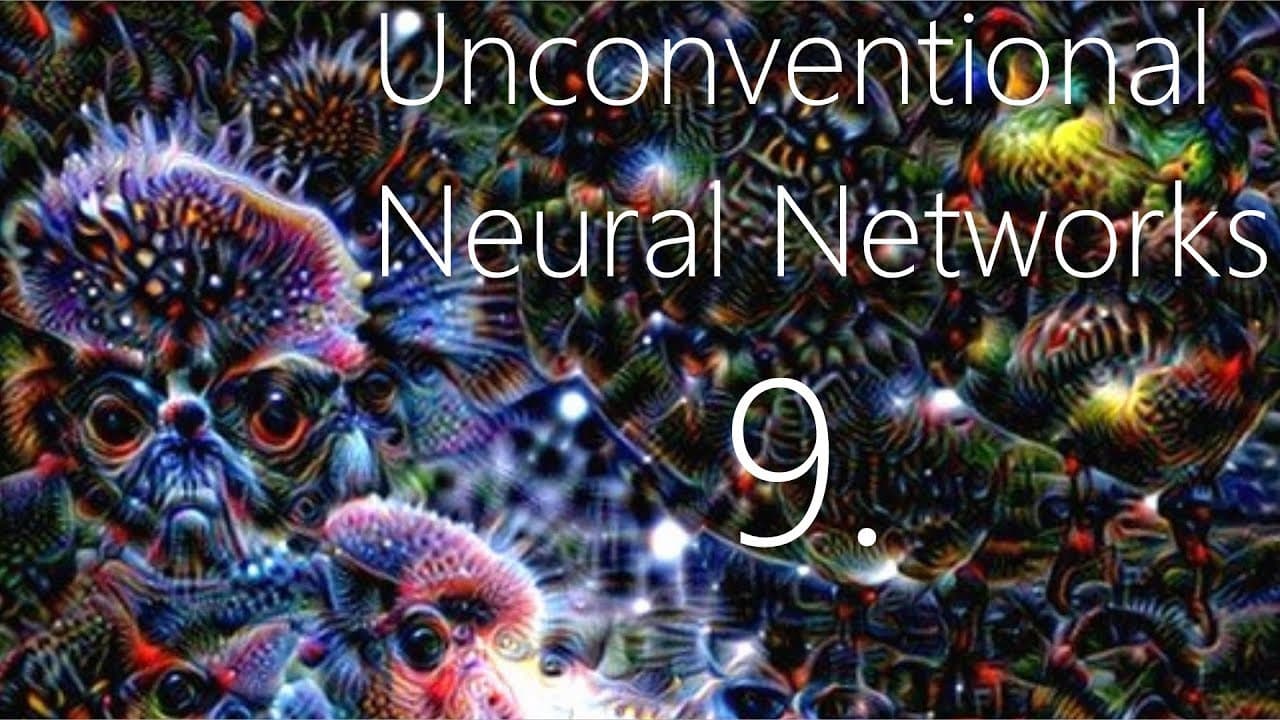
what's going on everybody and welcome to part 9 of our unconventional neural network series in this part we're going to be wrapping up the deep dream and creating a video from the frames of our deep dream so what we can see here is that we've got about 127 frames in and exemplified here is what I was talking about where it slowly gets darker and da... Read More
Key Insights
- 🎮 Deep Dream frames can be converted into videos using Python and OpenCV.
- 🎮 The codecs used for video conversion may vary depending on the operating system.
- 🎮 It is important to specify the inputs, frames per second, and video size for accurate and desired video output.
- 📁 Iterating through the frames can be done using range and looping through directory files.
- 🎮 Deep Dream frames can get darker as the video progresses, which may need to be resolved during the conversion process.
- 📁 The length of the Deep Dream frames can be determined by counting the number of files in the specified directory.
- 🕴️ Python and neural networks are generally better suited for nonlinear tasks rather than linear tasks such as math.
Install to Summarize YouTube Videos and Get Transcripts
Explore YouTube Video Summarizer or Get YouTube Transcript Extractor
Questions & Answers
Q: What is the purpose of this tutorial?
The purpose of this tutorial is to teach viewers how to convert frames from Deep Dream into a video using Python and OpenCV.
Q: What is the significance of specifying the inputs and codecs?
Specifying the inputs and codecs is important for correctly processing the frames and ensuring compatibility with different operating systems.
Q: How does the tutorial determine the length of the Deep Dream frames?
The tutorial uses the number of files present in the specified directory to determine the length of the Deep Dream frames.
Q: Is there a more efficient way to iterate through the frames?
The tutorial acknowledges that there may be more efficient or Pythonic ways to iterate through the frames, but the current method uses a range and looping through directory files.
Summary & Key Takeaways
-
This video tutorial demonstrates how to convert frames from Deep Dream into a video using Python and OpenCV.
-
The tutorial explains how to specify the inputs, codecs, frames per second, and video size for the video conversion.
-
The tutorial also covers how to iterate through the frames, read and write each frame, and release the video file after the conversion.
Read in Other Languages (beta)
Share This Summary 📚
Summarize YouTube Videos and Get Video Transcripts with 1-Click
Try YouTube Summary with ChatGPT & Claude or YouTube Transcript Generator
Explore More Summaries from sentdex 📚

Summarize YouTube Videos and Get Video Transcripts with 1-Click
Try YouTube Summary with ChatGPT & Claude or YouTube Transcript Generator