What Can Nice People Learn From Machiavelli?
TL;DR
Machiavelli argued that good people fail because they insist on acting nicely, while the wicked win by using cunning, lies, charm and intimidation. His advice in The Prince is to keep good aims but borrow every trick from the most unscrupulous operators, because we are judged by what we achieve, not by what we intend.
Transcript
Machiavelli was a 16th century Florentine political thinker with powerful advice for nice people who don't get very far. His thought pivots around a central , uncomfortable observation: that the "wicked" tend to win; and they do so because they have a huge advantage over the "good": they are willing to act with the darkest ingenuity and cunning to ... Read More
Key Insights
- Machiavelli's central observation is that the wicked tend to win because they are willing to use the darkest ingenuity and cunning, and are not held back by principles, which he saw as rigid opponents of change.
- The common belief that being good requires good means as well as good ends is, in Machiavelli's view, splendid in theory but ineffective in practice, because nice princes, statesmen and merchants always come unstuck.
- The Prince is not a guide to becoming a tyrant. It is a guide to what nice people should learn from tyrants, a book about being effective rather than merely good.
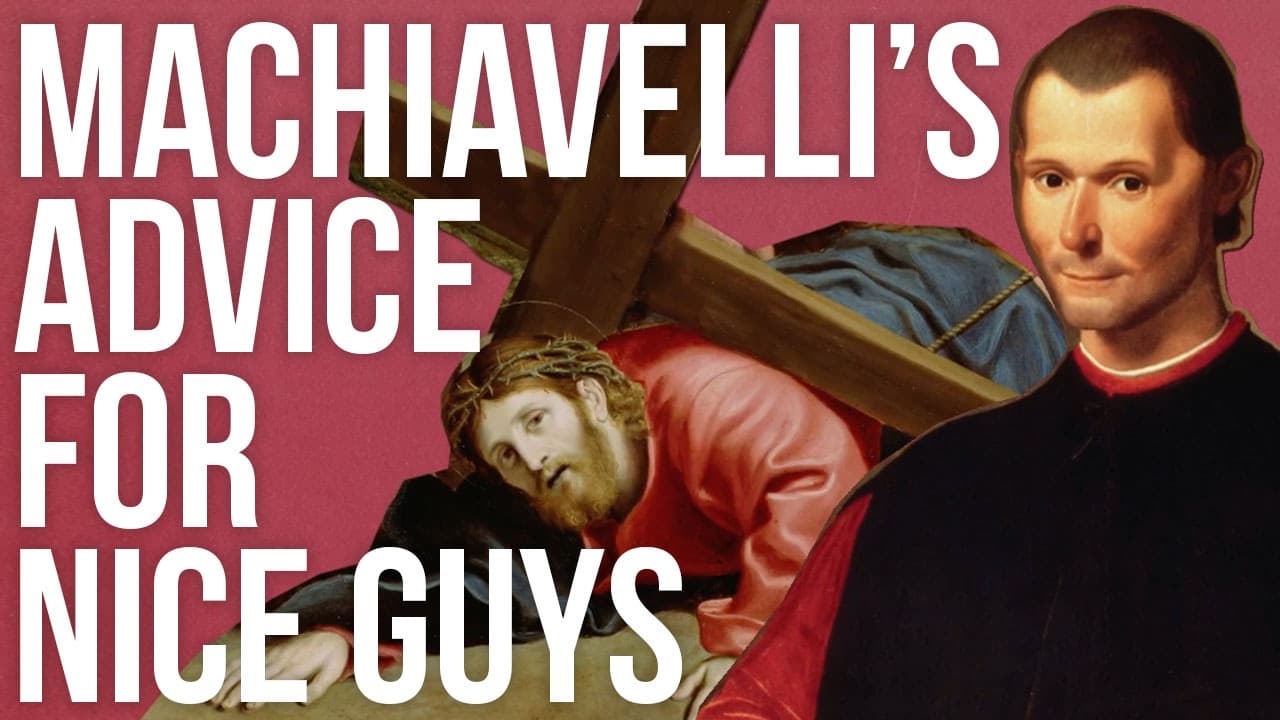
- Machiavelli traced the Western obsession with acting nicely to the Christian story of Jesus, whose gentle life he viewed, from a practical perspective, as a disaster of humiliation and mockery.
- Effective leaders, including today's CEOs, activists and thinkers, should know how to scare, intimidate, cajole, bully, entrap and beguile when a situation demands it, learning from the slickest operators around.
- People are ultimately the sum of what they achieve, not what they intend, so caring about virtue while only ever acting virtuously leads nowhere, according to Machiavelli.
- The most useful teachers are often those we temperamentally despise most, because our enemies know best how to bring about results, and good people need weapons of similar grade steel.
- Machiavelli disturbs readers because he challenges a self-serving story: that we failed because we were too pure and kind, when in fact we were too short sighted to learn from our enemies.
Install to Summarize YouTube Videos and Get Transcripts
Explore YouTube Video Summarizer or Get YouTube Transcript Extractor
Questions & Answers
Q: What is Machiavelli's advice for nice guys?
Machiavelli's advice is that nice people can keep good intentions but should never be overly devoted to acting nicely. They should learn every trick used by the most cynical, unscrupulous and nastiest people, including intimidation, charm, deception and distraction, and use them when needed. The goal is to be effective in changing the world for the better, not just well meaning.
Q: Why do the wicked tend to win according to Machiavelli?
According to Machiavelli, the wicked win because they have a huge advantage over the good: they are willing to act with the darkest ingenuity and cunning. They are not held back by principles. They will lie, twist facts, threaten and get violent, and they will also seductively deceive with charm and honeyed words, bedazzle and distract. In this way they conquer the world.
Q: Is The Prince a guide to being a tyrant?
No. The Prince is often thought of as a guide to tyranny, but it is better understood as a guide about what nice people should learn from tyrants. It is a short manual for well disposed princes on how not to finish last. The book focuses on how to be effective, not just good, and is haunted by examples of the impotence of the pure.
Q: Why did Machiavelli say acting nicely does not work?
Machiavelli looked back over the history of Florence and the Italian states and observed that nice princes, statesmen and merchants always came unstuck. The idea that good ends require good means, such as winning people through serious argument or gently persuading the unjust, sounds splendid. But he saw an incontrovertible problem with it: in practice, it fails against opponents willing to use any tactic.
Q: How did Machiavelli view the story of Jesus?
Machiavelli saw the Christian story of Jesus as the origin of the West's counterproductive obsession with acting nicely. He pointed out that from a practical perspective Jesus' life was an outright disaster: he was trampled upon, humiliated, disregarded, mocked and judged in his lifetime. Outside of any divine assistance, he was one of history's greatest losers, so the story is a poor model for effectiveness.
Q: What should modern leaders learn from Machiavelli?
Modern leaders such as CEOs, political activists and thinkers should learn every lesson from the slickest and most devious operators around. They should know how to scare and intimidate, cajole and bully, entrap and beguile when needed. The good politician should learn from the bad one, and the earnest entrepreneur from the slick one, so that good aims are actually achieved.
Q: Why should we learn from people we despise?
Machiavelli argues that the people we temperamentally most despise have the most to teach us about bringing about the reality we yearn for, even though they fight against it. They know what actually works. To compete, good people need weapons of similar grade steel to those of their enemies, rather than relying only on good intentions and a warm heart.
Q: Why does Machiavelli's thinking make people uncomfortable?
Machiavelli disturbs us because he probes where we are most self serving. We like to tell ourselves we did not succeed because we were a little too pure, good and kind. Machiavelli bracingly replies that we are stuck because we have been too short sighted to learn from those who really know how to win: our enemies. The true measure is what we achieve.
Summary & Key Takeaways
-
Machiavelli, a 16th century Florentine political thinker, observed that the wicked tend to win because they will lie, twist facts, threaten, use violence, and deceive with charm. Good people, bound by principles and committed to acting nicely, are routinely outmanoeuvred by opponents who feel free to use any method.
-
Looking at the history of Florence and the Italian states, Machiavelli saw nice princes, statesmen and merchants fail. He wrote The Prince as a manual for well disposed rulers on how not to finish last: be as nice as you wish in aims, but borrow every trick used by the most cynical people.
-
Machiavelli blamed the Christian story of Jesus for the West's attachment to meekness, calling his life a practical disaster. His lesson for leaders, CEOs and activists is to judge themselves by results, learn from those they despise, and care more about being effective than about being nobly intentioned.
Read in Other Languages (beta)
Share This Summary 📚
Summarize YouTube Videos and Get Video Transcripts with 1-Click
Try YouTube Summary with ChatGPT & Claude or YouTube Transcript Generator