How to Install Claudebot on AWS for AI Tasks
TL;DR
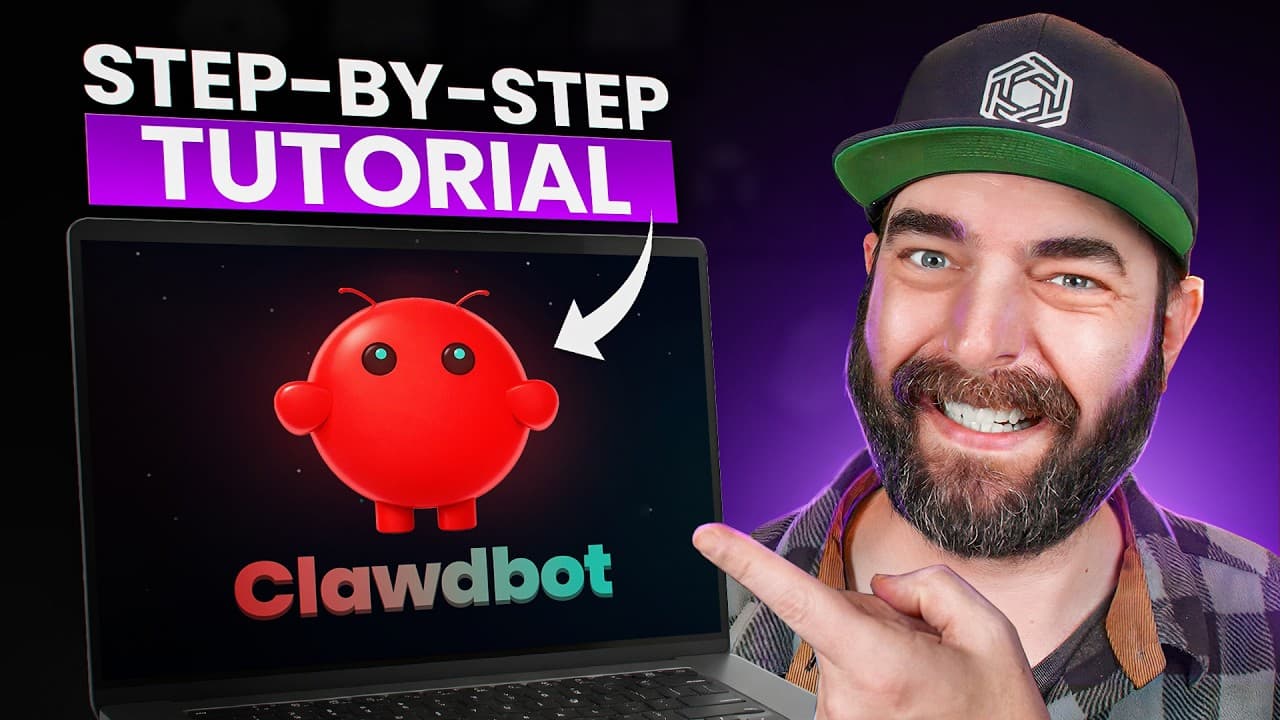
Claudebot is an AI assistant that can perform tasks on your behalf by running locally on your computer or a virtual private server. The video explains how to install Claudebot on an Amazon EC2 instance, highlighting its capabilities like persistent memory and self-improvement. Users should be cautious of security risks, such as prompt injection, and consider using a dedicated machine or VPS.
Transcript
Cladbot is taking the world by storm right now and it is absolutely blowing my mind as well as the minds of everybody that's using it. It is an AI assistant that not only gives you advice and you can chat with like the other bots, but it will actually go and take action and do things on your behalf better than anything I've ever seen before. And it... Read More
Key Insights
- Claudebot is an AI assistant capable of performing tasks autonomously.
- It can run locally on a computer or on a virtual private server (VPS).
- Claudebot has persistent memory, remembering user interactions across sessions.
- It is self-improving, capable of creating and using new skills autonomously.
- Installing Claudebot on a VPS like AWS EC2 is a safer option to mitigate risks.
- Security risks include potential prompt injection attacks and data exposure.
- Running Claudebot on a dedicated machine or VPS is recommended for security.
- Users should be aware of API costs when using external AI models with Claudebot.
Install to Summarize YouTube Videos and Get Transcripts
Explore YouTube Video Summarizer or Get YouTube Transcript Extractor
Questions & Answers
Q: How to install Claudebot on AWS?
To install Claudebot on AWS, create an AWS account and launch an EC2 instance with Ubuntu. Use the free tier for cost efficiency. Access the terminal, and follow the Claudebot setup instructions by pasting the provided command. Configure the instance with necessary API keys and communication channels, such as Slack, to complete the installation.
Q: What are the key features of Claudebot?
Claudebot's key features include running locally or on a VPS, persistent memory for retaining user interactions, full system access for executing commands, the ability to run scripts and install software, and self-improvement capabilities. It can control communication apps like Slack and has the potential to learn new skills autonomously.
Q: What security risks are associated with Claudebot?
Security risks with Claudebot include prompt injection attacks, where malicious commands could be executed, and exposure of sensitive data if not properly secured. It's crucial to run Claudebot on a dedicated machine or VPS, use a separate phone number and email for communication, and avoid giving it access to sensitive information.
Q: Why use a VPS for Claudebot?
Using a VPS for Claudebot is recommended to mitigate security risks. A VPS isolates Claudebot from your personal files and main system, reducing the risk of data exposure and system compromise. It also provides a controlled environment for running Claudebot, minimizing the impact of potential security vulnerabilities.
Q: What are the costs associated with using Claudebot?
While Claudebot itself is free and open-source, costs may arise from using external AI models and APIs, such as Claude Opus or OpenAI. Running Claudebot on a VPS may incur server hosting fees. Users should consider these potential expenses, especially if frequently accessing paid APIs for advanced AI functionalities.
Q: How does Claudebot improve over time?
Claudebot improves over time by learning from interactions and creating reusable workflows or skills. It can autonomously write code, install it, and begin using it, allowing it to adapt to user needs and enhance its capabilities. This self-improvement feature makes it a versatile tool for various applications.
Q: How does Claudebot integrate with communication platforms?
Claudebot integrates with platforms like Slack, Telegram, and WhatsApp, allowing users to control it remotely and receive updates. Users set up communication channels during installation, enabling Claudebot to respond to commands and perform tasks through these platforms, making it accessible from various devices.
Q: What are the broader implications of Claudebot for AI technology?
Claudebot represents a shift towards more autonomous AI applications, where AI assistants can perform tasks without constant human input. This evolution suggests a future where AI not only provides suggestions but also executes actions, potentially transforming industries by automating complex processes and enhancing productivity.
Summary & Key Takeaways
-
Claudebot is a powerful AI assistant that can perform tasks autonomously on your behalf. It can be installed locally or on a VPS, offering features like persistent memory and self-improvement. However, users should be cautious about security risks, such as prompt injection, and consider using a dedicated machine or VPS for safer operation.
-
Installing Claudebot on an Amazon EC2 instance is demonstrated, with steps including setting up an AWS account, launching an instance with Ubuntu, and configuring Claudebot. The video emphasizes the importance of understanding potential costs associated with API usage when integrating external AI models.
-
The video highlights Claudebot's capabilities, such as running scripts, accessing system files, and integrating with communication platforms like Slack. It also discusses the broader implications of AI assistants, suggesting they represent a significant shift towards more autonomous AI applications in the future.
Read in Other Languages (beta)
Share This Summary 📚
Summarize YouTube Videos and Get Video Transcripts with 1-Click
Try YouTube Summary with ChatGPT & Claude or YouTube Transcript Generator
Explore More Summaries from Matt Wolfe 📚






Summarize YouTube Videos and Get Video Transcripts with 1-Click
Try YouTube Summary with ChatGPT & Claude or YouTube Transcript Generator