How to Set Standards Without Seeking Approval
TL;DR
Set clear standards, honor your boundaries, and stop apologizing for expecting more than the bare minimum. Respect grows from presence, consistency, and self-respect, while approval based on constant accommodation can disappear as soon as you stop pleasing others. You do not need to become cruel or cold, but you must stop shrinking yourself to keep everyone comfortable.
Transcript
Welcome back to the Icirl Playbook and welcome back to our Icirl lessons from Icirl series where we explore the allure of some of the most iconic IT girls and see what it is that makes everyone so obsessed with them. By better understanding what makes them so magnetic, we can be inspired to adopt some of their mindset and values into our lives so t... Read More
Key Insights
- High standards are a form of self-respect when they reflect the quality of life and work you genuinely want. Because your life reflects what you tolerate, repeatedly accepting the bare minimum can establish expectations that work against your goals.
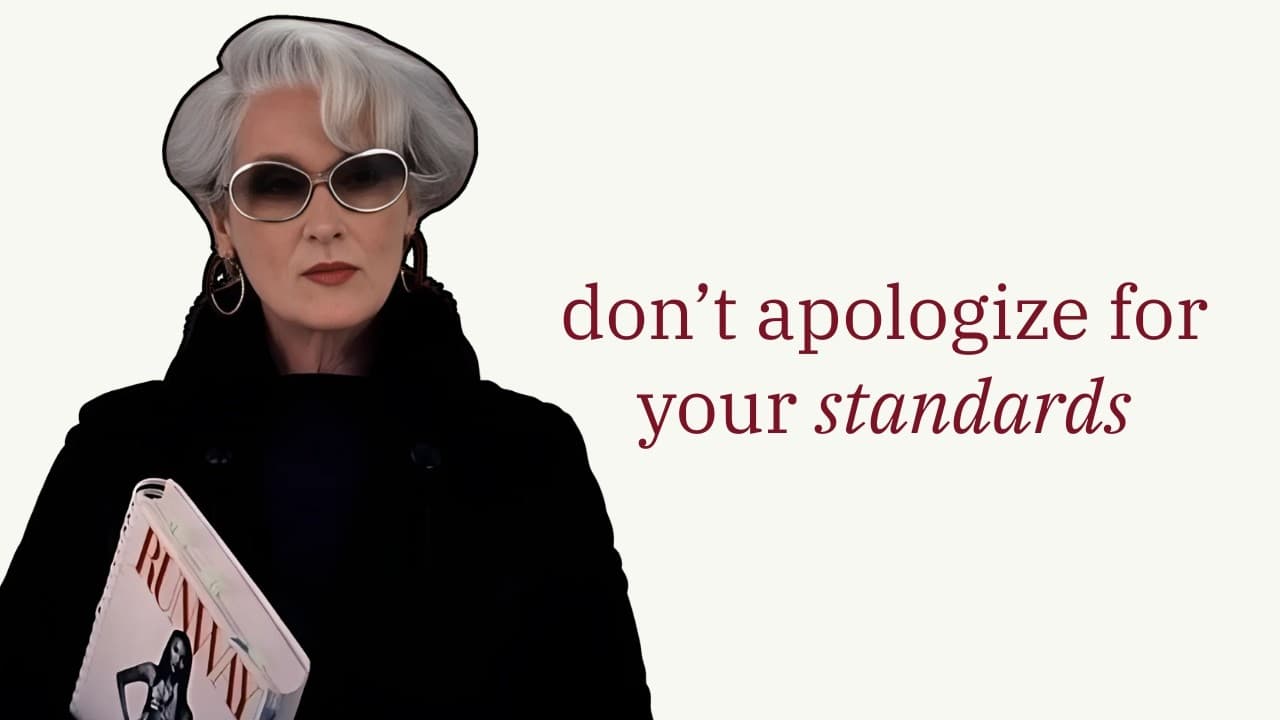
- Miranda Priestly’s authority is rooted in clarity about who she is, what she wants, and what quality she expects. Her intimidating presence does not depend on yelling or dramatic behavior, but on calm direction and an unwillingness to lower standards for someone’s comfort.
- Leadership requires responsibility for the quality of the final result. As Runway’s editor-in-chief, Miranda sets demanding expectations because she is accountable for what the magazine publishes, and she expects employees to rise to those standards or step aside.
- Likability is different from respect because making people comfortable does not guarantee that they will value your judgment. A person can be well liked and still not be taken seriously, especially when their approval depends on being consistently accommodating.
- Respect is built through presence, boundaries, and consistency. Unlike approval gained through people-pleasing, it does not require continually giving others what they want, and it allows a person’s words, recommendations, and expectations to carry lasting influence.
- Chasing approval gives away personal power because it encourages you to compromise your standards, values, identity, or boundaries. Stopping people-pleasing means accepting that some people may dislike your choices when you no longer organize your behavior around their comfort.
- Authenticity can create respect even when it challenges expectations. Rihanna is presented as bold and willing to correct others without trying to become America’s sweetheart, while Princess Diana is presented as choosing kindness over royal protocol despite criticism from the monarchy.
- Respect does not require cruelty, coldness, or meanness. The practical lesson is to stop shrinking yourself for approval, communicate expectations clearly, maintain boundaries consistently, and allow others to decide whether they will meet those expectations or step aside.
Install to Summarize YouTube Videos and Get Transcripts
Explore YouTube Video Summarizer or Get YouTube Transcript Extractor
Questions & Answers
Q: How can I set high standards without apologizing?
Treat your standards as an expression of the life and work you want, not as something that requires permission from everyone around you. Clarify what you expect, communicate it directly, and stop accepting the bare minimum merely to keep others comfortable. The transcript argues that your life reflects what you tolerate, so consistently honoring reasonable expectations is part of respecting yourself.
Q: What is the difference between being liked and respected?
Being liked often comes from making people comfortable and accommodating what they want, while being respected comes from presence, clear boundaries, and consistent behavior. Likability does not guarantee that others will take your judgment seriously. Approval can also disappear when you stop pleasing people, whereas respect gives your words, standards, and recommendations more durable influence.
Q: Why does chasing approval reduce personal power?
Chasing approval encourages you to shape your choices around other people’s comfort rather than your own values, standards, and boundaries. When keeping the peace becomes the priority, you may repeatedly compromise who you are. The proposed alternative is to stop people-pleasing, accept that not everyone will approve, and remain consistent about what you expect from yourself and others.
Q: How does Miranda Priestly demonstrate leadership?
Miranda demonstrates leadership by knowing what she wants, setting a demanding level of quality, and expecting employees to meet it. As Runway’s editor-in-chief, she is responsible for the work the magazine publishes, so her standards are tied to that responsibility. She communicates calmly and directly, does not chase people, and treats opportunity as a privilege rather than a pity favor.
Q: Do strong boundaries require being cold or cruel?
Strong boundaries do not require cruelty, coldness, or meanness. The lesson separates firmness from hostility: you can communicate what you expect, refuse the bare minimum, and correct someone when needed without deliberately mistreating them. Respect grows when boundaries are clear and consistent, not simply when a person intimidates others or makes them afraid of emotional outbursts.
Q: Why might people call a standards-driven person difficult?
People may label someone difficult, cold, or intimidating when that person stops accommodating every preference and begins requiring better behavior or stronger performance. From their perspective, firm expectations can feel uncomfortable because they demand effort or change. The transcript argues that universal approval is unnecessary, since the right people may respect consistent standards even when those standards do not make them comfortable.
Q: How can I stop people-pleasing while keeping relationships?
Stop compromising your identity, values, standards, and boundaries solely to preserve peace or maintain likability. Communicate expectations calmly, remain consistent, and accept that some people may react negatively when you no longer give them everything they want. The goal is not to become rude. It is to preserve self-respect while allowing relationships to be based on more than constant accommodation.
Q: What practical lesson can be taken from Miranda Priestly?
The practical lesson is to lead your own life with clear expectations and stop apologizing for wanting better than the bare minimum. Miranda’s useful strengths are certainty, consistency, and an unwillingness to chase approval, although the transcript also acknowledges her flaws. Applying the mindset means adopting those strengths without assuming that respect requires copying her coldness or every aspect of her behavior.
Summary & Key Takeaways
-
Miranda Priestly represents a form of influence built on certainty, demanding standards, and an unwillingness to chase approval. As Runway’s editor-in-chief, she expects people to recognize opportunity as a privilege and produce excellent work. Her authority comes from knowing what she wants and consistently refusing to accept less.
-
The central lesson is that likability and respect serve different purposes. Likability often depends on accommodating others and keeping them comfortable, while respect requires presence, boundaries, and consistency. People may call a standards-driven person difficult or intimidating, but the right people can still value their judgment and take their expectations seriously.
-
Applying the mindset does not require copying Miranda’s coldness or ignoring her flaws. It means treating yourself as the leader of your life, choosing standards that reflect the life you want, and refusing to compromise your values for approval. Self-respect begins with consistently honoring your expectations, boundaries, and identity.
Read in Other Languages (beta)
Share This Summary 📚
Summarize YouTube Videos and Get Video Transcripts with 1-Click
Try YouTube Summary with ChatGPT & Claude or YouTube Transcript Generator
Explore More Summaries from It Girl Playbook 📚



Summarize YouTube Videos and Get Video Transcripts with 1-Click
Try YouTube Summary with ChatGPT & Claude or YouTube Transcript Generator