How to organize your life with one notebook
TL;DR
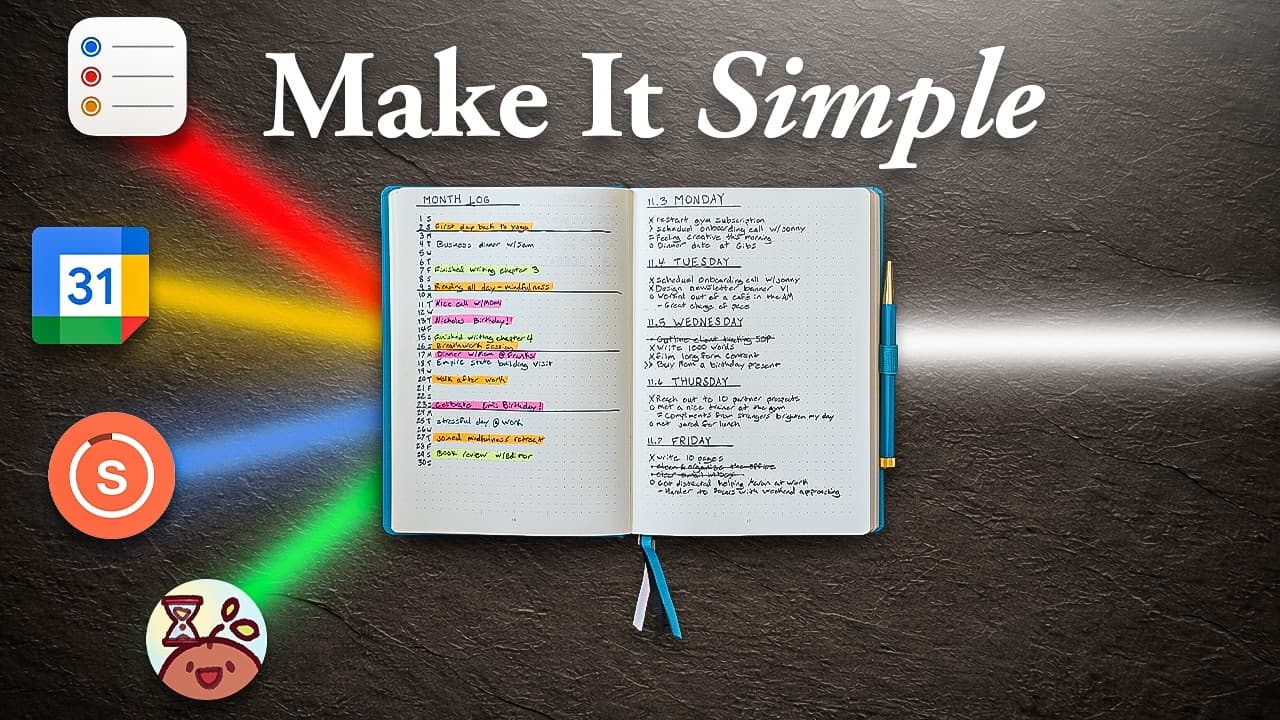
One notebook can replace many tools by using a simple, unified system. The method centers on naming to-dos as actions, writing by hand, and a daily to-do list with a top three focus. It also uses a monthly timeline, a small habit tracker, mood notes, and aims to reduce screen time.
Transcript
Growing up with ADHD, my life often felt really overwhelming. I always felt like I was behind or falling short. There was always something I should or could be doing better or more efficiently. So, I started trying to find a perfect app, spread, or productivity hack to finally feel organized and productive. But the more stuff that I added, the more... Read More
Key Insights
- Actions replace tasks to reduce friction and improve focus. The term action clarifies purpose and next steps.
- Handwritten entry creates longer-term time savings and discourages unnecessary tasks. It slows you down to work on what truly matters.
- A daily to-do list with a top three priority drives daily success and prevents overwhelm.
- Digital calendars lack feedback after the day passes, so a Bullet Journal timeline captures actual events.
- The monthly timeline shows what actually happened, not what was planned, aiding pattern recognition.
- Mood and events notes provide context to feelings, enabling better interpretation of states over time.
- Limiting habit tracking to three actions for 30 days makes behavior change feasible and sustainable.
- The notebook itself matters because the right medium supports consistent practice and reduces friction.
Install to Summarize YouTube Videos and Get Transcripts
Explore YouTube Video Summarizer or Get YouTube Transcript Extractor
Questions & Answers
Q: A real search query question about the video (e.g. 'How to...', 'What is...', 'Why does...', 'When should...'). Question 1
The Bullet Journal method replaces cluttered productivity stacks with a single notebook by focusing on actions, handwritten notes, and a simple daily routine. It emphasizes that friction, when applied to capture and planning, leads to better focus and follow-through. The video explains how to implement a daily date, a three-item top priority, and a monthly timeline to reflect reality rather than intention.
Q: Question 2
Question 2 asks how to name items in the notebook to improve execution. The answer is that calling items actions rather than tasks reduces friction and helps you stay oriented toward actual life outcomes. Writing by hand reinforces commitment and filters out irrelevant items, contributing to clearer priorities each day.
Q: Question 3
Question 3 covers the role of the daily to-do list. The answer states that writing down what you need to accomplish each day and highlighting the top three priorities helps ensure progress on what matters most. This approach prevents endless task accumulation and nudges you toward meaningful daily completion.
Q: Question 4
Question 4 explores why digital calendars can fail as productivity tools. The response explains that calendars predict outcomes rather than record what actually happened. The Bullet Journal uses a monthly timeline to log real events, enabling better pattern recognition and informed decisions about commitments.
Q: Question 5
Question 5 discusses the monthly timeline. It is described as a reflection of what actually happened, contrasting with traditional calendars. By logging noteworthy daily events, you gain an accurate record of your month that helps identify patterns and guide future actions.
Q: Question 6
Question 6 examines habit tracking. The answer emphasizes limiting to three small actions for a month and using the monthly log to track them. This restraint makes behavior change more feasible and sustainable, avoiding burnout from trying to change too many habits at once.
Q: Question 7
Question 7 asks about mood tracking within the Bullet Journal. The response notes that mood is recorded with context through notes about what you were doing or focusing on, creating a lightweight, contextual mood tracker that integrates thoughts, events, and feelings over time.
Q: Question 8
Question 8 inquires about the overall benefits of using one notebook. The answer highlights reduced screen time, fewer context-switching distractions, and a clearer, present workflow. The method centers on simplicity, direct practice, and the idea that the right notebook can replace many tools.
Summary & Key Takeaways
-
The system replaces multiple productivity tools with a single notebook, emphasizing minimal friction to capture what matters and clear daily focus. It encourages writing by hand and redefining tasks as actions to improve follow-through and life quality.
-
The monthly timeline records what actually happened each month, offering a truthful reflection that helps identify patterns and inform future commitments. Habit tracking is intentionally limited to a few small actions for a sustainable period.
-
Mood and event notes accumulate context over time, providing insight into behavior and emotions without overwhelming the user. The practice prioritizes presence and reduction of digital distractions while maintaining a flexible, enjoyable writing routine.
Read in Other Languages (beta)
Share This Summary 📚
Summarize YouTube Videos and Get Video Transcripts with 1-Click
Try YouTube Summary with ChatGPT & Claude or YouTube Transcript Generator
Explore More Summaries from Bullet Journal 📚




Summarize YouTube Videos and Get Video Transcripts with 1-Click
Try YouTube Summary with ChatGPT & Claude or YouTube Transcript Generator