Are Google and Bing in a Battle for Search Engine Supremacy?
TL;DR
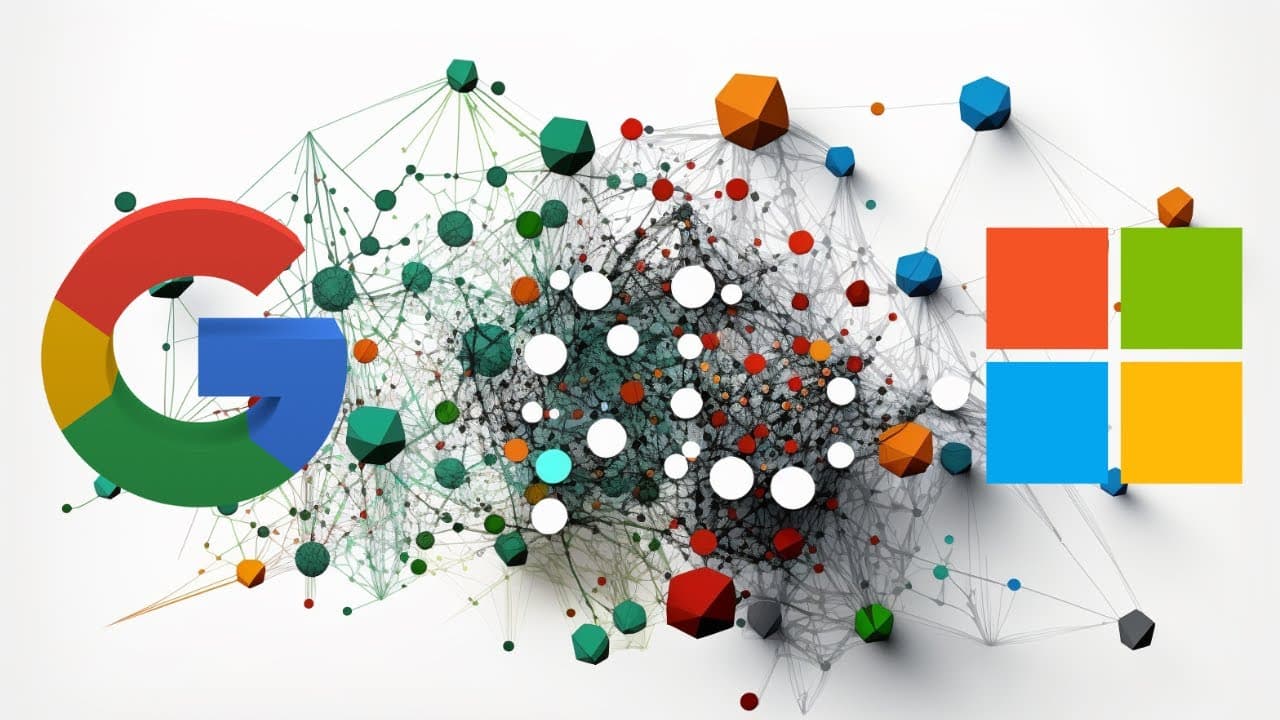
Google and Bing are competing fiercely in the search engine market, driven by advancements in AI technology like large language models. Microsoft's investment in OpenAI has bolstered Bing's capabilities, allowing it to challenge Google's long-standing dominance. As AI applications like ChatGPT gain popularity, the landscape of online search is rapidly evolving.
Transcript
ever since even before deep learning was a buzzword or something even many people were focusing on Google was at the Forefront easily the company with the most faith and energy being put into neural networks including through use in search results and linking content and all that but also for things like a Google Voice Assistant and so on in terms ... Read More
Key Insights
- 🔍 Google was a leader in deploying AI through neural networks, such as in search results and Google Voice Assistant.
- 🚀 Google authored important papers in AI, including "Attention is All You Need" and developed the BERT model architecture.
- 💰 Microsoft invested over $1 billion in OpenAI, which led to the development of GitHub Copilot, a powerful AI-powered programming assistant.
- ️ Speed is a crucial factor in the success of large language models like GitHub Copilot, and Google's dominance in search is partly due to its fast response time.
- 🆕 OpenAI's ChatGPT, a chatbot AI, quickly gained millions of users, leading to speculation that we may be entering the age of answer engines instead of search engines.
- 🔍 Google's dominance in search, with over 85% of the market share, is being challenged by Microsoft's Bing, especially with the rise of powerful AI applications like ChatGPT.
- 💼 Microsoft's investment in OpenAI and the success of ChatGPT give them a significant advantage in the search and answer engine market.
- 💥 Google's response to the competition includes developing their own large language model, Bard, but they face challenges in catching up to ChatGPT's success and maintaining their dominance.
- 🛑 However, Google's recent missteps, such as sharing incorrect information in an ad for Bard, suggest that they may be struggling to keep up with the rapid advancements in AI and search technology.
Install to Summarize YouTube Videos and Get Transcripts
Explore YouTube Video Summarizer or Get YouTube Transcript Extractor
Questions & Answers
Q: How has openAI's ChatGPT become a threat to traditional search engines like Google and Bing?
ChatGPT's ability to provide direct answers to user queries and its addictive user experience have made it a formidable contender in the search engine space. While search engines like Google and Bing rely on displaying search results, ChatGPT offers a more interactive and instantaneous answer engine experience that attracts users.
Q: Why is Google concerned about openAI's advances in AI and chatbots?
Google's dominance and revenue largely depend on its search engine. As openAI's ChatGPT gains popularity and users turn to it for direct answers, Google risks losing its user base and advertising revenue. Google needs to innovate and develop a comparable AI-powered search or answer engine to stay competitive in the market.
Q: How does Microsoft's involvement in openAI impact the competition between Google and Bing?
Microsoft's significant investment in openAI, along with its partnership in developing ChatGPT, gives Bing an edge in the search engine market. With plans to implement ChatGPT-like technology in Bing, Microsoft aims to become a leader in search and potentially overtake Google's market share.
Q: Is the era of traditional search engines coming to an end?
The rise of AI-driven models like GitHub Copilot and ChatGPT signals a shift towards more interactive and responsive answer engines. While traditional search engines may still serve a purpose, the demand for direct answers and personalized recommendations could diminish the importance of traditional search in the future.
Q: How does the speed and usability of large language models affect their success as search engines?
In addition to accuracy and relevance, the speed and responsiveness of large language models play a crucial role in user satisfaction. Google's success as a search engine was partly due to its speed and efficiency in delivering search results. Similarly, the success of ChatGPT and other AI-driven search engines will depend on their ability to provide fast and accurate answers to user queries.
Answer: OpenAI's ChatGPT, which attracted nearly 600 million visitors in just two months, has raised questions about the future of traditional search engines like Google. As ChatGPT offers direct answers and an addictive user experience, Google is concerned about losing its dominance in the search market. Microsoft's investment in openAI and plans to integrate similar technology into Bing further intensify the competition. While it is too early to predict the winner, these developments suggest a potential shift from traditional search engines to more interactive and personalized answer engines.
Summary & Key Takeaways
-
Google has been a leader in AI and deployed neural networks in various applications, including search, but other companies like openAI and Microsoft have emerged in the large language models space.
-
GitHub Copilot, a GPT-style model trained on programming code, has become a game-changing software application, while ChatGPT has gained immense popularity as an answer engine.
-
Microsoft's investment in openAI and its plans to implement a ChatGPT-like technology in Bing pose a threat to Google's dominance in the search market.
Read in Other Languages (beta)
Share This Summary 📚
Summarize YouTube Videos and Get Video Transcripts with 1-Click
Try YouTube Summary with ChatGPT & Claude or YouTube Transcript Generator
Explore More Summaries from sentdex 📚





Summarize YouTube Videos and Get Video Transcripts with 1-Click
Try YouTube Summary with ChatGPT & Claude or YouTube Transcript Generator