Why Do Police Power Struggles Escalate So Fast?
TL;DR
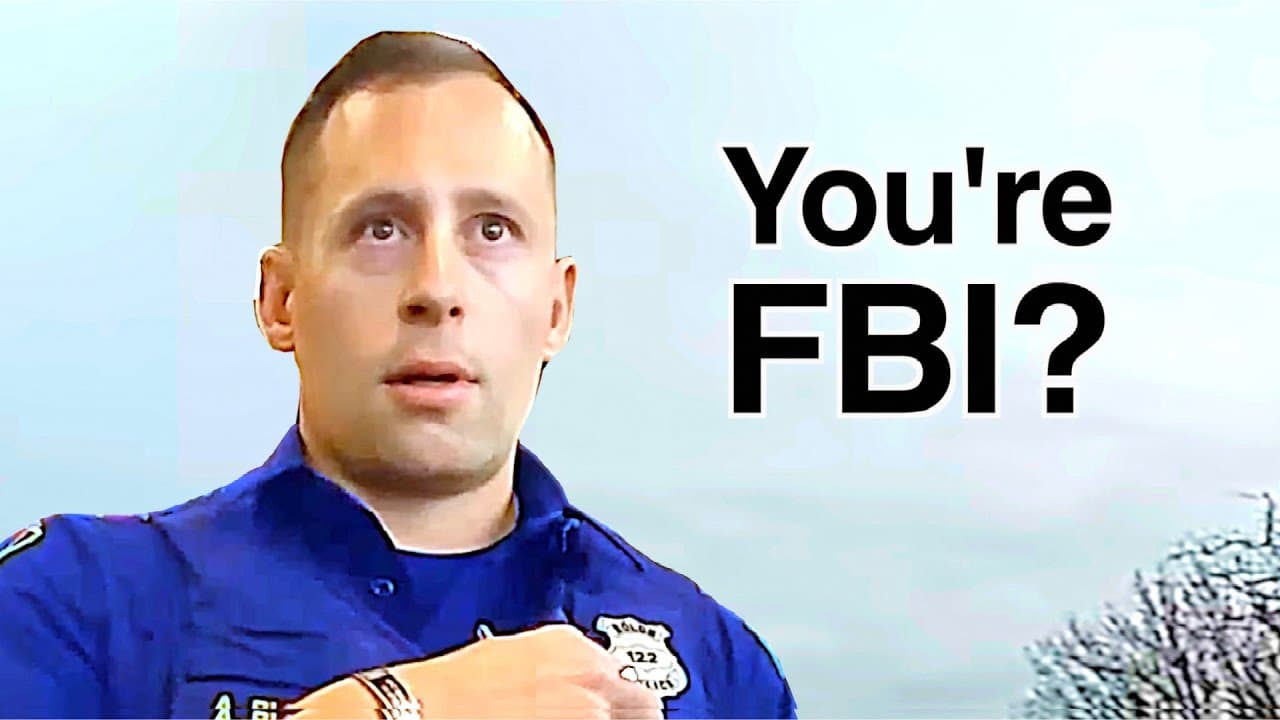
Police encounters can escalate when officers treat lawful explanations, uncertain suspicions, or interagency disagreements as challenges to their authority. One traffic stop involved a former FBI task force officer questioned over obstructed plates, emergency lights, and an FBI badge, while a separate jail dispute left officers arguing over booking priority, blocking vehicles, and threatening arrests as departments followed conflicting orders.
Transcript
cops are always trying to abuse their power but what happens when it's not civilians they're faced with but undercover FBI agents where'd you get this Federal Bureau of Investigation a US Air Force specialist and X FBI agent was pulled over for having a slightly obstructed license plate but when the cops found out who he was they started to look fo... Read More
Key Insights
- The first encounter began as a traffic stop for a reportedly obstructed license plate, but it expanded after the deputy questioned how quickly the driver had pulled over, whether weapons were present, what work he performed, and why his vehicle carried emergency-style lights.
- The driver identified himself as a former Nevada Department of Corrections employee, a security contractor, and a former FBI Safe Streets task force officer. He said he had contracted with the Department of Justice and Department of Homeland Security but was not currently employed by the federal government.
- The dispute over the vehicle lights centered on their presence and possible use. The driver said the lights supported contract work with law enforcement agencies, while officers asserted that red and blue lights could enable police impersonation and questioned whether merely possessing them violated Nevada rules.
- The FBI badge intensified the officers' suspicions after they found it during the encounter. The driver said a former employer had issued it, denied stealing or finding it, and explained that he lacked current federal credentials because he was no longer employed by the federal government.
- The commentary distinguishes possessing emergency lights from unlawfully activating them. It argues that the driver had not illuminated the lights during this incident and had not presented himself as a current FBI agent, making the officers' impersonation theory speculative according to the video's analysis.
- The jail confrontation followed severe overcrowding during a crime suppression procedure on July 16, 2022. After the county sheriff called off that procedure, booking priority reportedly placed local deputies first, state patrol officers second, and Columbus police officers last.
- The interdepartmental conflict escalated when Columbus patrol vehicles blocked Muscogee Deputy Blaine Atkins after he finished booking a suspect. Officers said they were following supervisor instructions, showing that the confrontation involved competing departmental orders rather than only a personal disagreement between individual officers.
- The operational consequences extended beyond the jail entrance because officers reported being unable to respond normally while the dispute continued. The transcript describes unanswered or delayed calls, jailers denying entry to police officers, supervisors separating personnel, and threats to arrest officers for obstruction.
Install to Summarize YouTube Videos and Get Transcripts
Explore YouTube Video Summarizer or Get YouTube Transcript Extractor
Questions & Answers
Q: Why was the former FBI task force officer pulled over?
A deputy said the vehicle's license plate was obstructed by an attached object that needed to be removed so the plate would remain visible from the required distance. The deputy also criticized the driver for not stopping immediately. The commentary disputes that criticism, arguing that a driver should pull over as quickly as safely possible rather than stopping where traffic or road conditions make doing so dangerous.
Q: Why did officers place the driver in handcuffs?
The officers placed the driver in handcuffs after noticing lights on his vehicle and asking whether he was a law enforcement officer. One officer later explained that red and blue lights could be used to impersonate police unless the person was a sworn officer. The transcript does not show a clear reason being given at the exact moment the handcuffs were applied, which the commentary presents as a central problem.
Q: What did the driver say about his connection to the FBI?
The driver said he had previously served as a task force officer with the FBI's Safe Streets operation and had performed contract work involving the Department of Justice, Department of Homeland Security, and other agencies. He did not claim to be a current federal employee. When asked why he lacked federal credentials, he answered that current credentials were unnecessary because he no longer worked for the federal government.
Q: Why did the driver have an FBI badge and emergency lights?
The driver said the FBI badge had been issued by a former employer and denied stealing or finding it. He described the vehicle lights as equipment required for some contract assignments, including work involving law enforcement agencies. The officers remained suspicious because the lights appeared to include red and blue colors, while the commentary emphasizes that the transcript does not show him activating them or claiming current police authority.
Q: Did the driver impersonate an FBI agent during the stop?
According to the video's commentary, the driver did not impersonate a current FBI agent. He consistently described his federal service as former work or contract work, acknowledged that he was not currently employed by the federal government, and explained the origin of his badge. The commentary argues that officers detained him because he might have misused the badge or lights, not because the footage established that he actually did so.
Q: What caused the conflict at the Muscogee County Jail?
The conflict developed during severe jail overcrowding on July 16, 2022, when many officers were waiting to book suspects. The transcript says the county sheriff had called off a crime suppression procedure that contributed to the influx. Booking priority placed local deputies first, state patrol officers second, and Columbus police officers last, frustrating Columbus officers when a deputy entered ahead of them under that stated order.
Q: Why were police vehicles blocking a deputy at the jail?
After Muscogee Deputy Blaine Atkins finished booking his suspect, he found his vehicle blocked by Columbus patrol vehicles. He said he needed to leave for a call and demanded that a car be moved. A Columbus officer responded that his supervisor had instructed him not to move, while the deputy said he was also following orders, turning the standoff into a conflict between departmental chains of command.
Q: How did the jail dispute affect police operations?
The dispute reportedly left officers at a standstill while calls remained pending. The transcript includes radio discussion about whether anyone could respond to a location on Forest Road, and officers said jailers would not let Columbus police personnel through the door. Supervisors also had to separate officers to prevent physical fights, while participants discussed arresting one another for obstruction and failing to perform their duties.
Summary & Key Takeaways
-
A deputy stopped a US Air Force specialist and former FBI task force officer because an object allegedly obstructed his license plate. The encounter expanded into questions about his work, vehicle lights, contractor status, FBI badge, and former assignments, followed by handcuffing and a search that the commentary describes as unjustified.
-
The stopped man said his vehicle lights were needed for contract work and that he had worked with the Department of Justice, Department of Homeland Security, and FBI. He denied being a current federal employee or impersonating an officer, explaining that his FBI badge came from his former employment as a Safe Streets task force officer.
-
A separate confrontation arose during overcrowding at the Muscogee County Jail on July 16, 2022. Local deputies were supposed to receive booking priority over state patrol and Columbus police officers. The resulting departmental dispute included blocked patrol cars, delayed calls, shouting, threatened obstruction arrests, and supervisors separating officers to prevent fights.
Read in Other Languages (beta)
Share This Summary 📚
Summarize YouTube Videos and Get Video Transcripts with 1-Click
Try YouTube Summary with ChatGPT & Claude or YouTube Transcript Generator
Explore More Summaries from Dr Insanity 📚
Summarize YouTube Videos and Get Video Transcripts with 1-Click
Try YouTube Summary with ChatGPT & Claude or YouTube Transcript Generator