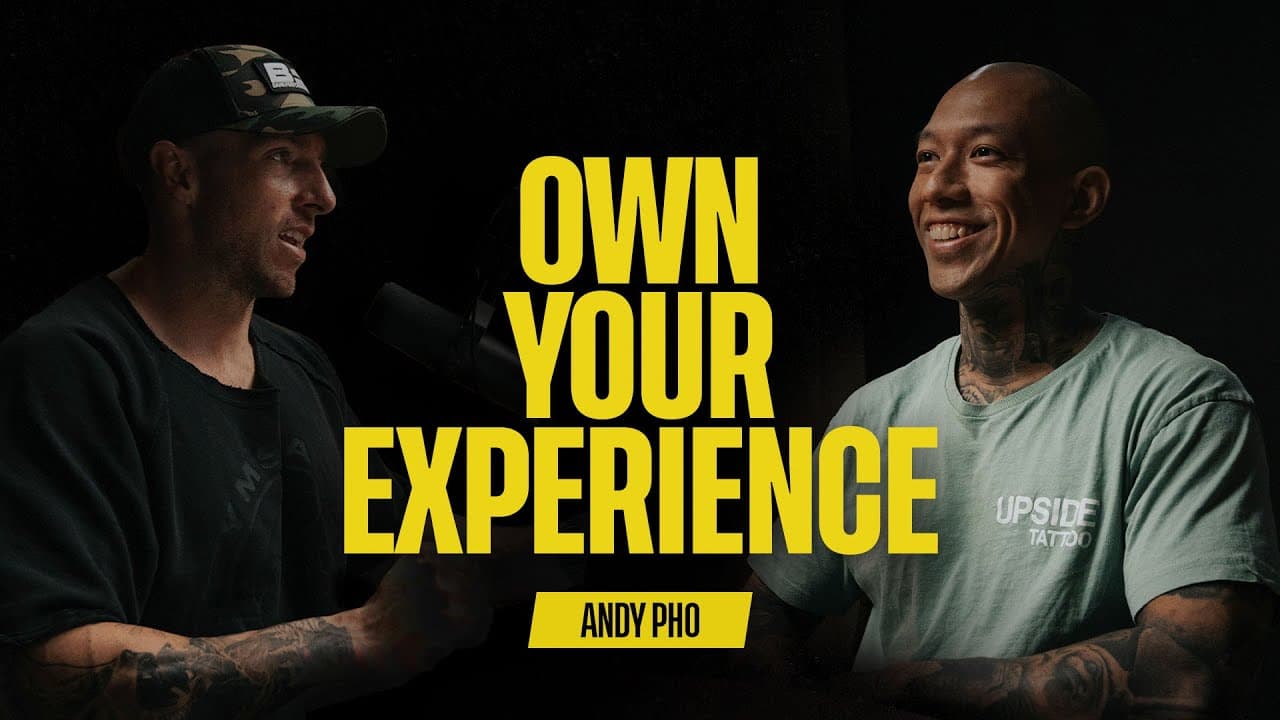
How Mindfulness Transforms the Tattoo Experience
TL;DR
A meaningful tattoo experience starts with careful listening, early design conversations, and an environment where clients feel calm enough to speak honestly. At Upside Tattoo, Andy Pho combines consultations, breath work, gratitude, quiet music, shared meals, and focused artistry to reduce anxiety, strengthen relationships, and create permanent work that expresses the client’s inner identity.
Transcript
imagine walking into a building all the walls are white and there's this music playing in the background that is instrumental in Zen it's loud enough to create this energy but it's soft enough to have deep meaningful conversation there's incense burning which you can smell throughout the entire place there's people drawing and painting on murals an... Read More
Key Insights
- Upside Tattoo is designed as a client-centered experience rather than a simple transaction. Andy Pho seeks to understand who each client is and what the tattoo should express, allowing the finished artwork to represent the person’s inner identity rather than merely reproducing a supplied image.
- Preparation begins before the client enters the studio. A FaceTime conversation establishes alignment, and a creative call roughly two weeks before the appointment gives the client and artist an opportunity to meet, exchange ideas, and reduce uncertainty about the permanent work ahead.
- The physical environment is intentionally calm and visually restrained. Bright white walls, plants, open space, incense, tea, and quiet instrumental music replace the loud entertainment, competing personalities, and abundant wall art often associated with more traditional tattoo shops.
- A shared gratitude circle creates connection before tattooing begins. At around 11:00, the artists and clients sit together, practice breath work, introduce themselves, and share something they appreciate before separating into their individual stations for the day’s work.
- The studio’s calm conditions are intended to support both artistic concentration and client comfort. Pho says relaxed clients sometimes fall asleep and may experience less swelling, redness, and bleeding, while artists can maintain creative focus without abrupt changes in music or atmosphere.
- Honest feedback depends on psychological comfort. Nick Bare recalls accepting an unwanted first tattoo design at age 18 because he felt intimidated, while his experience with Pho allowed collaborative design modifications and conversation before committing to the permanent artwork.
- The value of a tattoo can include the relationship behind it. Bare describes his finished piece as more than ink because the two-day session, conversations, shared lunch, and connection with Pho became part of how he understands the artwork.
- Upside Tattoo prioritizes relationships and creative experimentation over maximizing customer turnover. Pho acknowledges that the studio is not organized to fit as many clients as possible, but says its slower model gives artists time to listen, develop designs, and produce different work.
Install to Summarize YouTube Videos and Get Transcripts
Explore YouTube Video Summarizer or Get YouTube Transcript Extractor
Questions & Answers
Q: How does mindfulness improve the tattoo experience?
Mindfulness can improve tattooing by reducing the tension surrounding a permanent decision and creating conditions for honest communication. At Upside Tattoo, breath work, gratitude, quiet music, tea, and a calm visual environment help clients settle before the session. Andy Pho says this atmosphere also supports artistic focus, while relaxed clients may experience less swelling, redness, and bleeding during tattooing.
Q: What happens before an appointment at Upside Tattoo?
The experience begins before the client enters the studio. Andy Pho first uses a FaceTime conversation to understand the person, the desired artwork, and whether their expectations align. The shop’s consultant, Jasmine, passes client ideas to the artist, and a creative call roughly two weeks before the appointment allows both parties to meet, discuss the design, and reduce anxiety in advance.
Q: Why is communication important when designing a tattoo?
Communication helps an artist understand what the client wants the tattoo to represent, not merely what image should be placed on the skin. Pho emphasizes listening, asking precise questions, and giving clients room to offer feedback. This approach can prevent intimidated clients from accepting unsuitable designs and can produce work that more accurately expresses their identity, values, and intended meaning.
Q: What makes Upside Tattoo different from a traditional tattoo shop?
Upside Tattoo replaces a loud, visually crowded, transactional atmosphere with a bright, open, and intentionally restrained space. Clients remove their shoes, receive tea, discuss their designs, and join artists for breath work and gratitude. Calm instrumental music continues during tattooing, and everyone shares lunch, making the day feel communal and relationship-centered rather than focused on rapid customer turnover.
Q: Why does Upside Tattoo hold a gratitude circle?
The gratitude circle allows everyone to become acquainted before spending a full day together. At around 11:00, the artists and clients sit down, participate in breath work, state their names, and share something for which they are grateful. The practice lowers social barriers, establishes a calmer emotional tone, and creates a shared sense of connection before each group moves to its tattoo station.
Q: How can intimidation lead to a regretted tattoo?
Intimidation can prevent a client from voicing concerns even when a proposed design feels wrong. Nick Bare describes being 18, seeing a design he did not want, and approving it because the artist and shop made him uncomfortable. He was already thinking about eventual removal during the session. His story shows why clients need time, respectful dialogue, and explicit permission to request changes.
Q: What does Andy Pho value more than maximizing appointments?
Pho places greater value on relationships, meaningful experiences, client connection, and creative freedom than on fitting in as many appointments as possible. He acknowledges that Upside Tattoo is not the most profit-oriented model for rapidly moving people through a shop. The slower structure gives artists time to understand clients, experiment with ideas, concentrate on their work, and create pieces with personal significance.
Q: How does a calm studio environment support tattoo artists?
A calm studio helps artists sustain attention on the design instead of responding to competing music, loud conversations, or rapidly changing energy. Pho says the quiet, consistent atmosphere gives him space to create from a more focused place. It also provides time to connect with the client, explore new ideas, and produce work different from a repetitive design-and-apply workflow.
Summary & Key Takeaways
-
Andy Pho designed Upside Tattoo around connection rather than a purely transactional exchange. Clients discuss their identity and ideas before arriving, review designs in a relaxed setting, and receive opportunities to give feedback. This process helps the artist translate something internal and personal into permanent artwork while reducing uncertainty surrounding the appointment.
-
The studio uses a bright white interior, open space, plants, incense, quiet instrumental music, tea, breath work, and a gratitude circle to establish a calm atmosphere. Artists and clients spend the day together, including a shared lunch, creating community and allowing focused conversations to develop throughout an extended tattoo session.
-
Pho’s philosophy grew from working in several conventional tattoo shops and imagining the environment he would prefer as both an artist and client. His approach prioritizes relationships, communication, experimentation, and meaningful work over fitting in the most appointments. His personal journey, including time as a monk, also shaped this perspective.
Read in Other Languages (beta)
Share This Summary 📚
Summarize YouTube Videos and Get Video Transcripts with 1-Click
Try YouTube Summary with ChatGPT & Claude or YouTube Transcript Generator
Explore More Summaries from The Nick Bare Podcast 📚
Summarize YouTube Videos and Get Video Transcripts with 1-Click
Try YouTube Summary with ChatGPT & Claude or YouTube Transcript Generator