How to Make Calcium Hydroxide Efficiently
TL;DR
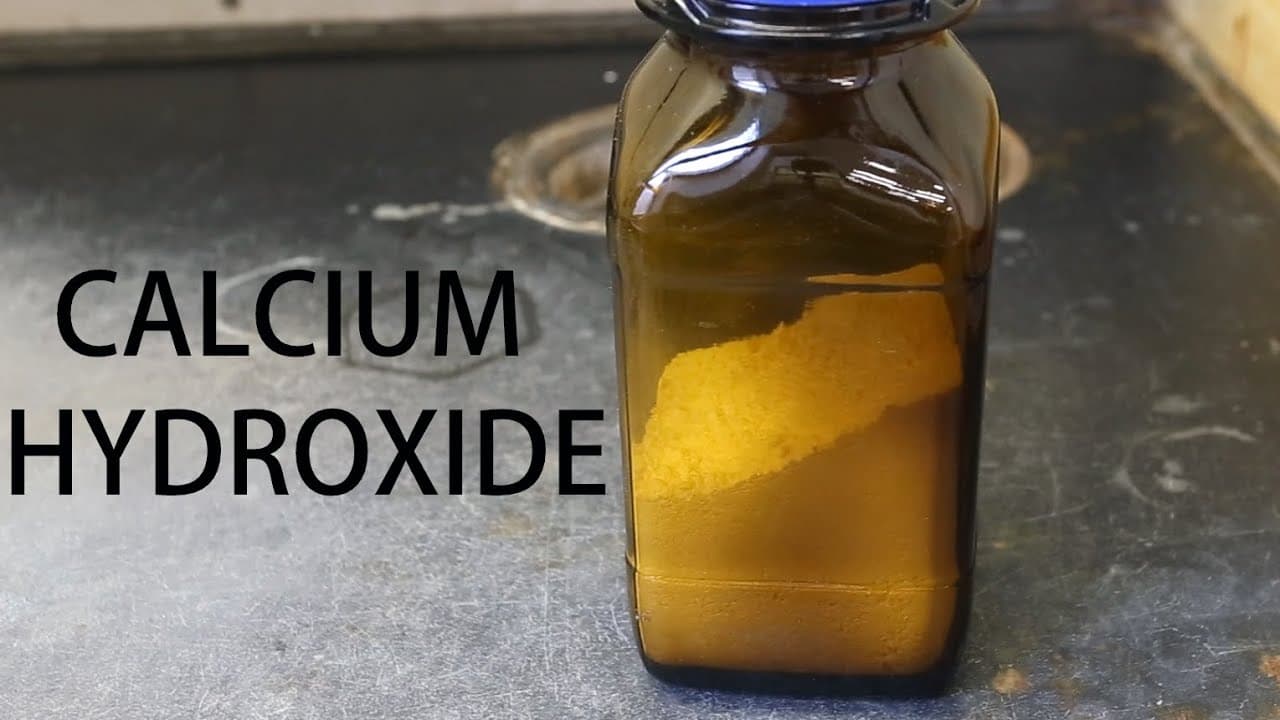
Calcium hydroxide can be made more efficiently from calcium chloride instead of calcium carbonate. The process involves reacting calcium chloride with sodium hydroxide, while the carbonate method, although accessible, is more wasteful. Calcium hydroxide precipitates from the solution, and after letting it sit, it can be collected and dried.
Transcript
calcium hydroxide is a relatively inert inorganic compound with a multitude of uses I'm most interested in using it to synthesize potassium chloride which I will show in a future video in the synthesis of calcium hydroxide we can either start from calcium carbonate or calcium chloride if we start from calcium carbonate it's actually quite a wastefu... Read More
Key Insights
- ❓ Calcium hydroxide can be synthesized from calcium carbonate or calcium chloride.
- ⌛ Starting from calcium chloride is more time-efficient and less wasteful.
- ❓ Excess sodium hydroxide is used to neutralize excess hydrochloric acid in the reaction.
- 💦 Calcium hydroxide is insoluble in water and precipitates from solution.
Install to Summarize YouTube Videos and Get Transcripts
Explore YouTube Video Summarizer or Get YouTube Transcript Extractor
Questions & Answers
Q: How do you make calcium hydroxide?
You react a soluble calcium salt with sodium hydroxide, and the calcium hydroxide immediately precipitates out because it is almost completely insoluble in water. In the carbonate route, calcium carbonate is first dissolved in excess hydrochloric acid to form calcium chloride, then sodium hydroxide solution is added to precipitate the calcium hydroxide. It is then decanted, dried, and crushed.
Q: What are the two methods for synthesizing calcium hydroxide?
You can start from either calcium carbonate or calcium chloride. Method 1 begins with calcium carbonate, which first has to be converted into calcium chloride using hydrochloric acid. Method 2 skips that step and starts directly from calcium chloride reacting with sodium hydroxide.
Q: Which starting material is better, calcium carbonate or calcium chloride?
Starting from calcium chloride is more time efficient and much less wasteful, so it is the recommended route. Calcium carbonate is only shown because it is easier for many people to obtain. The carbonate method is wasteful because you end up having to make calcium chloride from it anyway.
Q: What quantities of chemicals does the calcium carbonate method use?
About 180 g of sodium hydroxide is dissolved in about 300 mL of water, and about 360 mL of concentrated hydrochloric acid is added to about 500 mL of water. Around 200 g of crushed calcium carbonate is then weighed out and slowly added to the acid solution. Method 1 needs more sodium hydroxide than method 2 because of the excess acid.
Q: Why is excess sodium hydroxide used in method 1?
An excess of hydrochloric acid is used in the first step to fully dissolve the calcium carbonate, leaving the solution acidic. Extra sodium hydroxide is then needed to use up that leftover hydrochloric acid as well as to react with the calcium chloride. This ensures as much calcium hydroxide as possible is formed.
Q: How do you know the calcium carbonate has fully reacted with the hydrochloric acid?
You keep stirring until the solution completely clears, which indicates the calcium carbonate has reacted. The reaction produces calcium chloride, carbon dioxide, and water. The final pH of the solution should be acidic because an excess of hydrochloric acid was used.
Q: How is the calcium hydroxide collected and dried?
After adding the sodium hydroxide solution, the mixture is stirred and left to sit for several hours so the water separates from the calcium hydroxide. As much water as possible is decanted off, and the solid is poured into a large dish. It is then dried in an oven at about 100 degrees C for several hours before being chipped off, crushed, and bottled.
Q: Do you need to scrape every bit of calcium hydroxide out of the beaker?
No. The process yields a large amount of calcium hydroxide for very little money, so scraping out every last bit is not considered worth the time. Some residue can simply be left in the beaker.
Summary & Key Takeaways
-
Calcium hydroxide can be synthesized from either calcium carbonate or calcium chloride, but starting from calcium chloride is more efficient.
-
Method 1 involves reacting calcium carbonate with hydrochloric acid and sodium hydroxide, while method 2 only requires the reaction between calcium chloride and sodium hydroxide.
-
The calcium hydroxide precipitates from solution and can be collected after separating it from water.
Read in Other Languages (beta)
Share This Summary 📚
Summarize YouTube Videos and Get Video Transcripts with 1-Click
Try YouTube Summary with ChatGPT & Claude or YouTube Transcript Generator
Explore More Summaries from NileRed 📚

Summarize YouTube Videos and Get Video Transcripts with 1-Click
Try YouTube Summary with ChatGPT & Claude or YouTube Transcript Generator