What Is the Mindset Doctor's Approach to Trauma and Success?
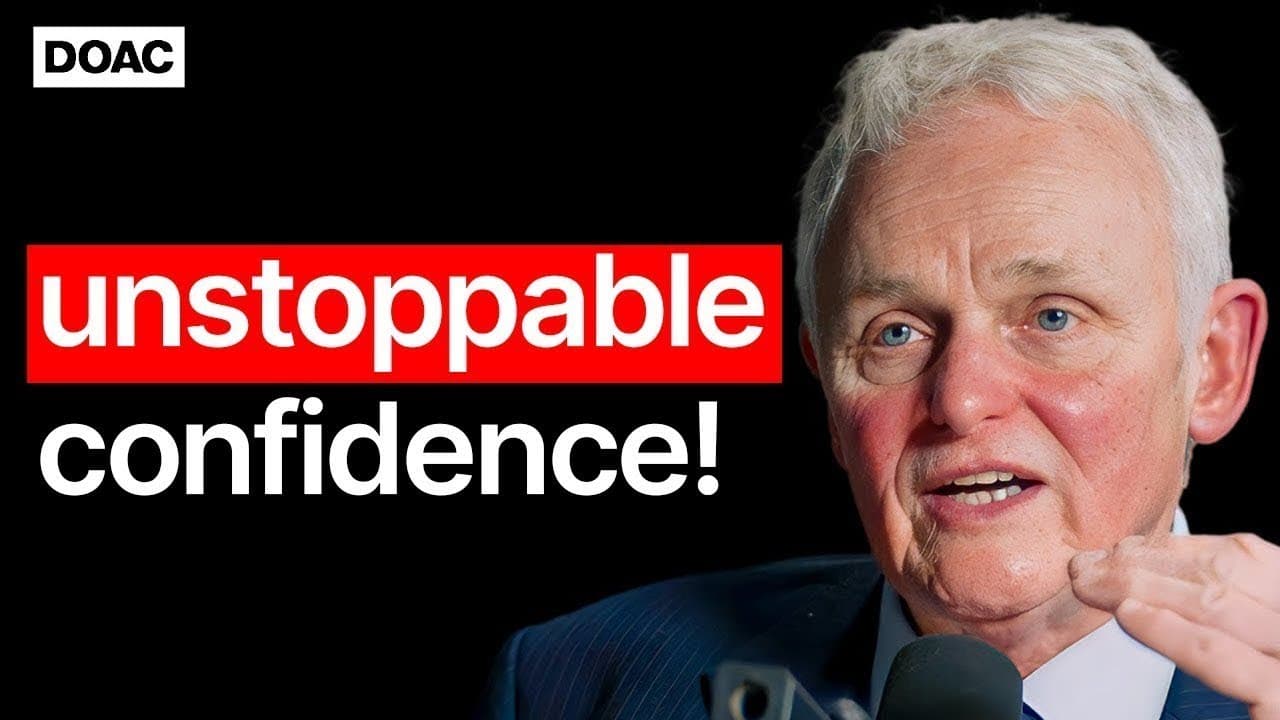
TL;DR
Professor Steve Peters, a leading psychiatrist, explains that trauma can significantly impact beliefs and self-esteem, leading to psychological challenges. He emphasizes the importance of psychological mindedness and acceptance to manage these beliefs, advocating for self-awareness and understanding of the different brain systems to achieve success.
Transcript
we have beliefs within us that are just too hard to remove and they may have come from traumatic experiences let's learn how to put it in a box Professor Steve Peters he's a world leading psychiatrist the author of a number of very influential books including the chimp Paradox a man who has helped multiple British athletes I've been seeing Steve fo... Read More
Key Insights
- 🧠Psychiatrist Steve Peters helps individuals manage their minds and beliefs to achieve success in various areas of life, including sports. He emphasizes the importance of understanding and working with the different systems of the brain: the human system, the chimp system, and the computer system.
- 🏆To succeed, individuals must develop psychological mindedness and understand that it's not about what happens to them in life, but how they deal with it.
- 😢Early childhood trauma can shape how individuals respond to situations later in life. Emotional memories begin to form in fetal life, and trauma during childhood can lead to low self-esteem or other emotional challenges.
- 💼Steve Peters has a diverse academic background with multiple degrees, including in mathematics, medicine, and psychiatry. He has specialized in areas such as sports medicine and medical education.
- ♂️As a psychiatrist, Peters has worked with numerous athletes in sports such as cycling and swimming, helping them overcome mental barriers and improve their performance by managing their minds effectively.
- 🧩Managing the chimp system, which is impulsive and emotionally driven, is key to achieving success. Through self-awareness, recognizing emotions, and developing skills, individuals can learn to manage their chimp system and make rational decisions.
- 🤝Apologizing and accepting responsibility for actions is crucial for maintaining healthy relationships and resolving conflicts. It is not a sign of weakness but rather a way to prioritize the relationship over being right.
- 😔Some traumas and deeply ingrained beliefs may be challenging to overcome completely. It is essential to accept the damaged circuits in the brain and focus on managing and working with them rather than constantly striving for complete change.
- 💪Building self-esteem involves understanding the natural tendencies of the chimp system, recognizing the need for acceptance from others, and developing a sense of self-worth that is not dependent on external validation or comparisons to others. #psychiatry #mindmanagement #trauma #selfesteem #success #apologies #chimpsystem #brain #relationships #challenges
Install to Summarize YouTube Videos and Get Transcripts
Explore YouTube Video Summarizer or Get YouTube Transcript Extractor
Questions & Answers
Q: How does trauma influence our beliefs and self-esteem?
Trauma can deeply impact our beliefs and self-esteem, leading to feelings of inadequacy and low self-worth. Negative experiences can become intertwined with our emotions, creating damaging beliefs that are difficult to shake off.
Q: What is the role of psychological mindedness in overcoming trauma?
Psychological mindedness is essential in understanding that our beliefs are not necessarily based on reality. By recognizing this, we can begin to challenge and change these beliefs, leading to healing and personal growth.
Q: Can trauma be fully overcome, or are there limitations to healing?
While some traumas can be fully healed, others may leave lasting effects on our beliefs. However, with acceptance and psychological mindfulness, we can learn to manage and work through these traumas, minimizing their impact on our lives.
Q: How can acceptance help in the healing process?
Acceptance allows us to acknowledge and make peace with our experiences, understanding that they are a part of our journey. By accepting our traumas, we can focus on healing and developing healthier beliefs that support our well-being.
Q: Are there specific strategies to build self-esteem after trauma?
Building self-esteem after trauma involves exploring our beliefs and challenging negative thoughts. Engaging in self-care, seeking support from loved ones, and practicing self-compassion are important strategies in rebuilding self-esteem.
Q: Can psychological mindfulness be applied to other areas of life, besides trauma and self-esteem?
Absolutely. Psychological mindfulness can be applied to various aspects of life, such as relationships, work, and personal growth. By being aware of our thoughts and beliefs, we can make conscious choices and navigate challenges with greater resilience.
Summary & Key Takeaways
-
Professor Steve Peters is a psychiatrist and author known for his work with athletes, helping them overcome psychological obstacles.
-
Traumatic experiences can shape our beliefs, leading to low self-esteem and a lack of confidence.
-
Acceptance and psychological mindedness are crucial in managing trauma and developing healthy beliefs and self-esteem.
-
Traumatic experiences can deeply impact our beliefs and self-esteem, leading to long-lasting psychological repercussions.
-
Accepting and acknowledging these beliefs is the first step in managing and healing from trauma.
-
Psychological mindedness and understanding that our beliefs are not necessarily based on reality allow us to develop healthier beliefs and build self-esteem.
Read in Other Languages (beta)
Share This Summary 📚
Summarize YouTube Videos and Get Video Transcripts with 1-Click
Try YouTube Summary with ChatGPT & Claude or YouTube Transcript Generator
Explore More Summaries from The Diary Of A CEO 📚






Summarize YouTube Videos and Get Video Transcripts with 1-Click
Try YouTube Summary with ChatGPT & Claude or YouTube Transcript Generator