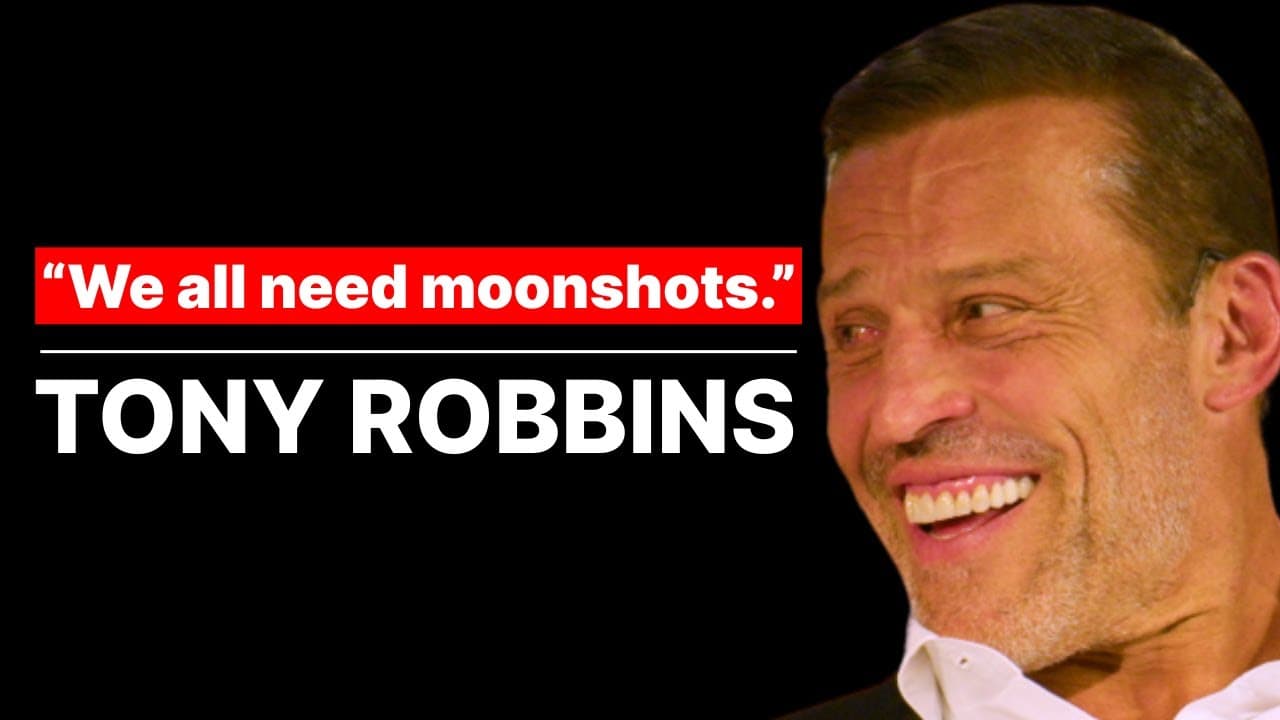
Tony Robbins on How to Change Your Life Patterns | All-In Live from Miami
TL;DR
Tony Robbins says changing your life begins by changing the meaning and patterns that shape your responses. At age 11, a stranger’s Thanksgiving food delivery taught him to interpret hardship as evidence that people care, while his three-stage approach to mastery is to recognize, utilize, and create patterns. He also argues that lasting transformation requires both energy and strategy. Read on for his practical framework.
Transcript
Our next guest needs no introduction. Tony Robbins. You have to figure it out. Like I always say, if you want to take the island, you burn the boats. I got a chance to work with the president of the United States. Uh Clinton, and he calls me one day, true story, and says, "Tony, they're going to impeach me in the morning." How many of you ever achi... Read More
Key Insights
- The meanings people give to events determine their lives more than the events themselves. Deciding whether a setback is an end or a beginning, or whether someone is dissing or coaching you, shapes the outcome you experience.
- Mastery is built in three stages: first recognize patterns so chaos becomes readable, then utilize those patterns for the power of anticipation, and finally create your own patterns, which is when you become masterful.
- There is nothing wrong with people; they simply get caught in patterns repeated so long they mistake them for their identity. Changing the person feels hard, but changing a pattern is comparatively easy.
- Real change requires both energy and strategy. Energy alone is just a pump-up that fades, while strategy without energy never moves; combining them is what rewires how the brain works so results last.
- Expectations are a major source of unhappiness, and social media amplifies them by showing the young generation wealthy lifestyles that reset what they believe they should have, leaving them feeling they have nothing.
- Trading expectations for appreciation changes your life. You cannot live without any expectations, but shifting toward gratitude for what exists reverses the dissatisfaction that comparison creates.
- A single act of kindness from a stranger who wanted no credit rewrote Robbins's belief that no one cares, teaching him that strangers do care and that he should care about strangers in return.
- Robbins learned practical psychology young by managing his mother's volatile emotional states, and later built a career turning around athletes, entrepreneurs, and even a president who faced impeachment by helping them figure things out.
Install to Summarize YouTube Videos and Get Transcripts
Explore YouTube Video Summarizer or Get YouTube Transcript Extractor
Questions & Answers
Q: How does Tony Robbins say you can change your life patterns?
Robbins says to first recognize patterns so that apparent chaos becomes understandable, then utilize those patterns to anticipate outcomes. The final stage is creating your own patterns, which he describes as mastery. He also says lasting change requires both energy and strategy.
Q: What does Tony Robbins mean by “the meanings we give to things”?
Robbins argues that events do not determine your life as much as the meanings you assign to them. Deciding whether something is an ending or a beginning, or whether someone is dismissing, coaching, or loving you, shapes how you respond and what follows.
Q: How did a Thanksgiving experience change Tony Robbins’s life?
When Robbins was 11, his family had only crackers and peanut butter for Thanksgiving after his father lost his job. A stranger delivered groceries and a frozen turkey without seeking credit, which Robbins interpreted as proof that strangers care. He then promised himself that he would someday feed at least two families.
Q: How did Tony Robbins get started in self-help and coaching?
Robbins says growing up with a powerful but sometimes violent mother made him a practical psychologist because he had to manage her emotional states and protect his younger siblings. He was also inspired by Jim Rohn and began studying patterns in behavior and success. As others saw his results, coaching became his focus and career.
Q: Why does Tony Robbins say patterns are the key to mastery?
Robbins says skilled investors, business leaders, dancers, and musicians succeed by recognizing recurring patterns. Recognition makes situations more readable, utilization creates the power of anticipation, and creating new patterns marks the point of mastery.
Q: Why do people struggle to change, according to Tony Robbins?
Robbins says people repeat patterns for so long that they begin to mistake those patterns for their identity. He argues that there is nothing fundamentally wrong with the person: the pattern is the problem. Changing a pattern is therefore more manageable than trying to change an entire person.
Q: What roles do energy and strategy play in Tony Robbins’s method?
Robbins says energy is necessary because nothing changes without it, but energy by itself produces only a temporary boost. Strategy without energy also fails to create movement. Combining the two is intended to rewire how the brain works and make change last.
Q: What does Tony Robbins recommend instead of chasing expectations?
Robbins recommends trading expectations for appreciation. He acknowledges that people cannot eliminate every expectation, but says focusing on gratitude for what already exists can reverse dissatisfaction. This shift also counters the comparison encouraged by displays of wealthy lifestyles on social media.
Summary & Key Takeaways
-
Robbins grew up in a tough Los Angeles environment with several father figures and a powerful but sometimes violent mother, becoming a practical psychologist as a boy by learning to manage her emotional states and get things done for his younger siblings.
-
At eleven, on a foodless Thanksgiving, a stranger delivered groceries and a turkey. His father took it as humiliating charity and later left, but Robbins reframed it as proof that strangers care, vowing to one day feed families himself.
-
He studied patterns across investing, business, and performance, learned to recognize, utilize, and create them, and turned that skill into coaching athletes, entertainers, and entrepreneurs. He argues meaning, energy plus strategy, and appreciation over expectation drive lasting change.
Read in Other Languages (beta)
Share This Summary 📚
Summarize YouTube Videos and Get Video Transcripts with 1-Click
Try YouTube Summary with ChatGPT & Claude or YouTube Transcript Generator
Explore More Summaries from All-In Podcast 📚



Summarize YouTube Videos and Get Video Transcripts with 1-Click
Try YouTube Summary with ChatGPT & Claude or YouTube Transcript Generator