How Robinhood's Outage and Fed Rate Cut Affect You
TL;DR
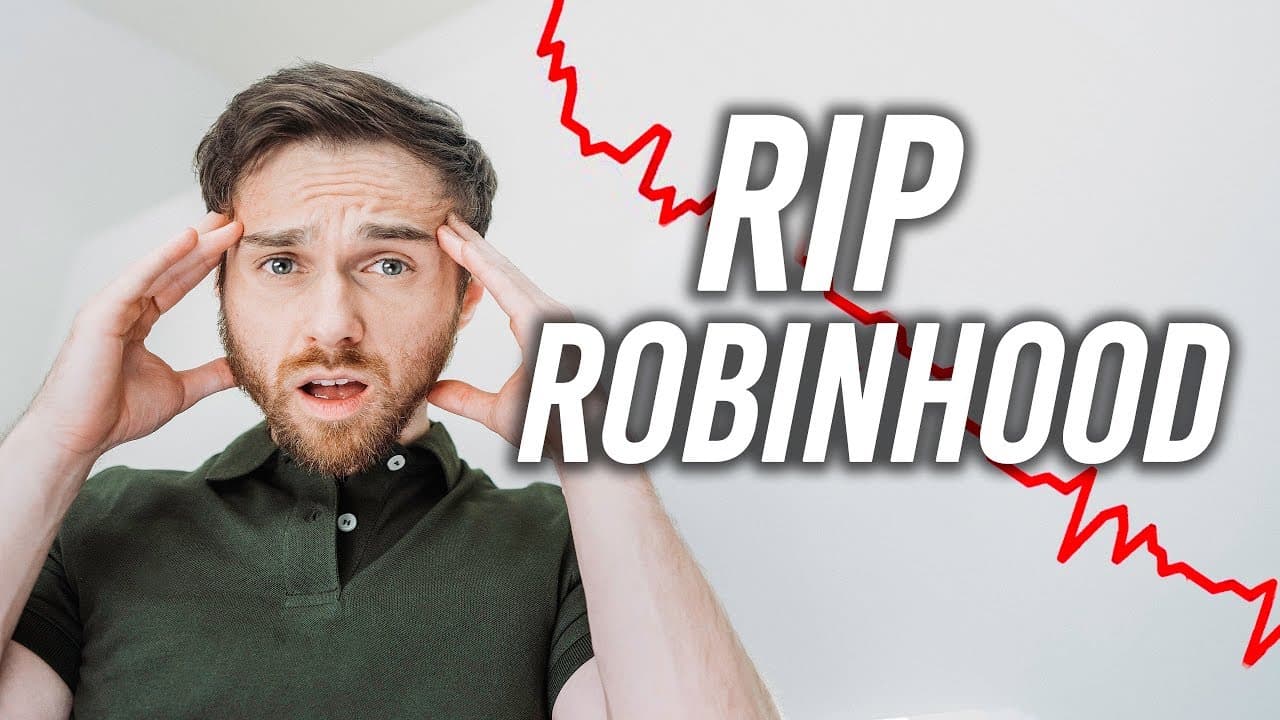
Robinhood's two-day service disruption prevented customers from trading during major market volatility, with options traders facing particularly severe losses. The company attributed the failure to overloaded infrastructure and a DNS breakdown, while the Federal Reserve's half-percentage-point rate cut reduced borrowing costs and prompted Robinhood to lower its uninvested-cash APY from 1.8% to 1.3%.
Transcript
The Robinhood trading app shuts down two days in a row, losing a ton of people money during the largest economic recovery since 2009. Also, the Fed has cut rates once again to prop up the economy as a result of what's going on in the world with the illness, and because the Fed has cut rates, Robinhood has dropped their APY down half a percent on al... Read More
Key Insights
- Robinhood's outage prevented millions of customers from buying and selling stocks or options during a major market rebound. The S&P 500 rose 4.6% on March 2, representing $1.1 trillion, so customers lost access at an unusually consequential time.
- Options traders were especially vulnerable because expiring or rapidly changing positions could not be closed while the application was unavailable. Some traders who held put contracts reportedly lost thousands of dollars when the market rose and they could not sell their positions.
- Robinhood's infrastructure failed under unprecedented activity, according to its co-CEOs. Heavy demand created a thundering-herd effect that triggered a DNS-system failure, contradicting rumors that the outage resulted from a leap-year coding error or a hack.
- Robinhood's initial compensation consisted of three free months of Robinhood Gold for customers who already subscribed when the outage occurred. Since Gold cost $5 per month, that benefit was worth $15 and did not address non-subscribers or necessarily match customers' trading losses.
- Affected customers can submit their circumstances through Robinhood's contact page for case-by-case consideration. The presenter notes that support was experiencing degraded performance, while criticizing the company's delayed communication and its failure to provide timely assistance during the disruption.
- An ACATS transfer moves investments from Robinhood to another brokerage without selling the underlying stocks. Robinhood typically charges $75, but a competing brokerage may reimburse that fee, particularly when the customer is transferring a sizable account.
- Robinhood's cash APY fell from 1.8% to 1.3% after the Federal Reserve reduced rates. That half-percentage-point reduction means each $1,000 of uninvested cash earns $5 less annually, and interest is paid through one of Robinhood's six FDIC banking partners.
- Dollar-cost averaging is presented as more dependable than trying to predict the market's response to a Federal Reserve rate cut. Because prices can move sharply in either direction, consistently investing over time avoids relying on an uncertain attempt to identify the perfect entry point.
Install to Summarize YouTube Videos and Get Transcripts
Explore YouTube Video Summarizer or Get YouTube Transcript Extractor
Questions & Answers
Q: Why did the Robinhood trading app go down?
Robinhood's co-CEOs attributed the outage to stress on the company's infrastructure during unprecedented activity. The excessive load produced what they called a thundering-herd effect, which then triggered a failure in the DNS system. According to the account presented, rumors blaming a leap-year coding error or a successful hack were incorrect.
Q: How did Robinhood's outage affect investors?
The outage prevented millions of Robinhood customers from buying or selling stocks and options during important market movements. On March 2, the S&P 500 increased 4.6%, representing $1.1 trillion, while customers lacked normal access. Some users reported disappearing balances, and others reportedly lost thousands because they could not close positions when needed.
Q: Why were options traders hit hardest by the outage?
Options traders held time-sensitive positions that could gain or lose value rapidly as the market moved. Some customers had put contracts based on an expectation that stocks would decline, but the market rose instead. Because Robinhood was unavailable, they could not sell those positions, and some reportedly lost all the money committed to those contracts.
Q: What compensation did Robinhood offer after the outage?
Robinhood initially offered three free months of Robinhood Gold to customers who already subscribed when the disruption occurred. Gold normally cost $5 per month, making the stated benefit worth $15. The email did not describe equivalent compensation for non-subscribers, although Robinhood said this offer was only the start of its response.
Q: How can customers report losses caused by Robinhood's outage?
Customers personally affected by the outage were directed to visit robinhood.com/contact, sign in, and answer questions describing what happened to their accounts or trades. Robinhood said it would handle claims individually on a case-by-case basis. However, its email support was experiencing degraded performance, so customers could face delays in receiving a response.
Q: How can investors transfer stocks out of Robinhood?
Investors can request an Automated Customer Account Transfer Service, or ACATS, transfer to move their holdings to another brokerage. This process transfers the stocks themselves instead of selling them first. Robinhood typically charges $75, but the receiving brokerage may agree to reimburse that fee, especially when the transferred account has a sizable balance.
Q: How did the Fed rate cut affect Robinhood's cash APY?
After the Federal Reserve cut rates, Robinhood reduced the APY on uninvested cash from 1.8% to 1.3%, effective March 3. The half-percentage-point decrease reduces annual interest by $5 for every $1,000 held in cash. The interest comes from one of six FDIC banking partners that hold participating customers' money.
Q: Should investors buy stocks immediately after a Fed rate cut?
A Federal Reserve rate cut does not provide a certain signal about the stock market's next move. It can make borrowing cheaper and support economic activity, but it can also indicate concern about difficult conditions ahead. Because markets may rise or fall unpredictably, the presenter favors dollar-cost averaging by investing consistently instead of attempting to time purchases.
Summary & Key Takeaways
-
Robinhood experienced brokerage outages on March 2 and March 3, 2020, preventing millions of customers from buying or selling investments. The first outage coincided with a 4.6% S&P 500 increase representing $1.1 trillion, while the second disrupted trading for another two hours before service returned around noon.
-
Robinhood attributed the disruption to unprecedented demand that stressed its infrastructure, produced a thundering-herd effect, and caused its DNS system to fail. The company offered three free months of Robinhood Gold to existing subscribers and directed affected customers to contact support so their individual situations could be reviewed case by case.
-
The Federal Reserve cut its interest-rate range by half a percentage point to 1%–1.25% on March 3, 2020. Robinhood consequently reduced the APY on uninvested cash from 1.8% to 1.3%. Rather than interpreting rate cuts as reliable market signals, the presenter recommends investing consistently through dollar-cost averaging.
Read in Other Languages (beta)
Share This Summary 📚
Summarize YouTube Videos and Get Video Transcripts with 1-Click
Try YouTube Summary with ChatGPT & Claude or YouTube Transcript Generator
Explore More Summaries from Andrei Jikh 📚


Summarize YouTube Videos and Get Video Transcripts with 1-Click
Try YouTube Summary with ChatGPT & Claude or YouTube Transcript Generator