How Do New AIs Enable Real-Time Video Creation?
TL;DR
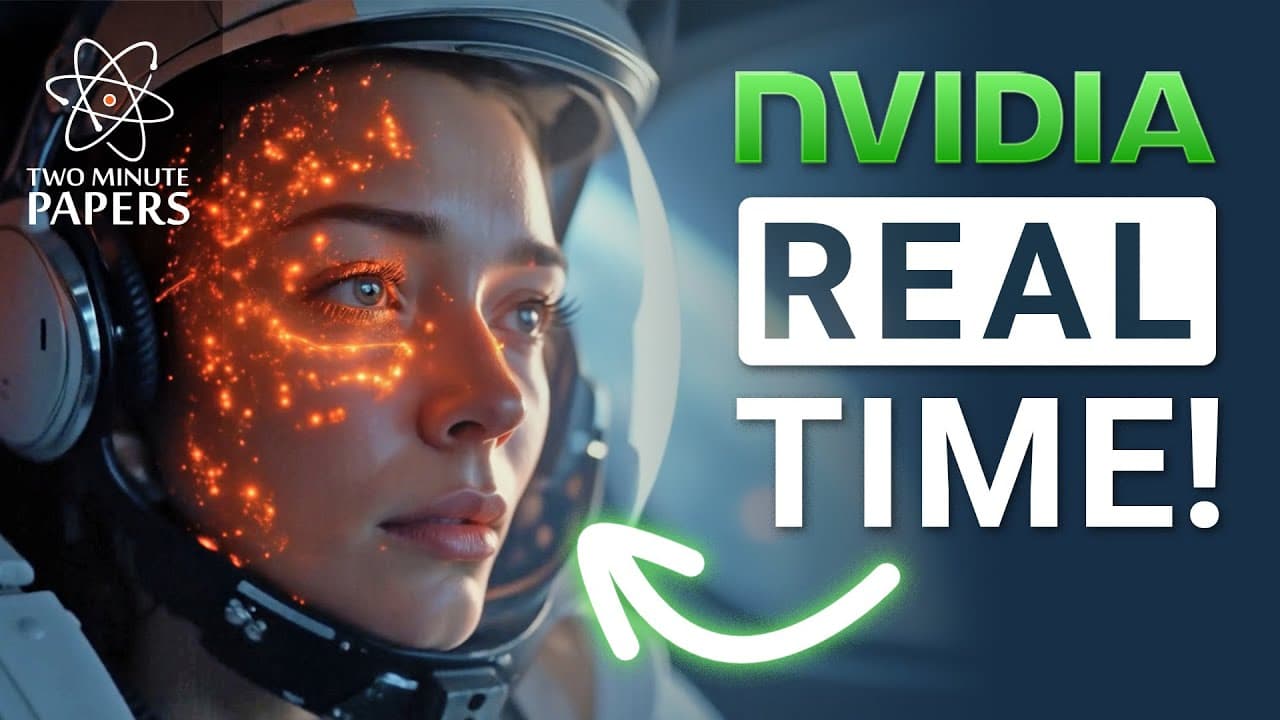
New text-to-video AI systems can generate video clips nearly in real time by first creating images from text prompts and then animating them. This innovative approach significantly speeds up video creation and addresses limitations such as character consistency, as seen with tools like Phantom, which preserves identity in generated content.
Transcript
What a day! Free text to video AIs are popping up like crazy, where you write a short text prompt, and you get a video of it. And now you are seeing a brand new system here, and I am delighted by how incredible it is. You see, the title of the paper says it can generate one minute video clips within one minute. Is that true? Well, kind of... Read More
Key Insights
- 🎮 Text-to-video systems are emerging rapidly, showcasing capabilities of near real-time video generation based on text prompts.
- 👤 A significant innovation involves generating a single image first, streamlining the video creation process and ensuring better alignment with user expectations.
- 🚄 High-speed generation does not equate to lower quality; some systems prioritize speed while others may trade speed for enhanced visual output.
- 🛟 The introduction of identity-preserving systems like Phantom indicates a shift towards more sophisticated and storytelling-friendly AI innovations.
- 🅰️ Existing models are not flawless; they require balanced datasets to enhance their versatility and reliability across diverse content types.
- 🎮 The ability to relight videos presents exciting creative opportunities, allowing greater control over the final product's aesthetic.
- 🤗 The rapid advancement of AI technologies in this field exemplifies the transformative potential of open science and collaborative research.
Install to Summarize YouTube Videos and Get Transcripts
Explore YouTube Video Summarizer or Get YouTube Transcript Extractor
Questions & Answers
Q: How do new text-to-video AIs significantly increase speed?
The new AIs improve speed by first generating a still image from a text prompt, which is then animated. This strategy minimizes the need to generate multiple video iterations, effectively reducing the time and resources required per output.
Q: What limitations exist in the current text-to-video models?
Many of the current models are trained on dense datasets focusing heavily on human-centric and cinematic content, limiting their effectiveness for broader types of videos. The quality of generated videos also varies, indicating areas for future improvement in both datasets and training methodologies.
Q: What is the purpose of the Phantom system in video generation?
The Phantom system allows for the creation of videos that preserve the identities of subjects, places, or objects throughout the footage. This addresses a common issue where characters generated in sequential images do not maintain consistent visual traits, making it suitable for projects requiring character continuity.
Q: How does relighting technology enhance video content?
New relighting tools enable creators to modify the mood and atmosphere of existing video content. For instance, altering an ordinary pet scene into a cyberpunk setting enhances its visual appeal, meeting the specific creative desires without compromising much of the original footage.
Summary & Key Takeaways
-
A new generation of text-to-video AIs has emerged, capable of producing videos in real-time by first generating images from text prompts, which are then animated.
-
Innovations in AI techniques have made video creation faster, with some systems promising real-time generation speeds that drastically reduce the need for multiple iterations.
-
Emerging tools like Phantom allow for identity preservation in videos, tackling issues with character consistency in generated content, although there may be trade-offs in visual quality.
Read in Other Languages (beta)
Share This Summary 📚
Summarize YouTube Videos and Get Video Transcripts with 1-Click
Try YouTube Summary with ChatGPT & Claude or YouTube Transcript Generator
Explore More Summaries from Two Minute Papers 📚
Summarize YouTube Videos and Get Video Transcripts with 1-Click
Try YouTube Summary with ChatGPT & Claude or YouTube Transcript Generator