How to Trade First Pullback in Active Markets
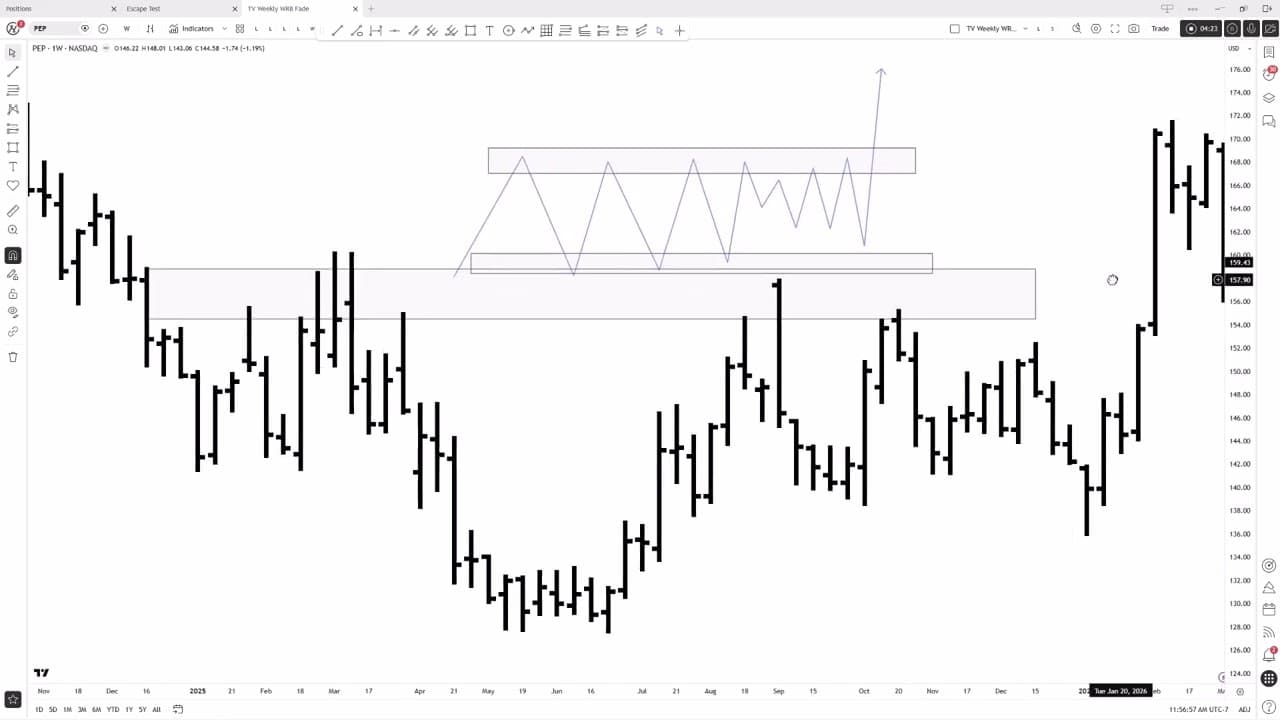
TL;DR
To trade effectively, focus on the first pullback pattern when the market is actively moving. Recognize an 'in play' market by identifying impulse moves, where price bars expand with urgency. Execute trades with a disciplined plan, defining entry, stop, and management strategies. This approach enhances precision and reduces randomness in trading.
Transcript
So, this is about the first pullback pattern and only playing when the market is in play. I'm going to talk about this and break it down and layer it all the way down into where we make a disciplined trade plan for this idea. So, first of all, what do I mean by only play when it's in play? So, if you think about markets. What I'm saying is stay out... Read More
Key Insights
- The first pullback pattern occurs after an impulse move in the market.
- An 'in play' market is characterized by clear, urgent price movements.
- Impulse moves are marked by bars that expand with less overlap.
- Trading should only occur when the market is 'in play' to avoid randomness.
- A structured plan with defined entry, stop, and management is essential.
- Wide Range Bars (WRB) can be used for entry and stop criteria.
- Practicing the first pullback pattern in various markets builds skill.
- A disciplined approach turns a setup idea into a repeatable process.
Install to Summarize YouTube Videos and Get Transcripts
Explore YouTube Video Summarizer or Get YouTube Transcript Extractor
Questions & Answers
Q: How to identify when a market is 'in play'?
A market is 'in play' when there is a clear impulse move, characterized by price bars that expand with urgency and less overlap compared to previous bars. This indicates active participation from traders, resulting in rapid price movements. Recognizing these conditions helps traders focus on opportunities with higher potential.
Q: What is the first pullback pattern in trading?
The first pullback pattern is a trading strategy that involves entering a trade after an impulse move in the market. It focuses on the initial retracement or 'pullback' following an aggressive price movement. This pattern is used to capitalize on the continuation of the trend established by the impulse move.
Q: Why is a structured trade plan important?
A structured trade plan is crucial because it provides a clear framework for entering, managing, and exiting trades. It includes defined criteria for entry, stop-loss, and trade management, reducing emotional decision-making and increasing consistency. This disciplined approach allows traders to test, track, and measure their strategies effectively.
Q: What role do Wide Range Bars (WRB) play in trading?
Wide Range Bars (WRB) are used in trading to identify significant price movements. They are bars that are larger than the preceding bars, indicating increased volatility and momentum. In the context of the first pullback pattern, WRBs help define entry and stop-loss levels, providing a structured method for executing trades during impulse moves.
Q: How can traders practice the first pullback pattern?
Traders can practice the first pullback pattern by backtesting it in various markets and conditions. This involves identifying impulse moves and the subsequent first pullbacks, then applying a structured trade plan with defined entry and exit criteria. Repeated practice helps traders refine their skills and build confidence in recognizing and executing the pattern.
Q: What are the benefits of focusing on one trading pattern?
Focusing on one trading pattern, like the first pullback, allows traders to develop expertise and precision in their approach. It reduces randomness and emotional decision-making, as traders rely on a consistent, rule-based strategy. This specialization enables effective testing, tracking, and measuring of performance, leading to improved trading outcomes.
Q: How does the first pullback pattern reduce randomness in trading?
The first pullback pattern reduces randomness by providing a clear, rule-based framework for entering trades after a significant market move. By focusing on specific conditions, such as impulse moves and subsequent pullbacks, traders avoid arbitrary decisions and instead rely on a disciplined strategy that enhances precision and consistency in trading.
Q: What is the importance of defining entry and stop criteria?
Defining entry and stop criteria is essential for managing risk and ensuring consistent trade execution. Clear criteria help traders determine precise points for entering and exiting trades, protecting against significant losses and maximizing potential gains. This disciplined approach is critical for maintaining a structured and effective trading strategy.
Summary & Key Takeaways
-
The first pullback pattern involves trading after an impulse move in an active market. Recognize when the market is 'in play' by observing expanded, urgent price bars. Execute trades with a structured plan, including defined entry, stop, and management strategies to enhance precision and reduce randomness.
-
An 'in play' market is indicated by impulse moves, where price bars expand with urgency. The first pullback pattern capitalizes on these movements, requiring a disciplined trade plan. This structured approach allows for testing, tracking, and measuring, transforming a setup idea into a repeatable trading process.
-
To effectively trade the first pullback pattern, wait for a market to exhibit clear impulse moves. Use a disciplined, rule-based plan for executing trades, focusing on entry, stop, and management. This method increases trading precision and minimizes randomness, providing a reliable strategy for active markets.
Read in Other Languages (beta)
Share This Summary 📚
Summarize YouTube Videos and Get Video Transcripts with 1-Click
Try YouTube Summary with ChatGPT & Claude or YouTube Transcript Generator