Why Smart Entrepreneurs Start Before They’re Ready

TL;DR
Smart entrepreneurs start before they feel ready by working with real people, gathering feedback, and improving through action. Marie Forleo tells aspiring parenting coach Edina that she does not need fancy marketing to find initial clients and can begin by coaching parents for free. Lisa Price and Brandon Stanton illustrate how direct experience can shape a business, and their specific paths reveal what starting before readiness actually requires.
Transcript
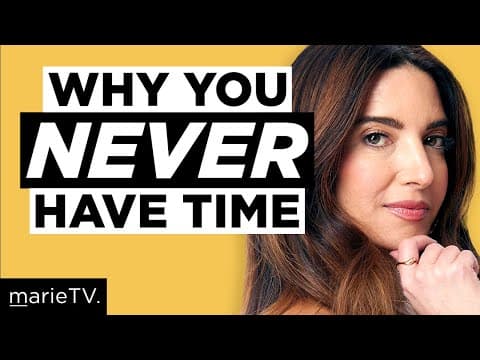
Hey, it's Marie Forleo and welcome to another episode of MarieTV and the Marie Forleo Podcast. Now, if you've been itching to start a business but you are overwhelmed with how to actually get started, this one is for you. Today's question comes from Edina, who writes, "Hey Marie, I've recently left my job as a school counselor to become a parenting... Read More
Key Insights
- Readiness follows real practice: Marie defines starting before readiness as doing the work with real people, not extending the planning stage. Direct interaction creates the experience an entrepreneur lacks at the beginning. Edina's next useful step is therefore coaching an actual parent, because more private strategizing cannot provide the same practical learning.
- Fear can resemble a constraint: Edina describes a catch-22 involving clients and marketing, but Marie disputes that framing. She believes Edina is scared rather than structurally unable to proceed. This distinction matters because fear can be addressed through action, while a supposedly impossible business condition encourages continued delay.
- Fancy marketing is not required: Both featured entrepreneurs began without sophisticated marketing. Lisa Price introduced products by giving them away and selling at local events, while Brandon Stanton repeatedly photographed people on the street. Their early momentum came from visible work and contact with people, not from perfect promotional systems.
- Small sales reveal real demand: Lisa's church flea-market experience produced a clear signal when every item sold. She then spent the remainder of the summer attending craft festivals and gradually developing a following. The sequence shows how a modest selling opportunity can generate information and momentum that brainstorming alone cannot supply.
- Customer questions can shape products: Lisa did not initially make hair products. She created them only after customers asked whether she had something for their hair. Rather than treating the missing product as proof that she was unprepared, she returned home, figured out how to make it, and responded to expressed demand.
- Feedback supports useful iteration: Lisa gave her new hair products to hairdressers and asked for feedback before making improvements. Her progress was incremental, with each response informing the next adjustment. Marie uses this process to show that an early offering can become stronger through use, evaluation, and revision.
- A clear commitment creates direction: Brandon chose a concrete project, taking 10,000 photographs of people on New York City streets and placing them on a map. That commitment gave him something specific to execute despite his lack of experience. The project created the conditions in which his skills and eventual business could develop.
- Repetition develops multiple skills: Brandon invested thousands of hours in editing thousands of photographs and learned what worked and what did not. He also became comfortable approaching, speaking with, and interviewing strangers. Humans of New York emerged from this combined practice in photography, selection, conversation, and observation.
- Simple living supported the work: Brandon's initial goal was not described as building a famous brand. He wanted enough income to keep a roof over his head while taking photographs, and he lived on Cheerios and turkey sandwiches while sleeping on a floor mattress. This simplified arrangement supported sustained attention to the project.
- Growth emerged from ongoing action: Humans of New York eventually reached over 25 million followers and led to two bestselling books, but Brandon did not begin with those outcomes or a polished marketing operation. Marie emphasizes the long learning process that preceded them, including repeated photographing, editing, interviewing, and adjustment.
- Free coaching creates experience: Marie advises Edina to offer parenting coaching without charge if necessary. Free sessions would place her in front of real parenting problems and let her practice delivering help. The immediate objective is not a perfect offer but evidence that she can work effectively with the people she hopes to serve.
- Existing relationships are a starting point: Marie's first outreach suggestion is for Edina to list every parent she knows and contact them by email or text, humorously adding smoke signal as another option. The message should state that Edina can help solve parenting problems and is willing to begin for free.
Install to Summarize YouTube Videos and Get Transcripts
Explore YouTube Video Summarizer or Get YouTube Transcript Extractor
Questions & Answers
Q: What does it mean to start before you're ready?
Starting before you're ready means doing the actual work with real people instead of spending weeks or months brainstorming and strategizing. The entrepreneur begins without waiting for complete confidence, perfect marketing, or every answer. Real interactions then reveal what works, what people need, and what should be improved. Marie's examples show that readiness develops through action, feedback, repetition, and adjustment.
Q: How can a new parenting coach find initial clients without polished marketing?
Marie advises Edina to make a list of every parent she knows and contact them by email or text. She should explain that she can help solve parenting problems and offer to coach them for free. Marie also suggests a flea-market booth advertising free parenting advice or approaching parents directly on the street. These methods create real conversations and coaching experience before sophisticated marketing exists.
Q: Why does Marie Forleo reject Edina's catch-22?
Edina believes she cannot gain clients without good marketing and cannot improve her marketing without clients. Marie responds that fancy marketing is not necessary to obtain the first clients. She believes fear, rather than an impossible business condition, is keeping Edina from acting. Working with parents directly breaks the apparent loop by producing experience before the marketing is refined.
Q: How did Lisa Price start Carol's Daughter?
Lisa Price experimented with fragrances and essential oils in her Brooklyn kitchen during the 80s. She first gave her creations to friends and family, then followed her mother's suggestion to sell at a church flea market. After selling everything, she continued attending craft festivals and slowly built a following. Customer requests for hair products then prompted her to develop, test, and improve a new category.
Q: How did customer feedback influence Lisa Price's business?
Customers asked Lisa whether she offered anything for their hair, although she did not yet make hair products. She responded by going home and figuring out how to create them. Lisa then gave the products to hairdressers, collected their feedback, and made improvements. This feedback process helped her expand gradually until Carol's Daughter became large enough to be acquired by L'Oreal in 2014.
Q: How did Brandon Stanton create Humans of New York?
After losing his financial-industry job, Brandon Stanton moved to New York City to pursue photography despite having no experience and initially not owning a camera. He committed to taking 10,000 street portraits and plotting them on a map. Thousands of hours of photographing and editing taught him what worked, while approaching strangers strengthened his interviewing skills. Those repeated activities eventually transformed into Humans of New York.
Q: What results came from Brandon Stanton's approach?
Brandon's street-photography project developed into the Humans of New York brand and business. Marie states that it gained over 25 million followers and produced two bestselling books. Those results followed extensive practice rather than fancy marketing at the beginning. His progression supports Marie's point that action allows an entrepreneur to learn and grow while the work is already underway.
Q: What additional structure does B-School offer aspiring entrepreneurs?
Marie presents B-School as an option for someone who wants more structure after accepting the need to act. She says it teaches how to attract ideal clients, determine what to charge, and set up a sustainable business. The material is provided step by step, and the program includes a risk-free guarantee. Her recommendation follows, rather than replaces, the immediate instruction to begin doing the work.
Summary & Key Takeaways
-
Edina describes her dilemma: On MarieTV and the Marie Forleo Podcast, former school counselor Edina explains that she left her job to become a parenting coach but feels overwhelmed about finding a client. She believes she faces a catch-22 because she cannot sign clients without good marketing, yet cannot improve her marketing without clients. Although she understands Marie Forleo's advice to start before feeling ready, brainstorming and strategizing have not moved her forward.
-
Action replaces prolonged planning: Marie clarifies that starting before readiness does not mean spending weeks or months brainstorming and strategizing. It means training yourself to perform the actual work with real people. She rejects Edina's belief that fancy marketing is necessary or that the situation is truly a catch-22. Marie suggests fear is contributing to the hesitation, while also reassuring Edina that feeling scared is acceptable when beginning a new business.
-
Lisa Price learns through customers: Carol's Daughter founder Lisa Price began experimenting with fragrances and essential oils in her Brooklyn kitchen during the 80s. After initially giving her creations to friends and family, she sold everything at her church's flea market and continued at craft festivals. Customer requests led her to develop hair products, which she gave to hairdressers for feedback. She kept improving the products, and L'Oreal acquired her company in 2014.
-
Brandon Stanton builds through repetition: After losing his financial-industry job, Brandon Stanton pursued photography despite lacking experience and not owning a camera. He moved to New York City and committed to taking 10,000 street portraits and plotting them on a map. Thousands of hours spent photographing, editing, and speaking with strangers taught him what worked. That process became Humans of New York, which gained over 25 million followers and produced two bestselling books.
-
Edina receives an immediate assignment: Marie tells Edina to begin coaching parents, even if she must initially work for free. She proposes contacting every parent Edina knows, offering help through messages, providing free parenting advice at a flea-market booth, or approaching parents directly. These interactions would let Edina practice solving real problems instead of waiting for polished marketing. For additional structure around ideal clients, pricing, and sustainability, Marie recommends B-School and mentions its risk-free guarantee.
Read in Other Languages (beta)
Share This Summary 📚
Summarize YouTube Videos and Get Video Transcripts with 1-Click
Try YouTube Summary with ChatGPT & Claude or YouTube Transcript Generator
Explore More Summaries from The Marie Forleo Podcast 📚
Summarize YouTube Videos and Get Video Transcripts with 1-Click
Try YouTube Summary with ChatGPT & Claude or YouTube Transcript Generator