A self-contained PCB-based weighing scale
TL;DR
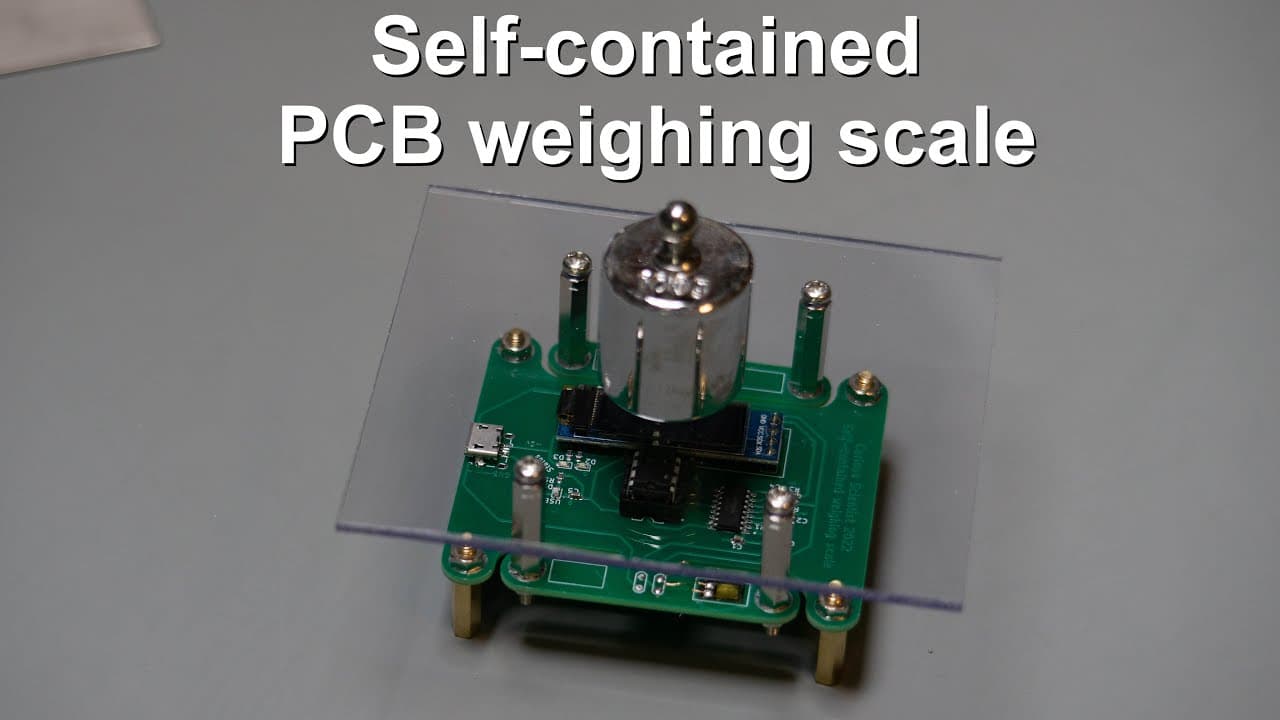
The video demonstrates building a self-contained PCB weighing scale using strain gauges.
Transcript
foreign welcome everyone in this video I'm going to continue the work with the previous topic which was making a scale out of a PCB and in the previous video I made this device here which was basically a PCB based scale and the original idea here was to create a pattern on the PCB board and use it as a strain gauge and then have a circuit which is ... Read More
Key Insights
- 🦾 Strain gauges are essential for measuring mechanical stress and can be effectively utilized in custom electronic projects like weighing scales.
- 🧘 A full Wheatstone bridge configuration maximizes sensitivity and accuracy by employing four resistive elements in contrasting positions, enhancing measurement reliability.
- ❓ Proper preparation and soldering techniques are crucial, particularly with SMD components, to ensure a functional final product.
- ⚖️ Calibration is necessary for any weighing scale to achieve accurate, reliable measurements; the process can be adapted to various electronic applications.
- 👻 The incorporation of energy-efficient components, like lithium polymer batteries, allows for portable and practical designs in custom electronics.
- 🎨 Signal drift can be a common issue in precision measurements, warranting careful design, assembly practices, and potential need for recalibration.
- 🎨 Utilizing platforms that provide schematics and PCB design options can significantly enhance project outcomes and accessibility for DIY electronics enthusiasts.
Install to Summarize YouTube Videos and Get Transcripts
Explore YouTube Video Summarizer or Get YouTube Transcript Extractor
Questions & Answers
Q: What is the fundamental principle behind the PCB weighing scale described in the video?
The fundamental principle of the PCB weighing scale is based on the Wheatstone bridge configuration, which utilizes four strain gauges to measure changes in resistance caused by bending. When weight is applied, the PCB acts as a cantilever beam, bending slightly and causing the strain gauges to either stretch or compress, thus allowing for accurate weight measurement through variations in electrical voltage.
Q: Why did the presenter initially face issues with the design, and how were they resolved?
The original design's conceptual approach failed to function as intended; the strain gauges integrated into the PCB did not effectively register weight changes. The issue was resolved by shifting to an external strain gauge placement, which produced successful readings. This transition demonstrated the importance of practical testing and adaptation based on observed performance.
Q: How does the HX711 chip contribute to the functioning of the scale?
The HX711 chip is a specialized ADC (Analog to Digital Converter) designed for measuring small changes in voltage, particularly suitable for weighing scales. It processes the output from the Wheatstone bridge formed by the four strain gauges, converting the analog signal into a digital format that can be displayed. This integration simplifies the readout process while ensuring accurate weight measurements.
Q: What challenges did the presenter face with signal drift, and how did they address it?
The presenter encountered signal drift, likely due to air bubbles beneath the strain gauges or misalignment caused by tightened screws. To address this issue, they carefully replaced the strain gauges, ensuring proper adhesion, and contemplated potential mechanical stresses affecting the readings. This highlights the need for meticulous assembly and troubleshooting in electronic projects.
Summary & Key Takeaways
-
The video details the construction of a PCB-based weighing scale, incorporating strain gauges and a Wheatstone bridge, focused on creating a compact, functional design.
-
The assembly process is shown in stages, from preparation to soldering components, ensuring clarity on how each part interacts within the circuit.
-
The final product includes various components, including an HX711 chip for signal processing and an OLED display for weight readings, emphasizing the importance of calibration and troubleshooting issues like signal drift.
Read in Other Languages (beta)
Share This Summary 📚
Summarize YouTube Videos and Get Video Transcripts with 1-Click
Try YouTube Summary with ChatGPT & Claude or YouTube Transcript Generator
Explore More Summaries from Curious Scientist 📚
![Building a coil winder [Part 6] - A few improvements thumbnail](/_next/image?url=https%3A%2F%2Fi.ytimg.com%2Fvi%2F3eyxG_g2iUA%2Fhqdefault.jpg&w=750&q=75)
Summarize YouTube Videos and Get Video Transcripts with 1-Click
Try YouTube Summary with ChatGPT & Claude or YouTube Transcript Generator