Jared Leto on Creative Independence and Failure
TL;DR
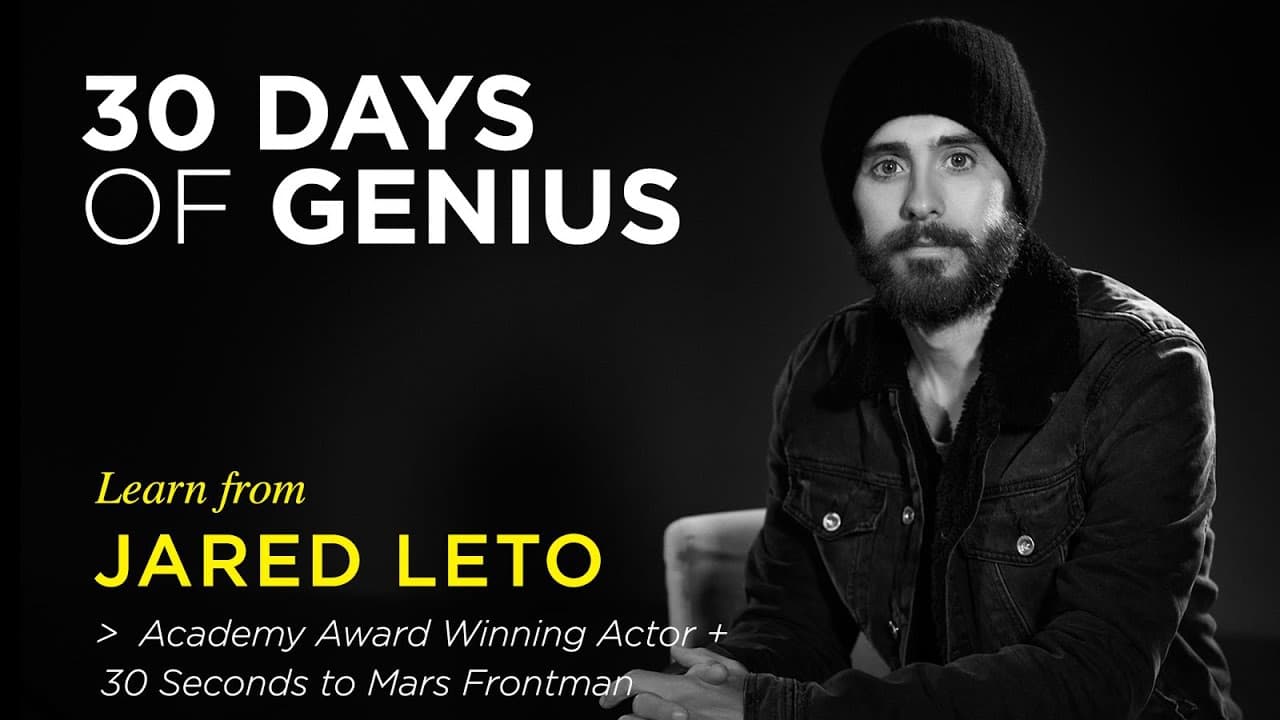
Creative independence starts with acting before gatekeepers grant permission, while learning enough about business to protect your work. Jared Leto argues that pursuing multiple disciplines creates more responsibility, control, and opportunities to learn from failure, and his experience fighting a record company reinforced the importance of understanding contracts and defending creative freedom.
Transcript
hey everybody how's it going I'm Chase Jarvis welcome to another episode of Chase Jarvis live here on Creative live you're tuned in to the 30 days of Genius series that's where I sit down with the world's top creatives entrepreneurs and thought leaders and extract actionable insights for you to live your dreams in career Hobby and life if you're ne... Read More
Key Insights
- Creative identity can encompass many disciplines because painting, photography, music, performance, film, and acting can all belong to the same creative path. Leto views his varied work as a reflection of both his upbringing and the opportunities available in the present era.
- Independent action is possible when creators stop waiting for gatekeepers to approve their work. Technology lets someone write a song, publish it from a garage, and receive immediate public feedback, although that access does not guarantee positive reactions, employment, discoverability, or an audience.
- Failure is an educational opportunity because attempting different kinds of work creates new ways to make mistakes and learn. Leto supports every creator's right to succeed gloriously or fail gloriously, treating action and experimentation as more valuable than waiting for permission.
- Art school is a setting for testing different forms of expression. Leto studied painting while exploring sculpture, fine art, photography, and darkroom work, experiences that taught him that creativity does not need to remain confined to one medium or professional label.
- Photography can reveal productive accidents when an unintended technical choice produces an unexpectedly effective image. Leto recalls discovering movement caused by shutter-speed settings and recognizing that a mistake he might have corrected could instead become a valuable creative result.
- Business knowledge is crucial for protecting creative work. Leto says artists must either develop that knowledge themselves, find a trusted partner such as a manager or chief executive, or combine both approaches, because limited understanding can leave creators vulnerable to exploitation.
- Contractual success does not guarantee financial security because 30 Seconds to Mars sold millions of albums yet learned that it was millions of dollars in debt. Investigating the situation revealed what Leto describes as a convoluted contractual problem that the band could not simply escape.
- Artifact is a record of 30 Seconds to Mars fighting for creative freedom after a record company sued the band for $30 million. Making the feature-length documentary also became a separate learning process, deepening Leto's understanding of business and the difficulty of documentary production.
Install to Summarize YouTube Videos and Get Transcripts
Explore YouTube Video Summarizer or Get YouTube Transcript Extractor
Questions & Answers
Q: How can artists build an independent creative career?
Artists can build independence by beginning the work without waiting for a gallery, company, editor, producer, or other gatekeeper to grant permission. Technology makes it possible to create something, publish it quickly, and receive direct feedback. Independence also requires accepting responsibility for decisions, learning from failure, and developing enough business knowledge to protect the work and its underlying creative vision.
Q: Why does Jared Leto consider himself a multidisciplinary artist?
Jared Leto treats visual art, performance, music, photography, film, and acting as parts of one creative path rather than professions reserved for different types of people. He began with visual art and studied painting, but art school allowed him to explore several other media. That experience taught him that a creative identity can remain unified even when its expression changes across projects.
Q: How has technology reduced creative gatekeeping?
Technology allows creators to make and distribute work without first securing approval from traditional institutions. Leto gives the example of writing a song in a garage, posting it on the same day, and receiving immediate reactions. He also notes that direct access does not eliminate difficulty, since creators may still struggle to find content, obtain work, attract an audience, or handle harsh public feedback.
Q: What role does failure play in creative development?
Failure provides information that can improve later decisions, and working across multiple disciplines creates more opportunities to encounter it. Leto sees that expanded possibility as valuable because mistakes teach lessons that permission-seeking and inactivity cannot provide. His position is that people have both the ability and the right to attempt creative roles, whether the outcome becomes a striking success or a striking failure.
Q: What did Jared Leto learn from studying photography?
Photography taught Leto to observe people, work patiently, and remain open to unexpected results. He recalls spending long periods in the darkroom, first examining processed negatives and then watching images appear during printing. He also learned that technical mistakes can produce worthwhile images, such as unintended movement caused by a shutter-speed choice that he might otherwise have corrected.
Q: Why do creative professionals need business knowledge?
Creative professionals need business knowledge because artistic work is often governed by contracts, financial arrangements, managers, and large companies. Leto says a creator can become the informed business person, rely on a deeply trusted partner, or operate somewhere between those models. Greater knowledge helps artists recognize unfavorable conditions, protect their interests, and preserve more control over how a shared vision is brought to life.
Q: Why did 30 Seconds to Mars fight its record company?
The band discovered that despite selling millions of albums, it was still millions of dollars in debt under its contractual arrangement. After examining the situation, the members concluded that they were caught in a convoluted contractual problem they could not realistically escape. They fought for creative freedom while facing a $30 million lawsuit from the record company, and Leto says the band ultimately won that fight.
Q: What is the documentary Artifact about?
Artifact documents 30 Seconds to Mars confronting its record-company dispute and fighting for creative freedom after learning that commercial success had left the band millions of dollars in debt. The conflict included a $30 million lawsuit. Leto says producing the feature-length documentary was itself extremely difficult, but the filmmaking process taught him additional lessons beyond those he learned while directly experiencing the business dispute.
Summary & Key Takeaways
-
Jared Leto describes himself as following one broad creative path rather than separating painting, photography, music, film, and acting into unrelated identities. Art school encouraged him to experiment across disciplines, observe closely, and appreciate productive accidents. That foundation shaped his belief that creators can pursue multiple forms of expression without permission.
-
Technology allows artists to create, publish, receive feedback, and reach audiences without waiting for traditional gatekeepers. Leto acknowledges that finding work, content, or an audience can still be difficult, but considers direct access valuable. Independence brings greater responsibility and control, along with more opportunities to fail, learn, and improve through experience.
-
Business knowledge is essential because creative careers involve contracts, companies, managers, and financial risk. After selling millions of albums, 30 Seconds to Mars discovered it was millions of dollars in debt and faced a $30 million lawsuit. Their resulting fight for creative freedom became the feature-length documentary Artifact and provided further education.
Read in Other Languages (beta)
Share This Summary 📚
Summarize YouTube Videos and Get Video Transcripts with 1-Click
Try YouTube Summary with ChatGPT & Claude or YouTube Transcript Generator
Explore More Summaries from Chase Jarvis 📚


Summarize YouTube Videos and Get Video Transcripts with 1-Click
Try YouTube Summary with ChatGPT & Claude or YouTube Transcript Generator