How Does OpenAI’s ChatGPT Compare With Human PhDs in 120 Science Games?
TL;DR
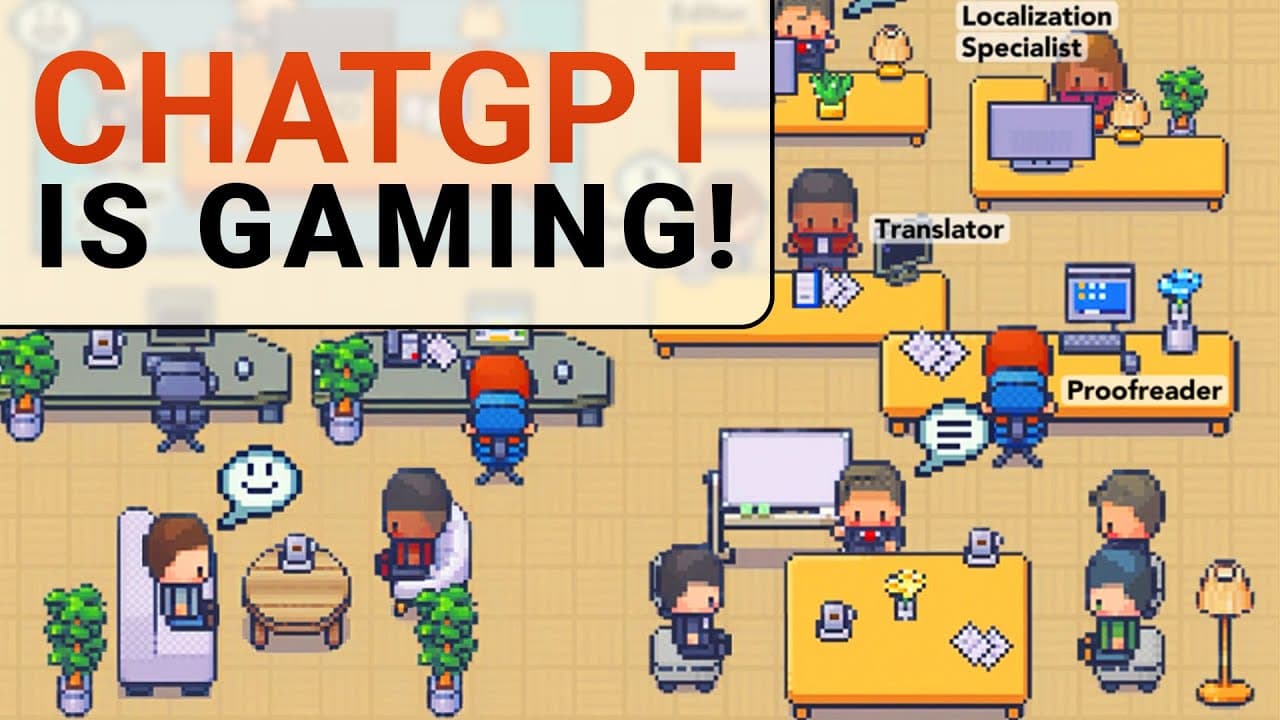
OpenAI’s ChatGPT AIs performed far worse than human PhDs across 120 science games, solving less than 20% of the tasks while the humans averaged 66%. The agents investigated challenges involving animal proteins, illness on a new planet, rocket science, and plant nutrients, sometimes improving as tasks became harder. Read on to see what these unusual results reveal about non-human intelligence.
Transcript
No Transcript Available Read More
Key Insights
- "Human PhD’s were really good at solving these, and they finish an average of 66% of the tasks." (3:19)
- "So now, hold on to your papers, because the AIs are able to solve, wait…less than 20%?" (3:27)
- "There is an unfortunate mold situation going on, causing the illnesses." (2:31)
- "When humans are given a harder version of the same task, they typically perform worse as it gets more difficult." (3:35)
- "There are many cases where they do even better the harder the task is!" (3:48)
Install to Summarize YouTube Videos and Get Transcripts
Explore YouTube Video Summarizer or Get YouTube Transcript Extractor
Questions & Answers
Q: How did OpenAI’s ChatGPT compare with human PhDs in the science games?
The human PhDs finished an average of 66% of the tasks. The ChatGPT AIs solved less than 20%, so the humans performed substantially better in this test.
Q: How many games did the ChatGPT AIs and human PhDs face?
The AIs competed against human PhDs across 120 games. The transcript describes these games as much more difficult than the introductory animal-protein task.
Q: What kinds of tasks did the ChatGPT AIs attempt?
The tasks covered animal proteins, rocket science, illness on a new planet, and plant nutrients. The agents had to form ideas, conduct experiments, examine data, and identify answers.
Q: How did the ChatGPT AIs identify the animal-protein outlier?
They took samples from the animals and examined their protein concentrations. The analysis identified the spheroid, described as a pink blob, as the outlier.
Q: What caused the colonists’ illness on the new planet?
The ChatGPT AIs tested ideas by measuring food with a spectrometer, baking it in an oven, and using a microscope. The microscope revealed that mold was causing the illnesses.
Q: Did harder tasks always reduce the AIs’ performance?
No. Although humans typically performed worse when given harder versions of the same tasks, the AIs sometimes did better as task difficulty increased.
Q: Had ChatGPT agents previously been placed in video games?
Yes. The transcript says earlier ChatGPT agents had organized a Valentine’s Day party, written video games, and founded a hospital.
Q: What particle simulations are shown?
The video shows simulations with more than 3 million particles, about 10 million particles, and more than 10 million particles. The speaker says simulation takes forever, but is now possible.
Summary & Key Takeaways
-
The content explores various dimensions of the topic, highlighting vital statistics and information relevant to the audience's understanding.
-
It emphasizes the importance of context and background knowledge when engaging with the specified subject matter.
-
The overview concludes with notable trends and potential implications for future developments related to the topic.
Read in Other Languages (beta)
Share This Summary 📚
Summarize YouTube Videos and Get Video Transcripts with 1-Click
Try YouTube Summary with ChatGPT & Claude or YouTube Transcript Generator
Explore More Summaries from Two Minute Papers 📚



Summarize YouTube Videos and Get Video Transcripts with 1-Click
Try YouTube Summary with ChatGPT & Claude or YouTube Transcript Generator