How do you convey emotion with furniture? | Christoph Niemann | The Art Assignment
TL;DR
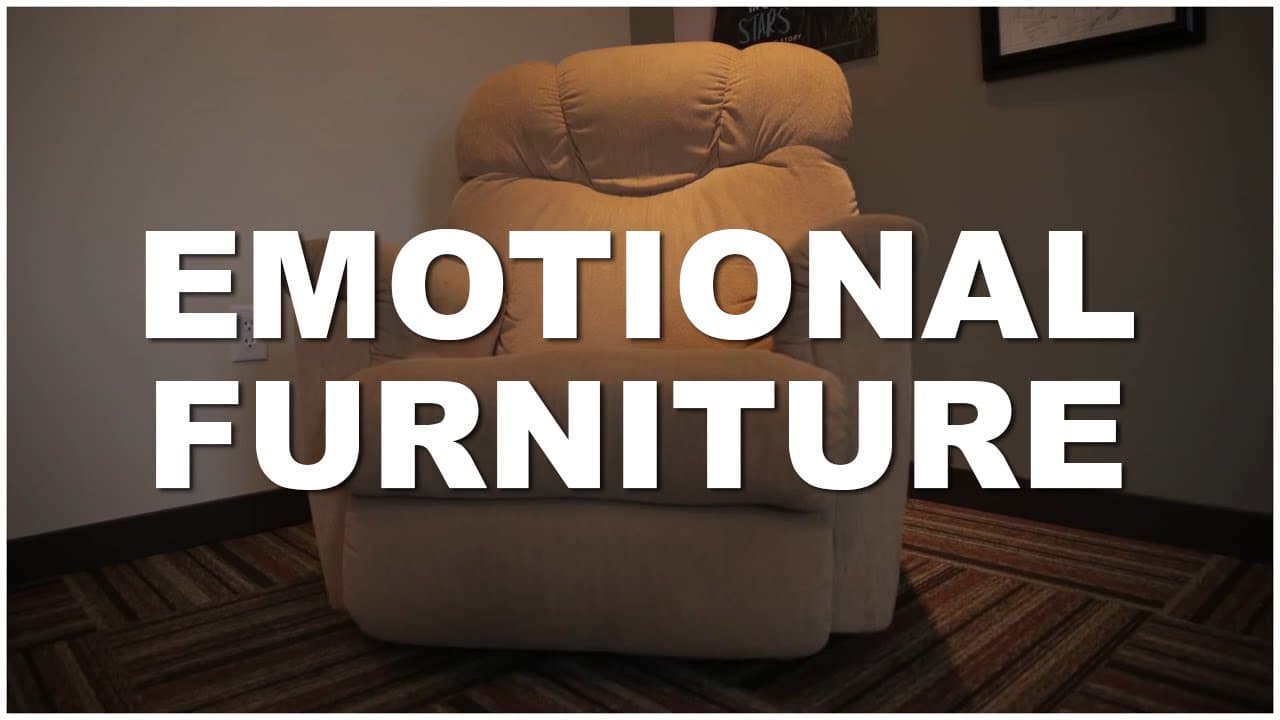
Furniture can convey emotion when its scale, distance, arrangement, and surrounding context create visual tension without relying on faces or figures. Christoph Niemann’s “emotional furniture” assignment asks for three photographs expressing envy, melancholy, and confidence through composition alone, with no altering, painting, signs, type, or added faces. Read on for the specific rules and artistic reasoning behind the exercise.
Transcript
Today, we're meeting with illustrator and artist Christoph Niemann whose work has graced the cover of many a "New Yorker" magazine, the front page of Google, and can be found regularly in the "New York Times Magazine." With text and image, Christoph has chronicled the World Cup, the Venice Biennale, the New York City Marathon, as well as his love/h... Read More
Key Insights
- ❓ Inanimate objects offer a pure and emotive potential that surpasses the distractions associated with human subjects.
- 😄 Photography allows for a more objective representation of objects and can provide background meaning to ease viewers into a story.
- 😀 The emotional furniture assignment focuses on using furniture composition to convey envy, melancholy, and confidence without altering the objects or adding faces.
- 🙈 Artists like Edward Hopper demonstrate the power of furniture and settings in conveying emotions, as seen in paintings like "Nighthawks".
- 🙈 Furniture can be seen as both human-like and prop-like, acting as tools for the artist's arrangement and creating evocative scenes.
- 🛟 The assignment encourages participants to explore scale, arrangement, and composition to create scenes that feel possible in real life.
- 🥰 The use of furniture in art connects to daily life and can evoke emotions similar to the presence of human figures.
Install to Summarize YouTube Videos and Get Transcripts
Explore YouTube Video Summarizer or Get YouTube Transcript Extractor
Questions & Answers
Q: How do you convey emotion with furniture?
Arrange furniture so that scale, distance, context, and composition suggest an emotional relationship. Christoph Niemann recommends treating inanimate objects as actors while leaving them unaltered and avoiding faces, signs, type, and human figures.
Q: What is Christoph Niemann’s emotional furniture assignment?
Create three photographs using pieces of furniture to communicate emotion. The first photo should convey envy, the second melancholy, and the third confidence.
Q: What are the rules for the emotional furniture photographs?
The emotions must come from how the furniture is arranged within each shot. Do not alter or paint the objects, add faces, or use signs or type.
Q: Why does Christoph Niemann use inanimate objects to tell emotional stories?
He says a face attracts so much attention that viewers may overlook everything else in an image. Inanimate objects begin without an assigned identity or emotion, so an artist can place them in context and use them as actors in precise stories.
Q: How can scale and distance create emotion between objects?
Niemann suggests placing something small against something big or something far away against something close. These relationships can create tension even when the subjects are ordinary objects such as buildings, cars, leaves, or fruit.
Q: Why does Niemann use photography instead of drawing for this assignment?
He says a drawn chair carries his handwriting and tends to be exaggerated or simplified. A photographed chair feels more like it comes from real life and can bring background meaning that eases the viewer into a story.
Q: How can a scene communicate emotion without human figures?
The setting, furniture, lighting, and perspective can carry the emotional meaning. Discussing Edward Hopper’s 1942 painting “Nighthawks,” the host argues that these elements could still communicate loneliness, distance, and numbness without the figures.
Q: Which artworks illustrate the emotional power of furniture and interiors?
The discussion mentions Adolf Menzel’s interior, van Gogh’s “Bedroom in Arles,” Matisse’s “The Window” from 1916, and Roy Lichtenstein’s “Step-on Can with Leg.” It also examines Edward Hopper’s “Nighthawks” as an example of furniture, lighting, perspective, and setting creating a strong mood.
Summary & Key Takeaways
-
Christoph Niemann highlights the emotive potential of inanimate objects, which allow for the creation of tension and precise storytelling.
-
He encourages the use of photography for a more objective representation of objects compared to drawing, which tends to simplify or exaggerate.
-
The assigned project involves capturing envy, melancholy, and confidence through furniture arrangement, focusing on composition rather than altering the objects.
Read in Other Languages (beta)
Share This Summary 📚
Summarize YouTube Videos and Get Video Transcripts with 1-Click
Try YouTube Summary with ChatGPT & Claude or YouTube Transcript Generator
Explore More Summaries from The Art Assignment 📚






Summarize YouTube Videos and Get Video Transcripts with 1-Click
Try YouTube Summary with ChatGPT & Claude or YouTube Transcript Generator