How Do You Trick Yourself Into Doing Anything?
TL;DR
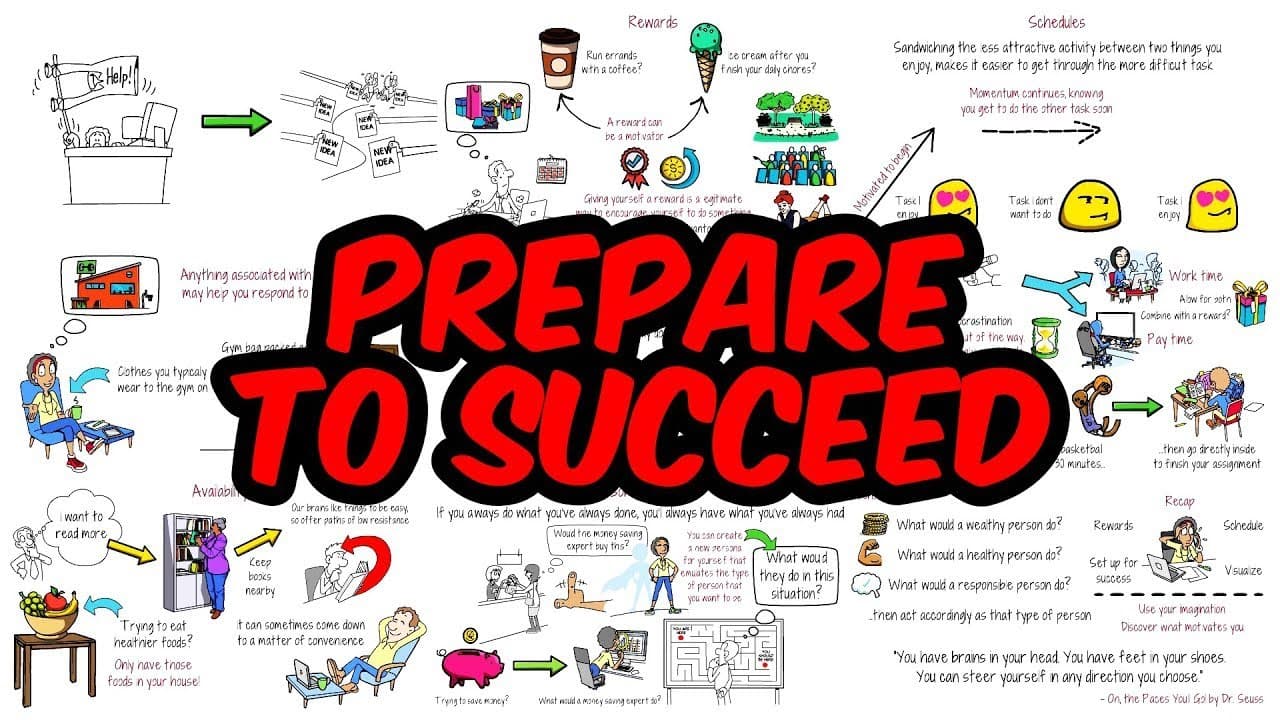
You can trick yourself into doing difficult tasks by pairing them with rewards, scheduling them around enjoyable activities, preparing the environment, making good choices convenient, and acting like the person you want to become. Examples include rewarding several hours of home-office work with a walk or playing basketball for 30 minutes before an assignment. Read on for practical ways to reduce the resistance to starting.
Transcript
Sometimes we all need a little help to get things done. There’s all kinds of reasons we can think of to not do something. Maybe you’ve felt that way yourself. But by using a few new ideas that can trick you into looking at your tasks a little differently, you just might find a way to make it easier. So, how do you trick yourself into doing somethin... Read More
Key Insights
- 🛟 Rewards serve as effective motivators by associating tasks with positive outcomes.
- ❓ Scheduling tasks between enjoyable activities can create a sense of momentum and anticipation.
- 💨 Preparation can be a simple yet powerful way to trick yourself into starting a task.
- 💄 Making desired actions the most convenient choice can increase the likelihood of following through.
- 🤳 Embodying the persona of your ideal self can provide guidance and motivation.
- 😒 Life doesn't have to be tedious; use imagination to make tasks more enjoyable.
Install to Summarize YouTube Videos and Get Transcripts
Explore YouTube Video Summarizer or Get YouTube Transcript Extractor
Questions & Answers
Q: How can you trick yourself into doing something?
Use rewards, schedules, preparation, convenience, and the imagined perspective of the person you want to become. These approaches make an unwanted task feel more appealing, easier to start, or more consistent with your goals.
Q: How can rewards motivate you to complete tasks?
Connect finishing a task with something enjoyable, such as ice cream after chores, a walk after working, a movie, time with friends, or quiet relaxation. The anticipated reward gives you an incentive to begin and finish, and choosing a healthy reward can be a double win.
Q: How does scheduling an unwanted task between enjoyable activities help?
The first enjoyable activity helps you begin with momentum, while the second gives you something to anticipate after the difficult task. This sandwich structure can make the less attractive activity easier to complete.
Q: How can you plan for procrastination without abandoning your work?
Allow yourself a different activity for a defined period, then commit to starting the required task directly afterward. The example given is playing basketball with friends for 30 minutes before going inside to finish an assignment.
Q: What does “prepare as if” mean?
It means arranging your tools, clothing, equipment, or workspace as though you are about to perform the task. Because preparation may feel easier than the task itself, it can become the first step toward starting.
Q: How can preparing a workspace make it easier to begin working?
Set up the familiar items you associate with work, such as papers, a laptop, snacks, and special lighting. Once the area is ready, sitting down and beginning requires little additional effort.
Q: How can availability help you build better routines?
Make the action you want the easiest and most convenient option. For healthier eating, that could mean keeping only healthier foods at home, making an alternative more difficult to obtain.
Q: How can imagining your ideal self influence your choices?
Think about the person you want to be and ask what that person would do in the current situation. If you want to save money, imagining someone who spends wisely can guide you when considering an unnecessary impulse purchase.
Summary & Key Takeaways
-
Definition: A reward system links completing a task with an enjoyable outcome, such as food, a walk, a movie, social time, or relaxation.
-
Compare: Rewards do not have to involve food, and a healthy reward can support motivation while also benefiting your routine.
-
When: Schedule an unwanted task between enjoyable activities so the first creates momentum and the second provides something to anticipate.
-
Number: Playing basketball with friends for 30 minutes can refresh your mind before you go inside to finish an assignment.
-
Definition: Planning for procrastination means allowing another activity for a set period, then committing to the required task immediately afterward.
-
Tool: Prepare papers, a laptop, snacks, and special lighting to signal that your familiar work routine is about to begin.
-
Tool: Place your gym bag and equipment by the front door, then put on your usual gym clothes to move closer to leaving.
-
Definition: Availability means making the desired action the easiest and most convenient option, such as keeping only healthier foods at home.
-
Who: Picture the person you want to become and ask what that person would do before making a choice.
-
When: Before an impulse purchase, imagine someone who spends money wisely and reconsider whether you need the item.
Read in Other Languages (beta)
Share This Summary 📚
Summarize YouTube Videos and Get Video Transcripts with 1-Click
Try YouTube Summary with ChatGPT & Claude or YouTube Transcript Generator
Explore More Summaries from The Art of Improvement 📚

Summarize YouTube Videos and Get Video Transcripts with 1-Click
Try YouTube Summary with ChatGPT & Claude or YouTube Transcript Generator