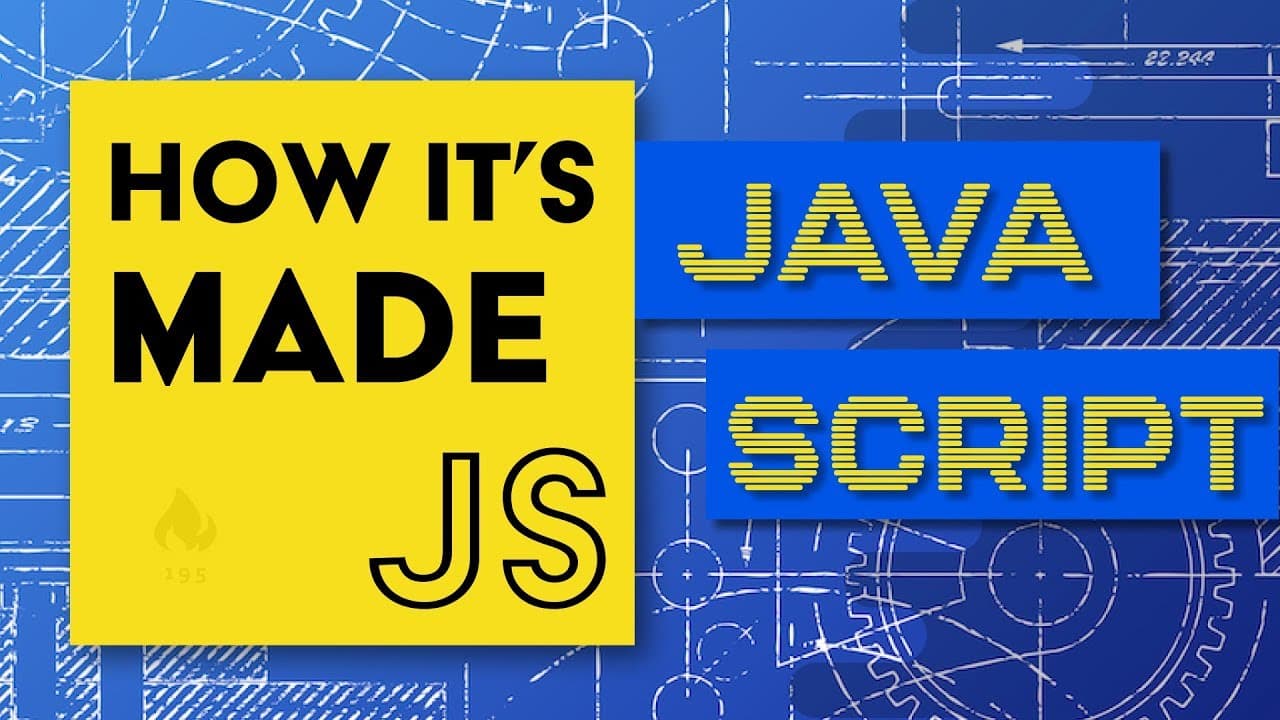
What Is JavaScript and How Does It Work Internally?
TL;DR
JavaScript is a high-level, interpreted, dynamically typed, multi-paradigm programming language that simplifies hardware interactions with abstractions like garbage collection and dynamic typing. Its internal workings involve a call stack for executing functions, a heap for memory management, and an event loop that facilitates non-blocking execution, enhancing performance and responsiveness.
Transcript
today on how they do it JavaScript today we'll look at the computer science behind it so by the end of this video you should understand what a high-level single-threaded garbage-collected interpreted or just-in-time compiled prototype-based multi-paradigm dynamic language with a non-blocking event loop concurrency model really means if you're new y... Read More
Key Insights
- 😄 JavaScript's high-level nature abstracts hardware complexities for developers, providing simplicity and ease of use.
- 👻 The event loop ensures non-blocking behavior in JavaScript, allowing for responsive and efficient execution.
- 👨💻 Understanding the call stack and heap in JavaScript is crucial for efficient memory management and code execution.
- 😘 The transition from lower-level languages to JavaScript involves leveraging abstractions like dynamic typing and garbage collection.
- ⚾ JavaScript's prototype-based inheritance and multi-paradigm nature contribute to its flexibility in development.
- 🫥 The interpreter in JavaScript executes code line by line, contrasting it with compiled languages for performance optimization.
- 🚒 Modern JavaScript engines like v8 employ JIT compilation to enhance performance while maintaining interpreter flexibility.
Install to Summarize YouTube Videos and Get Transcripts
Explore YouTube Video Summarizer or Get YouTube Transcript Extractor
Questions & Answers
Q: How does JavaScript differ from low-level languages like machine code?
JavaScript operates at a high level of abstraction, utilizing abstractions like garbage collectors and dynamic typing to simplify code development. In contrast, low-level languages like machine code require direct execution by the CPU, posing challenges for web development.
Q: What is the significance of the event loop in JavaScript?
The event loop in JavaScript allows for non-blocking operations by continuously handling messages in a queue. This ensures that the main thread remains responsive and can offload long-running tasks to separate threads.
Q: What role does the call stack play in JavaScript execution?
The call stack in JavaScript serves as a continuous, high-performance memory region used to execute functions. Each function call creates a frame in the stack, with frames being added and removed as functions are called and returned.
Q: How does JavaScript memory management differ from languages like C?
JavaScript relies on garbage collection to manage memory, automatically clearing up memory when objects are no longer referenced. This simplifies memory management for developers compared to languages like C, where manual allocation and deallocation are required.
Summary & Key Takeaways
-
JavaScript is a high-level, single-threaded, garbage-collected, interpreted or JIT-compiled language with a prototype-based, multi-paradigm dynamic nature.
-
The language abstracts hardware complexities, transitioning from machine code to high-level languages like JavaScript.
-
JavaScript uses an interpreter to execute code line by line, showcasing dynamic typing and multi-paradigm features.
Read in Other Languages (beta)
Share This Summary 📚
Summarize YouTube Videos and Get Video Transcripts with 1-Click
Try YouTube Summary with ChatGPT & Claude or YouTube Transcript Generator
Explore More Summaries from Fireship 📚



Summarize YouTube Videos and Get Video Transcripts with 1-Click
Try YouTube Summary with ChatGPT & Claude or YouTube Transcript Generator