How to Extract Citric Acid from Lemons at Home
TL;DR
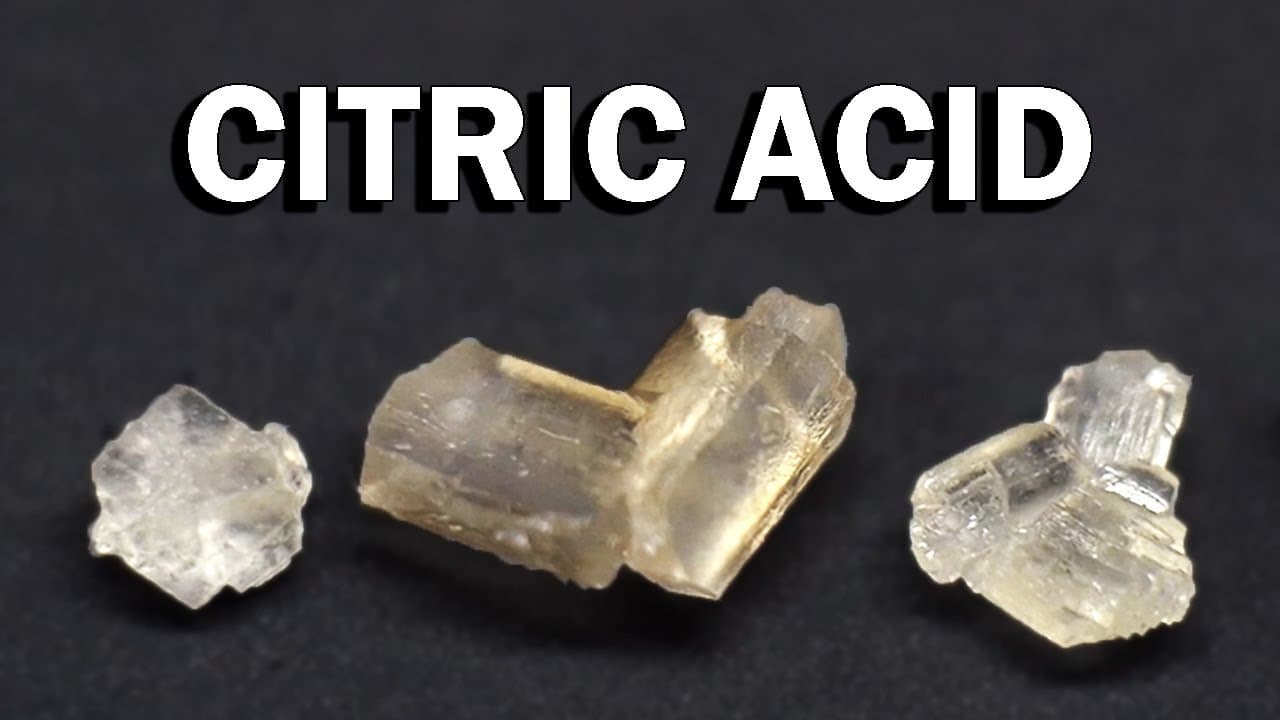
To extract citric acid from lemons, juice the lemons, then gradually add sodium hydroxide to neutralize the citric acid until reaching a pH of about 9. After neutralization, filter the solution and then add calcium chloride, heat to form calcium citrate, and finally convert it back to citric acid using sulfuric acid. This process yields a crude citric acid with an 83% recovery rate.
Transcript
Citric Acid is present in a lot of fruits and vegetables, but it has the highest concentration in citrus fruits. This high concentration of citric acid is responsible for the sourness of fruits like lemons and limes. The major use of citric acid is as a flavouring agent and pH balancer in foods and drinks. It has a huge variety of lesser uses thoug... Read More
Key Insights
- 🍋 Citric acid is abundantly found in citrus fruits, especially lemons and limes.
- ❓ The extraction of citric acid involves neutralization with sodium hydroxide and subsequent chemical reactions.
- 💁 The process of filtering the solution is crucial in obtaining a purified form of citric acid.
- ☠️ The content creator achieved an 83% recovery rate of citric acid from the lemons used in the experiment.
- 😥 Citric acid has various applications, including as a flavoring agent, pH regulator, and even as a cleaning agent.
- 🍄 Synthetic production of citric acid using fungi is common today, replacing the traditional extraction from fruits.
- ♿ The experiment showcased the step-by-step procedure of citric acid extraction, emphasizing the practicality and accessibility of the process.
Install to Summarize YouTube Videos and Get Transcripts
Explore YouTube Video Summarizer or Get YouTube Transcript Extractor
Questions & Answers
Q: What is the main purpose of citric acid in food and beverages?
Citric acid serves as a flavor enhancer and a pH stabilizer, adding a tangy taste and balancing acidity levels in various food and drink products.
Q: How is citric acid neutralized during the extraction process?
Citric acid is neutralized by adding sodium hydroxide solution gradually until the desired pH of around eight or nine is reached. This reaction forms trisodium citrate and water.
Q: Can citric acid be extracted from other fruits besides lemons?
Yes, citric acid is present in various fruits and vegetables, but citrus fruits like lemons and limes have the highest concentration. Extraction can be performed using similar methods with different sources.
Q: Why is it necessary to filter the solution multiple times?
Filtering the solution removes impurities, solids, and pulp from the extracted citric acid. Multiple filtration steps are required to ensure a cleaner final product.
Summary & Key Takeaways
-
Citric acid is commonly found in citrus fruits and is responsible for their sour taste.
-
The major use of citric acid is as a flavoring agent and pH balancer in food and drinks.
-
In this experiment, the content creator extracts citric acid from lemons using a process involving neutralization with sodium hydroxide, filtration, and further chemical reactions.
Read in Other Languages (beta)
Share This Summary 📚
Summarize YouTube Videos and Get Video Transcripts with 1-Click
Try YouTube Summary with ChatGPT & Claude or YouTube Transcript Generator
Explore More Summaries from NileRed 📚



Summarize YouTube Videos and Get Video Transcripts with 1-Click
Try YouTube Summary with ChatGPT & Claude or YouTube Transcript Generator