Magnesium - Periodic Table of Videos
TL;DR
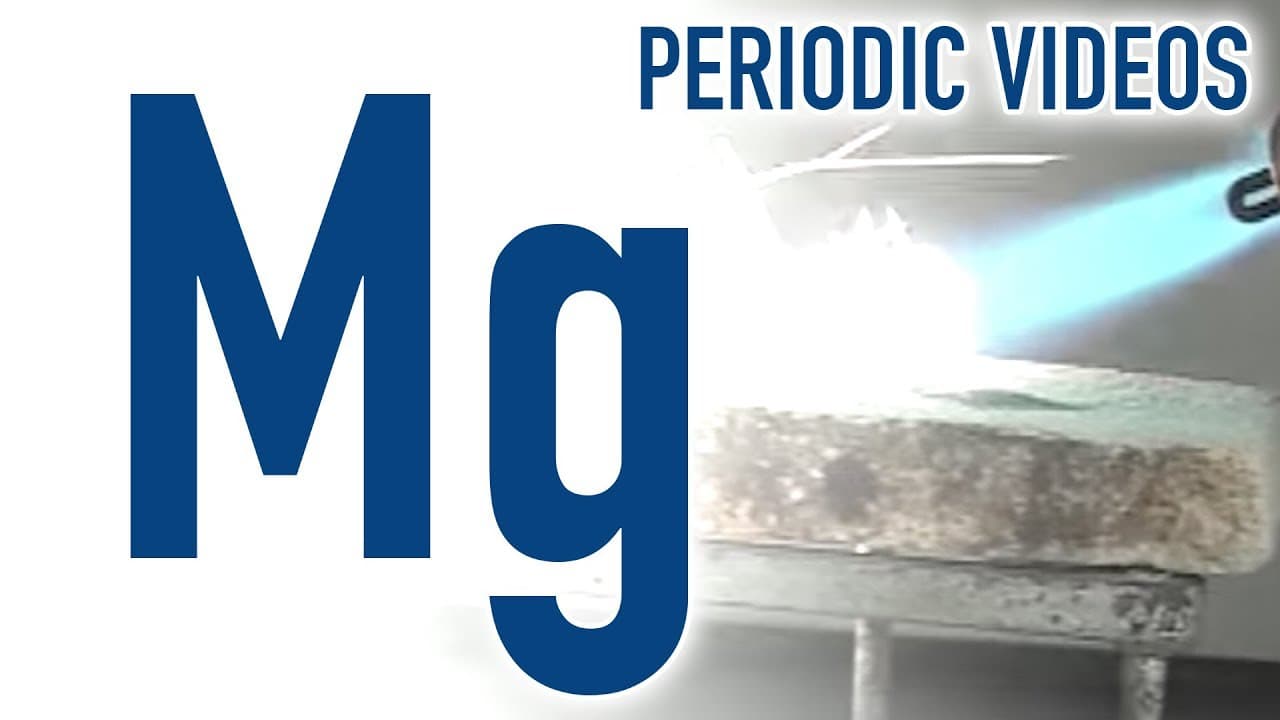
Magnesium is the lightest metal that can be practically used, combining low weight with the ability to form strong, robust alloys. It is used in mobile-phone and laptop frames, construction, car components, and ship hulls; it also burns with a fierce white light. An atom of magnesium sits at the center of chlorophyll, helping plants capture sunlight. Read on to explore its properties, reactions, uses, and biological importance.
Transcript
Magnesium is one of the lightest elements. It’s right at the beginning of the period table and, in fact, it’s the first of the light metals that you can actually use. Lithium and sodium react violently with water so you can’t really use them as a metal and beryllium is fantastically poisonous so unless you are using it in the lab where you can be s... Read More
Key Insights
- 🎠 Magnesium is the lightest practical metal, suitable for use in construction and high-performance car parts.
- 🤩 It plays a crucial role in photosynthesis as a key component of chlorophyll in plant leaves.
- 🙂 Burning magnesium produces intense white light, historically used in photographic flashbulbs.
- ❓ Despite being very reactive, magnesium's versatility and availability make it a valuable element for various industries.
Install to Summarize YouTube Videos and Get Transcripts
Explore YouTube Video Summarizer or Get YouTube Transcript Extractor
Questions & Answers
Q: Why is magnesium considered the lightest metal that can be practically used?
Lithium and sodium react violently with water, while beryllium is extremely poisonous. Magnesium therefore becomes the first light metal in the periodic table that can be practically used.
Q: What are magnesium's main properties?
Magnesium is very light, reactive, pliable, and widely available. It can also be easily alloyed with aluminium and other light metals to produce strong, robust materials.
Q: What is magnesium metal used for?
Magnesium can be used in mobile-phone and laptop frames because it is light. It is also used in construction, high-performance car components, and ship hulls.
Q: What happens when magnesium burns in oxygen?
Burning magnesium produces a fierce, bright white light and releases substantial heat. In the demonstrated photographic bulb, a tiny amount of magnesium generated enough heat to melt the glass.
Q: Why was magnesium used in photographic flashbulbs?
Magnesium was placed inside bulbs filled with oxygen because its combustion produces an intense white light. A new bulb had to be fitted to the camera for each photograph.
Q: Can magnesium burn in nitrogen?
Magnesium is described as one of the few metals that is supposed to burn in nitrogen. However, the professor says that his classroom demonstration failed every time over 25 years, even after burning magnesium was plunged into nitrogen gas.
Q: What role does magnesium play in chlorophyll and photosynthesis?
Chlorophyll contains an atom of magnesium at the center of its organic molecule. Chlorophyll captures sunlight and transfers its energy toward reactions that turn carbon dioxide and water into sugars and other plant materials; without magnesium, the process is not nearly as efficient.
Q: What was Milk of Magnesia described as?
Milk of Magnesia was described as magnesium oxide in water, supplied as a white-looking liquid in blue bottles. The speaker recalls receiving it for indigestion as a child and says it did not taste very nice.
Summary & Key Takeaways
-
Magnesium is the lightest metal that can be used due to its stability with water and lack of toxicity.
-
It is widely available in the world and is commonly used in construction and high-performance car parts.
-
Magnesium plays a crucial role in photosynthesis as it is a key component of chlorophyll, essential for plant life.
Read in Other Languages (beta)
Share This Summary 📚
Summarize YouTube Videos and Get Video Transcripts with 1-Click
Try YouTube Summary with ChatGPT & Claude or YouTube Transcript Generator
Explore More Summaries from Periodic Videos 📚

Summarize YouTube Videos and Get Video Transcripts with 1-Click
Try YouTube Summary with ChatGPT & Claude or YouTube Transcript Generator