What Did Tulsi Gabbard Say About the Durham Report?
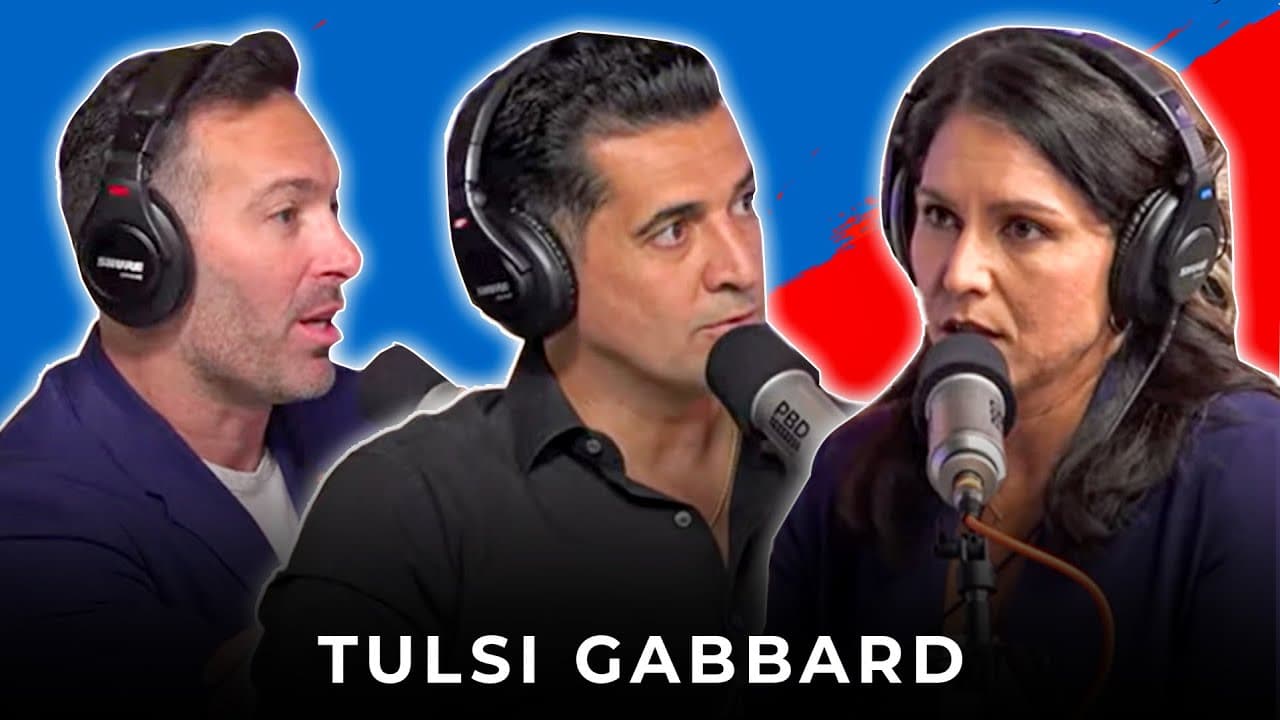
TL;DR
Tulsi Gabbard highlights the need for political integrity, critiques the military-industrial complex, and addresses the risks of nuclear escalation with Russia. She emphasizes the importance of personal conviction over party loyalty and advocates for clarity in women's rights discussions within the context of contemporary identity politics.
Transcript
30 seconds I know this life meant for me yeah why would you plan on Goliath when we got bit David now you came in giving values contagious this world of entrepreneurs we get no value to haters yes I do agree listen we finally made it happen we have the Great Tulsi gabbard in the house but let me first properly introduce her background so we can get... Read More
Key Insights
- 🥳 Tulsi Gabbard emphasizes the necessity for political integrity and personal conviction over party loyalty, especially during her tenure with the DNC.
- 🎖️ The military-industrial complex is critiqued for profiting from ongoing conflicts, noted as a significant contributor to escalating nuclear tensions globally.
- 😥 Gabbard voices concern over the normalization of various gender ideologies, pointing out that feminist voices need to reclaim narratives surrounding biology and societal safety.
- 🪡 The discussion on nuclear risks reveals the urgent need for diplomatic resolutions and the importance of approaching foreign policy responsibly to avoid catastrophic outcomes.
- 🧔♀️ The current landscape of women’s rights is hindered by identity politics, with Gabbard advocating for clarity in conversations about women's roles and protections.
- ❓ Accountability in political discourse is highlighted as essential, especially regarding the dissemination of misinformation surrounding elections and government actions.
- 💁 Voter empowerment through informed decisions is underscored as critical for ensuring governmental accountability and representation reflecting public interests.
Install to Summarize YouTube Videos and Get Transcripts
Explore YouTube Video Summarizer or Get YouTube Transcript Extractor
Questions & Answers
Q: How did your early political experiences shape your views on party loyalty?
My early experiences in politics showed me that party loyalty often conflicts with the duty to my constituents. My decision to endorse Bernie Sanders over Hillary Clinton reflected my belief that foreign policy should prioritize peace and diplomacy over a militaristic approach, even at the cost of being ostracized by my party.
Q: What motivated your resignation as Vice Chair of the DNC?
I resigned after observing clear bias during the 2016 Democratic primaries that favored Hillary Clinton. I wanted to stand for a democratic process that truly represented voters' choices, rather than manipulation by party elites, which compromised the integrity of our political system.
Q: How do you perceive the current state of women's rights in relation to identity politics?
The current climate, where women’s rights discussions are overshadowed by confusing identity politics, is troubling. Women should feel empowered to speak out against policies that threaten fair competition and safety, especially in sports, and it’s vital they regain control of the narrative.
Q: Why do you think nuclear war risks are increasing, and what can be done?
The escalation of conflicts, particularly in Ukraine, raises nuclear war risks. We must prioritize diplomacy and de-escalation strategies over military involvement and ensure leaders recognize the dire consequences of such escalation, emphasizing peace at all levels.
Q: What does it mean to you to be a woman in politics?
Being a woman in politics entails an added responsibility to represent the interests of all, while navigating various assumptions based on gender. It's crucial to assert one’s voice and opinions, irrespective of pressures to conform or support fellow women to maintain authenticity.
Q: How do you view accountability regarding misinformation in politics?
There should be a demand for accountability for those perpetuating misinformation. The recent Durham report highlights the dangers of politicizing intelligence agencies and the need for journalists and politicians to uphold standards of truth in their narratives.
Q: What should voters prioritize in the upcoming elections?
Voters should focus on candidates willing to speak honestly about the critical issues affecting our nation, such as foreign policy, civil liberties, and economic stability. It’s essential to choose leaders who prioritize serving the people over their own political ambitions.
Q: What role does social media play in shaping political narratives?
Social media has a profound impact on political narratives, often amplifying misinformation and quick reactions. While it offers a platform for diverse voices, it can also create echo chambers that stifle open dialogue and critical thinking.
Summary & Key Takeaways
-
Tulsi Gabbard reflects on her political journey, the challenges faced within the Democratic Party, and her commitment to uphold integrity over political alignment.
-
She raises concerns over the military-industrial complex and its influence on U.S. foreign policy, emphasizing the grave risks of nuclear escalation with Russia.
-
The conversation shifts to societal issues around identity and gender, exploring the complexities of women's rights and the acceptance of various sexual identities in contemporary culture.
Read in Other Languages (beta)
Share This Summary 📚
Summarize YouTube Videos and Get Video Transcripts with 1-Click
Try YouTube Summary with ChatGPT & Claude or YouTube Transcript Generator