What Islam really says about women | Alaa Murabit
TL;DR
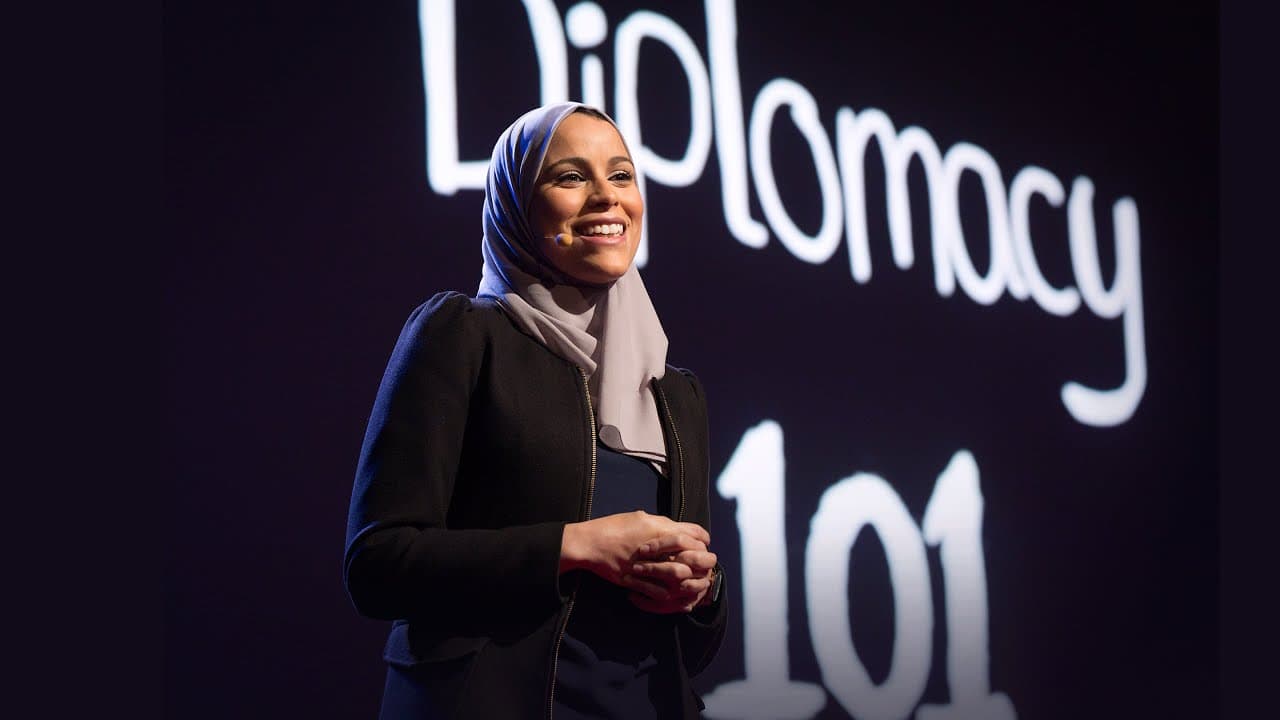
Alaa Murabit argues that Islam supports women’s equality and leadership, while cultural practices and male-dominated religious institutions often distort that message. Drawing on her upbringing as one of 11 children, her move to Libya at age 15, and women’s participation in the 2011 Libyan revolution, she shows how Quranic verses and sayings of the Prophet can challenge restrictive norms. Read on to see how reclaiming religious narratives can expand women’s participation.
Transcript
So on my way here, the passenger next to me and I had a very interesting conversation during my flight. He told me, "It seems like the United States has run out of jobs, because they're just making some up: cat psychologist, dog whisperer, tornado chaser." A couple of seconds later, he asked me, "So what do you do?" And I was like, "Peacebuilder?" ... Read More
Key Insights
- 🧕 Religion and peacebuilding: The speaker highlights the importance of reclaiming religion in order to ensure the full participation of women in peace processes and conflict resolution globally.
- 🌍 Global impact: The misrepresentation and misuse of religious scripture has influenced social, cultural, and legal norms worldwide.
- 👦 Family values: The speaker emphasizes her upbringing in a large Muslim family, where she was treated equally regardless of gender and taught about God's mercy and friendship.
- 💪 Lessons from a large family: Growing up with 10 siblings taught the speaker about power structures, alliances, focus, messaging, and the importance of being at the table.
- 🧕 Representation in religious institutions: Religious institutions are dominated by men, and until this changes, women cannot expect full economic and political participation.
- 🇱🇾 Cultural shift during war: The speaker experienced a temporary shift in cultural norms during the Libyan revolution, where women had a seat at the decision-making table.
- 💡 Highlighting Islamic scripture: The speaker used verses from the Quran and sayings of the Prophet to promote women's rights and challenge cultural norms in Libya, leading to policy changes and alternative narratives.
- 🚩 Challenging distorted religious messaging: Challenging distorted religious messaging is not easy and comes with insults, ridicule, and threats, but it is necessary to reclaim the message of human rights and the principles of faith for societal transformation and the empowerment of women.
Install to Summarize YouTube Videos and Get Transcripts
Explore YouTube Video Summarizer or Get YouTube Transcript Extractor
Questions & Answers
Q: What does Alaa Murabit say Islam really teaches about women?
Murabit says she was taught that God does not judge people differently based on gender and that women are equal in the eyes of God. Her research also uncovered Muslim women who were political, economic, and military leaders, including Khadija, who financed the Islamic movement in its infancy.
Q: Why does Alaa Murabit believe religion must be reclaimed?
She argues that religious scripture has been misrepresented, misused, and manipulated in ways that shape social norms, cultural expectations, laws, and daily life. Reclaiming religious messaging is therefore essential to securing women’s full participation in peace processes, conflict resolution, politics, and the economy.
Q: How did Murabit’s parents shape her understanding of Islam and gender?
Her devout parents treated her the same as their other children and expected the same from her regardless of gender. They presented God as merciful, beneficial, and supportive, which shaped how she understood both her faith and her place in the world.
Q: What did Murabit experience after moving from Canada to Libya?
Murabit moved from Saskatoon to Zawiya in 2005 after finishing high school at age 15. There, she saw “haram,” meaning religiously prohibited, and “aib,” meaning culturally inappropriate, used as though they were interchangeable, prompting her to question women’s roles in her faith.
Q: What did Murabit’s research reveal about women in Islamic history?
She found women in her faith who had been innovative and strong leaders politically, economically, and even militarily. She highlights Khadija, who financed the Islamic movement in its infancy, and questions why women like her were absent from what people were taught.
Q: Why does Murabit emphasize having a seat at the table?
Growing up with 10 siblings taught her that people must be present when decisions are made or risk having others control the story. She applies that lesson to women’s representation, arguing that those who sit at the table control the message and shape policy.
Q: How do male-dominated religious institutions affect women’s participation?
Murabit says religious institutions across the world’s faiths are dominated by men and driven by male leadership. Because leaders create policies in their own likeness, she argues that women cannot achieve full economic and political participation without changing the underlying system.
Q: How did the 2011 Libyan revolution change women’s roles?
During the revolution, Murabit experienced a temporary cultural shift in which women’s involvement was encouraged and demanded. She and other women gained seats at the table and participated directly in decision-making, demonstrating that established cultural roles could change.
Summary
In this talk, the speaker shares her experiences as a young Muslim woman and highlights the importance of reclaiming religion as a means to ensure the full participation of women globally. She discusses the damage that has been done in the name of religion and emphasizes the need to challenge the misrepresentation and misuse of religious scripture. The speaker also reveals how her upbringing and cultural background influenced her understanding of gender equality and the role of women in faith. She explains her journey of questioning the cultural aspects of religion and the importance of research and debate in shaping her beliefs. The speaker then shares her work in Libya, where she used Islamic scripture to promote women's rights and challenge existing cultural norms. She highlights the challenges and criticisms she faced and emphasizes the necessity of women's active participation and the reclaiming of the message of human rights within religious contexts.
Questions & Answers
Q: How did the speaker's upbringing influence her perspective on gender equality and religion?
The speaker explains that her parents, as religiously devout and spiritual people, treated her and her siblings equally without teaching them that God judged differently based on gender. Their understanding of God as a merciful and beneficial friend shaped the speaker's view of the world and her faith. She was not subjected to religious teachings through a cultural lens and was treated with fairness and equality, allowing her to understand the importance of gender equality in religion.
Q: What led the speaker to question the role of women in her faith?
After moving to her parents' hometown in Libya, the speaker quickly became exposed to the cultural aspects of religion. The terms "haram" (religiously prohibited) and "aib" (culturally inappropriate) were used interchangeably, causing her to question her own aspirations and role as a woman. Conversations with classmates, colleagues, professors, friends, and relatives led her to question why women were being relegated to positions that predated the teachings of their faith. This drove her to research women's role in religion and seek out inspiring female leaders within Islam.
Q: How does the speaker believe gender equality can be achieved within religious contexts?
The speaker believes that reclaiming the message of religious scripture is essential to promoting gender equality. She acknowledges that religious institutions are often dominated by men and influenced by male leadership, resulting in policies that limit women's economic and political participation. By using scripture and highlighting verses from the Quran and the sayings of the Prophet, the speaker was able to challenge existing cultural norms and advocate for women's rights. She found that by changing the message, societies can be transformed and women can have a seat at the decision-making table.
Q: What challenges did the speaker face in promoting women's rights using religious scripture?
The speaker faced challenges and criticisms from different perspectives. Liberals accused her of using religion and labeled her as a bad conservative, while conservatives hurled insults and threats. These challenges included being told that her parents would be ashamed of her and that she wouldn't make it to her next birthday. However, the speaker remains firm in her belief that women's rights and religion are not mutually exclusive. Despite the difficulties, she underscores the necessity of continuing to challenge distorted religious messaging and advocating for gender equality.
Q: What does the speaker believe is the ultimate goal in the fight for women's rights?
The speaker believes that the ultimate goal of fighting for women's rights goes beyond individual families or communities. She highlights the need for women's participation at all levels of society, emphasizing that by remaining silent, women allow for the continued persecution and abuse of women worldwide. Instead of relying on bombs and warfare to combat extremism, the speaker emphasizes the importance of local societies addressing these issues sustainably. She believes that by reclaiming the message of human rights within religious contexts, societies can be transformed through the full participation of women.
Q: How did the speaker use scripture to promote women's rights in Libya?
The speaker's organization led a widespread campaign in Libya, entering homes, schools, universities, and even mosques. They used verses from the Quran and the sayings of the Prophet (Hadiths) to highlight the rights of women. By engaging local community imams and incorporating their Friday sermons, they were able to discuss previously taboo issues, such as domestic violence. The organization also pointed out that the principles of international human rights declarations aligned with teachings from religious scripture, debunking misconceptions and challenging opposition. The campaign brought about policy changes and raised awareness about women's rights in Libya.
Q: What did the speaker learn from her experiences during the Libyan revolution?
During the Libyan revolution, the speaker and other women had a seat at the table and played an active role in decision-making, information-sharing, and shaping the future of their country. However, the speaker noticed that after the revolution, many women returned to their previous roles due to religious and political leaders' encouragement, citing religious scripture as their defense. This experience reinforced the speaker's determination to bring about lasting change and highlighted the challenges encountered in making the temporary cultural shifts during war permanent.
Q: How did the speaker overcome opposition and criticism in her work?
The speaker emphasizes that overcoming opposition and criticism is not easy when challenging distorted religious messaging. She received insults, ridicule, and threats from various groups. Liberals accused her of using religion and conservatives used colorful language against her. However, the speaker perseveres and affirms that women's rights and religion are not mutually exclusive. She asserts that reclaiming the message of human rights and the principles of faith is necessary for societal transformation. The ultimate goal is not personal recognition or familial approval but the full and sustainable participation of women in society.
Q: How does the speaker view the relationship between religious institutions and gender equality?
The speaker points out that religious institutions are dominated by men and driven by male leadership, resulting in policies that hinder the economic and political participation of women. She believes that simply advocating for change within existing systems is not enough. The speaker argues that the foundation of religious institutions must be reshaped to enable the full participation of women. She uses the metaphor of a crooked foundation, stating that a straight house cannot be built upon it. True change requires a systemic transformation that allows women to have an equal role in decision-making and policy creation.
Q: What is the speaker's main message regarding women's rights and religion?
The speaker asserts that women's rights and religion are not mutually exclusive and should not be pitted against each other. Instead, she emphasizes the importance of women actively participating in religious contexts and reclaiming the message of human rights within their faith. The speaker believes that silence only perpetuates the persecution and abuse of women worldwide. By challenging distorted religious messaging and advocating for gender equality, women can bring about lasting societal transformation.
Takeaways
The speaker shares her personal journey as a young Muslim woman and highlights the importance of reclaiming religion to ensure the complete participation of women globally. She challenges the misrepresentation and misuse of religious scripture that has influenced social, cultural, and legal norms. The speaker's work in Libya showcases how Islamic scripture can be used to promote women's rights and challenge existing cultural norms. She emphasizes the necessity of women being actively involved at decision-making tables to bring about sustainable change. By reclaiming the message of human rights within religious contexts, societies can be transformed through the full and equal participation of women.
Summary & Key Takeaways
-
The speaker discusses the misrepresentation and misuse of religion, highlighting the need for women's participation and reclaiming religion to ensure global gender equality.
-
The speaker shares personal experiences of growing up in a religious household and the importance of being treated equally, regardless of gender.
-
The speaker describes their involvement in the Libyan revolution and how changing the messaging around women's rights using religious scripture led to cultural and social change.
Read in Other Languages (beta)
Share This Summary 📚
Summarize YouTube Videos and Get Video Transcripts with 1-Click
Try YouTube Summary with ChatGPT & Claude or YouTube Transcript Generator
Explore More Summaries from TED 📚

Summarize YouTube Videos and Get Video Transcripts with 1-Click
Try YouTube Summary with ChatGPT & Claude or YouTube Transcript Generator