How to Turn Creative Curiosity Into a Career

TL;DR
Follow the work you feel compelled to make, practice it repeatedly, and consider monetization only after your abilities and audience begin to develop. Sir Mix A Lot built his creative path by repairing electronics, teaching himself schematics, recreating electronic sounds, and selling personalized cassette mixes, showing how curiosity and persistent experimentation can gradually reveal professional value.
Transcript
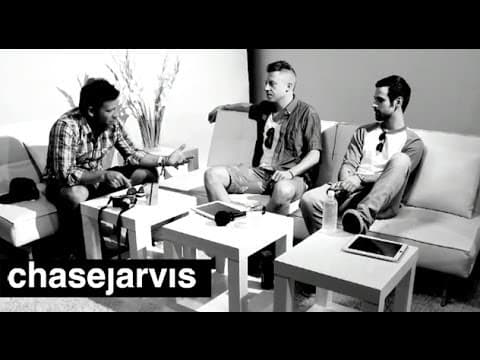
hello everybody how's it going I'm Chase Jarvis welcome to another episode of Chase Jarvis live specifically the 30 days of Genius series on Creative live in this series I talk to the world's top creatives and entrepreneurs I extract all kinds of brilliant information out of their big brains unlocking all kinds of their secrets to help you live you... Read More
Key Insights
- Creative careers are marathons that require continued work after early success. Sir Mix A Lot says record checks initially seemed as though they would continue automatically, but when they slowed, he recognized the need to keep working and find appropriate ways to extend the value of his brand.
- Brand expansion is most credible when it reflects genuine knowledge and participation. Sir Mix A Lot distinguishes his technical interests from simply funding a product and attaching his name, noting that he personally solders, cuts metal, operates a CNC machine and laser, builds equipment, and writes his own G-code.
- Technical curiosity can become the foundation of artistic creativity. Walkie-talkies sparked Sir Mix A Lot's desire to understand communication range, which led him toward radio-frequency amplifiers, electronic schematics, and hands-on construction before music became his primary creative direction.
- Self-education is a practical response to a compelling question. Sir Mix A Lot used an amateur radio handbook to identify schematic symbols for components such as resistors and capacitors, then applied that knowledge by repairing equipment and attempting to build his first amplifier at age 15.
- Inspiration often begins with seeing familiar tools used in an unexpected way. Watching Kraftwerk make music with gadgets, sensors, and homemade instruments showed Sir Mix A Lot that electronics could produce the sounds he wanted, connecting an existing technical interest with a developing musical ambition.
- Creative development can move from inspiration to imitation and then original production. Sir Mix A Lot first chased the ability to reproduce electronic sounds, then began making his own material after he understood how those sounds could be created.
- A calling is an activity that remains compelling before profitability is clear. Sir Mix A Lot says people should notice what they cannot stop wanting to make, pursue it, and improve repeatedly, because professional opportunities may become visible only after the skill has developed.
- Early customers can reveal value before a formal career exists. Sir Mix A Lot created personalized cassette recordings with mixes, names, raps, and altered voices, selling them for $10 each. The demand demonstrated that his experimental music-making already provided something people were willing to purchase.
Install to Summarize YouTube Videos and Get Transcripts
Explore YouTube Video Summarizer or Get YouTube Transcript Extractor
Questions & Answers
Q: How can creative curiosity become a professional career?
Creative curiosity can become a career through repeated experimentation, self-education, imitation, and original production. Sir Mix A Lot began by investigating how walkie-talkies and radio-frequency amplifiers worked, then connected that knowledge to electronic music. He practiced recreating sounds, made his own beats, worked with local rappers, and eventually discovered demand by selling personalized cassette mixes for $10.
Q: Why should creators focus on making before monetizing?
Focusing on making allows creators to develop real ability before commercial expectations narrow their choices. Sir Mix A Lot says he initially cared about producing electronic sounds, not making money from them. Once he could imitate those sounds, he created original material. Continued improvement and customer interest later revealed that his work had professional value, making monetization an outcome of developed skill rather than the original motive.
Q: How did electronics influence Sir Mix A Lot's music?
Electronics gave Sir Mix A Lot both the technical curiosity and practical foundation that preceded his music. After experimenting with walkie-talkies, he searched for broken radio-frequency amplifiers, learned to read schematics, repaired equipment, and built an amplifier. Seeing Kraftwerk produce music with electronic gadgets then showed him that the tools and concepts he already enjoyed could also be used to create musical sounds.
Q: What did Sir Mix A Lot learn from his first amplifier project?
Sir Mix A Lot's first amplifier project demonstrated that early creative attempts do not need to work perfectly to be valuable. He built the amplifier at age 15 and recalls that it did not work very well, partly because its leads were too long. The attempt still represented meaningful progress because it applied knowledge he had independently gained from studying schematics and repairing electronic equipment.
Q: How does imitation help someone develop an original style?
Imitation can serve as a learning stage that teaches a creator how desired results are produced. Sir Mix A Lot initially pursued the electronic noises that fascinated him and worked until he could reproduce them. After learning how to mimic those sounds, he began making his own material. His account presents originality as something that emerged from active technical practice rather than from waiting for a completely new idea.
Q: How can someone identify a creative calling?
A creative calling may appear as something a person feels persistently driven to make, even when it does not seem profitable or fit a conventional career path. Sir Mix A Lot suggests paying attention to the project that repeatedly captures your interest and continuing until it exists. As ability improves through repetition, its usefulness and possible professional value can become easier to recognize.
Q: Why do people sometimes overlook their valuable abilities?
People may overlook valuable abilities because those actions feel natural to them, or because they are trying to fit a conventional nine-to-five expectation. Sir Mix A Lot says some people claim they are not good at anything, yet an observer can notice something they do that clearly has value. The person performing it may not recognize the skill because they have never examined it as a possible calling or profession.
Q: How did Sir Mix A Lot first earn money from making music?
Sir Mix A Lot first earned money by creating personalized cassette recordings for people in his community. A customer would pay $10 and return seven days later for a tape containing a 30-minute side of mixes. The recording could include the customer's name, personalized raps, Smurf-like voices, or robot voices. These sales showed that his experimental production skills already had direct customer value.
Summary & Key Takeaways
-
Sir Mix A Lot traces his creative instincts to childhood experiments with walkie-talkies. Wanting to communicate across greater distances led him to search for broken radio-frequency amplifiers, study an amateur radio handbook, teach himself schematic symbols, and build an amplifier at age 15, although that first attempt did not work particularly well.
-
Seeing Kraftwerk create music with electronic gadgets connected Sir Mix A Lot's technical curiosity with a new artistic direction. He initially wanted to reproduce unusual sounds rather than become a rapper or build a business. After learning through imitation, he began creating original beats and finding local performers who could rap over them.
-
Sir Mix A Lot argues that creative careers develop through sustained action rather than immediate certainty. People may overlook valuable abilities because those skills feel ordinary to them or conflict with conventional expectations. His career began with personalized cassette mixes sold for $10, then expanded as continued practice revealed professional and commercial possibilities.
-
Key Insights_Shim
Read in Other Languages (beta)
Share This Summary 📚
Summarize YouTube Videos and Get Video Transcripts with 1-Click
Try YouTube Summary with ChatGPT & Claude or YouTube Transcript Generator
Explore More Summaries from Chase Jarvis 📚




Summarize YouTube Videos and Get Video Transcripts with 1-Click
Try YouTube Summary with ChatGPT & Claude or YouTube Transcript Generator