How Do Animals Survive Being Swallowed Alive?
TL;DR
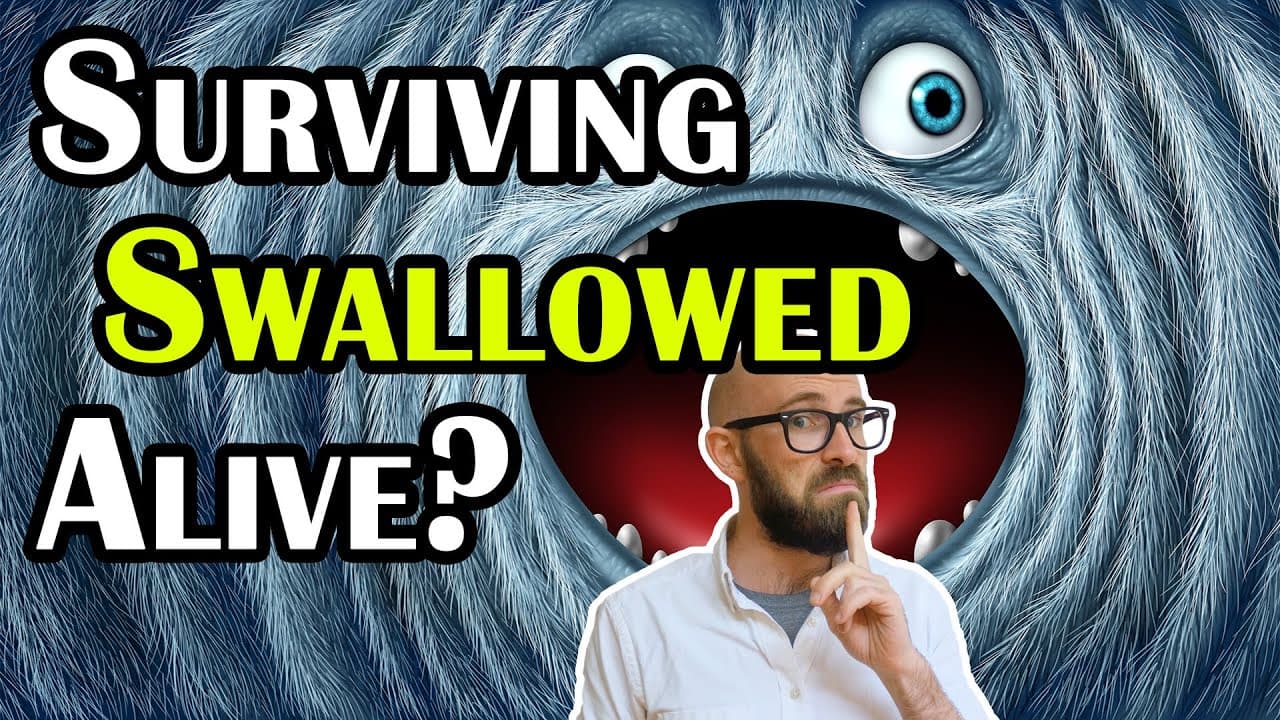
Animals that are swallowed alive usually die from suffocation due to low oxygen levels in the predator's stomach, rather than from digestive acids. However, certain species like snails and beetles have evolved mechanisms to survive this ordeal by using protective mucus or releasing irritants to trigger regurgitation, allowing some to escape intact.
Transcript
this video is brought to you by squarespace from websites and online stores to marketing tools and analytics squarespace is the all-in-one platform to build a beautiful online presence and run your business now a couple of simple things maybe you've got some idea for a website or a business or a podcast knocking around in your mind well the second ... Read More
Key Insights
- 🖤 Animals being swallowed whole by predators generally die from lack of oxygen or suffocation rather than from digestive acids.
- 🦭 Certain animals, like snails and beetles, have evolved mechanisms to survive being swallowed alive, such as sealing themselves in with mucus or releasing irritating chemicals to induce regurgitation.
- ✳️ Humans are unlikely to be swallowed alive by animals due to the risks involved, including the predator's ability to incapacitate or kill the prey.
- 😘 Survival rates for animals swallowed whole by predators are relatively low, but some species have managed to adapt to this harsh reality and escape unharmed or even continue reproducing.
Install to Summarize YouTube Videos and Get Transcripts
Explore YouTube Video Summarizer or Get YouTube Transcript Extractor
Questions & Answers
Q: How do snakes kill their prey before swallowing them?
Snakes use either venom or constriction to kill their prey. Venomous snakes inject venom into their prey, causing paralysis or death. Constrictor snakes wrap themselves tightly around their prey, cutting off blood flow and causing asphyxiation.
Q: Can animals survive being swallowed alive by predators?
Yes, some animals have mechanisms that allow them to survive the journey through a predator's digestive system. Snails, for example, can seal themselves in with mucus to protect against stomach acid, while beetles release irritating chemicals to induce regurgitation.
Q: Do animals that survive being swallowed whole face any long-term effects?
It is unclear what long-term effects animals that survive being swallowed whole may experience. However, in some cases, surviving the digestive journey allows these animals to propagate their species through transportation inside predators.
Q: Can humans be swallowed alive by animals?
While extremely rare, there have been instances of humans being swallowed by large reptiles, such as crocodiles and pythons. However, in such cases, the prey would likely be killed first by the predator's powerful jaws or constriction.
Summary & Key Takeaways
-
When animals are swallowed alive by predators, their fate depends on the predator's eating habits. Some predators, like snakes, kill their prey before consuming it, while others, like certain birds, swallow their prey alive.
-
The interior of a predator's stomach is low in oxygen and high in acid, causing air-breathing prey to suffocate quickly. However, it would take longer for stomach acid to cause life-threatening damage to the prey's outer surface.
-
Some animals, such as snails and beetles, have evolved mechanisms to survive being swallowed alive, such as sealing themselves in with mucus or releasing irritating chemicals to induce regurgitation.
Read in Other Languages (beta)
Share This Summary 📚
Summarize YouTube Videos and Get Video Transcripts with 1-Click
Try YouTube Summary with ChatGPT & Claude or YouTube Transcript Generator
Explore More Summaries from Today I Found Out 📚





Summarize YouTube Videos and Get Video Transcripts with 1-Click
Try YouTube Summary with ChatGPT & Claude or YouTube Transcript Generator