What Factors Influence CPU Performance?
TL;DR
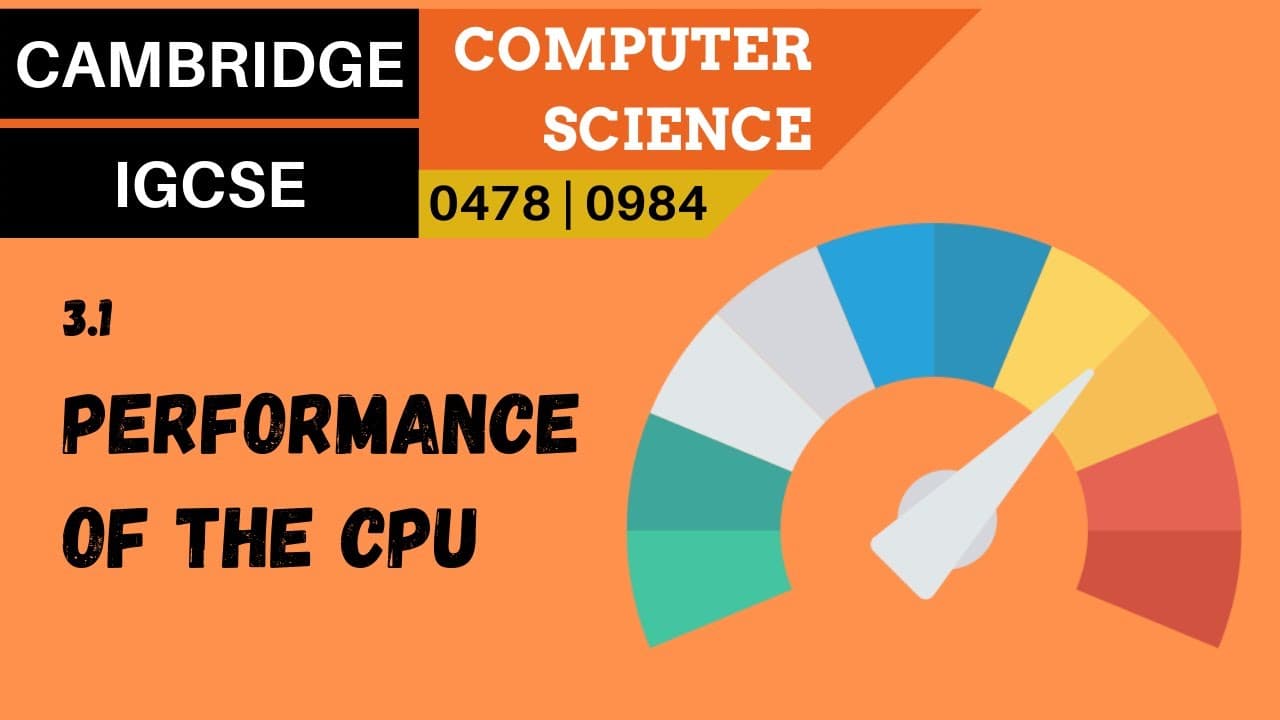
CPU performance is influenced by three main factors: clock speed, cache size, and the number of cores. Clock speed, measured in hertz, determines how quickly a CPU can execute instructions, while cache size affects efficiency by storing frequently used data. The number of cores enhances multitasking capabilities but can introduce communication delays.
Transcript
in this video we look at the factors affecting the performance of the cpu and we pay particular attention to clock speed the number of calls and cash let's think about a typical racing car as an analogy before we look at the central processing unit itself so what are all the factors affecting the speed of this car well obviously we have the... Read More
Key Insights
- Clock speed, measured in hertz, determines how fast a CPU can execute instruction cycles. Modern CPUs operate in gigahertz, enabling billions of operations per second, significantly impacting performance.
- Cache size is crucial for CPU efficiency. It temporarily stores instructions and data, reducing the need to access slower main memory, thus speeding up processing times.
- The number of CPU cores influences multitasking capabilities. More cores allow simultaneous execution of multiple programs, though communication between cores can affect efficiency.
- A quad-core processor contains four separate processing units within a single chip, each capable of executing tasks independently, enhancing multitasking capabilities.
- Chip multiprocessors integrate multiple CPU cores into one physical chip, commonly referred to as multi-core processors, optimizing space and performance.
- Specialized processors like graphics and sound cards offload specific tasks from the CPU, improving overall system performance, especially in gaming and multimedia applications.
- Understanding the distinction between a single physical CPU chip and a multi-core processor is essential for advanced studies beyond basic specifications.
- Efficient CPU performance relies on a balance between clock speed, cache size, and core count, tailored to the specific needs of the software being run.
Install to Summarize YouTube Videos and Get Transcripts
Explore YouTube Video Summarizer or Get YouTube Transcript Extractor
Questions & Answers
Q: What is the role of clock speed in CPU performance?
Clock speed, measured in hertz, determines how many instruction cycles a CPU can execute per second. Modern CPUs operate in gigahertz, allowing billions of operations per second. This speed is crucial for performance as it influences how quickly a CPU can fetch and execute instructions, impacting overall processing speed.
Q: How does cache size affect CPU efficiency?
Cache size affects CPU efficiency by temporarily storing frequently accessed instructions and data, minimizing the need to retrieve them from slower main memory. A larger cache can store more data, reducing access times and speeding up processing. However, cache size is limited compared to main memory, requiring a balance for optimal performance.
Q: Why is the number of CPU cores important?
The number of CPU cores is important because it determines the CPU's ability to multitask. More cores allow simultaneous execution of multiple programs, enhancing multitasking capabilities. However, communication between cores is necessary for synchronization, which can affect efficiency. Not all programs are optimized to utilize multiple cores effectively.
Q: What is a chip multiprocessor?
A chip multiprocessor (CMP) is a single physical chip that contains multiple CPU cores. Each core operates as an independent processing unit, capable of executing tasks simultaneously. CMPs optimize space and performance by integrating multiple cores into one chip, commonly referred to as multi-core processors, enhancing multitasking and processing capabilities.
Q: How do specialized processors improve CPU performance?
Specialized processors, such as graphics and sound cards, improve CPU performance by offloading specific tasks from the main CPU. These processors are designed to excel at processing instructions related to graphics and sound, freeing up the CPU to handle other tasks. This offloading enhances overall system performance, especially in gaming and multimedia applications.
Q: What is the significance of understanding multi-core processors?
Understanding multi-core processors is significant for advanced studies as it involves recognizing the distinction between a single physical CPU chip and multiple embedded cores. Multi-core processors optimize performance by allowing simultaneous task execution, but require efficient inter-core communication. This understanding is crucial for designing and optimizing software to leverage multi-core capabilities.
Q: How do clock speed, cache size, and core count work together?
Clock speed, cache size, and core count work together to determine CPU performance. Clock speed affects instruction execution speed, cache size influences data retrieval efficiency, and core count enhances multitasking. Balancing these factors based on software requirements optimizes CPU performance, ensuring efficient processing and responsiveness for various applications.
Q: What additional information is provided beyond the IGCSE specifications?
Beyond the IGCSE specifications, the video provides insights into chip multiprocessors, distinguishing between single physical chips and multi-core processors. It also highlights the role of specialized processors in enhancing CPU performance by offloading specific tasks, offering a deeper understanding of CPU architecture and its implications for advanced computing applications.
Summary & Key Takeaways
-
The video discusses factors affecting CPU performance, focusing on clock speed, cache size, and the number of cores. It explains how each element contributes to processing speed and efficiency.
-
Clock speed is measured in hertz and determines the number of instruction cycles a CPU can execute per second, with modern CPUs operating in gigahertz.
-
Cache size impacts CPU efficiency by storing frequently accessed data and instructions, reducing the need to access slower main memory and speeding up processing.
Read in Other Languages (beta)
Share This Summary 📚
Summarize YouTube Videos and Get Video Transcripts with 1-Click
Try YouTube Summary with ChatGPT & Claude or YouTube Transcript Generator
Explore More Summaries from Craig'n'Dave 📚





Summarize YouTube Videos and Get Video Transcripts with 1-Click
Try YouTube Summary with ChatGPT & Claude or YouTube Transcript Generator