Why Did Regional Bank Fears Drag US Stocks Down?
TL;DR
Regional bank disclosures involving fraud concerns triggered a broad risk-off session, pushing major US indexes lower and hitting smaller, unprofitable companies especially hard. Consumers are also resisting high food prices, while changing health preferences and GLP-1 use are pressuring processed-food and snack companies. Luxury watchmaker Ulysse Nardin highlighted the importance of US demand by unveiling a new Freak watch edition during New York Watch Week.
Transcript
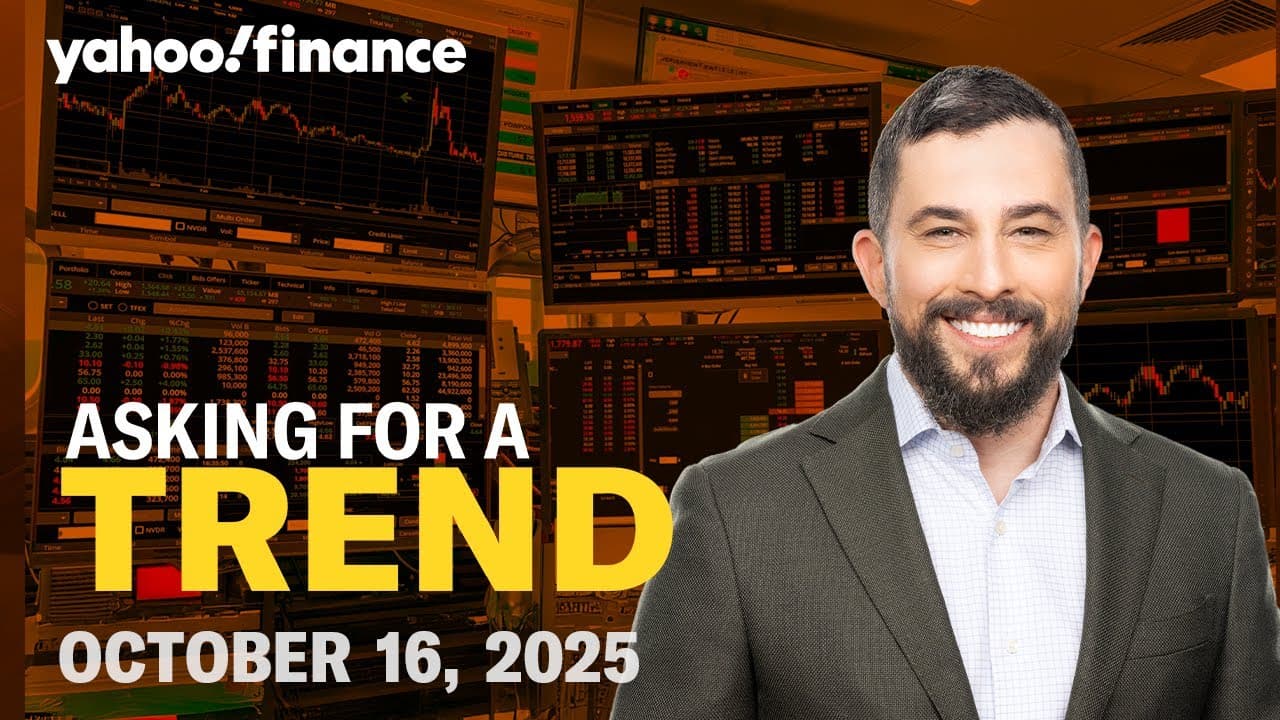
Hello and welcome to Asking for a Trend. I'm Josh Lipton and for the next half hour, we are breaking down the trends of today that'll move stocks tomorrow. There's a lot to keep track of, so we're focusing on what you need to know to get ahead of the curve here. Some of the trends we're going to be diving into. It was a rough ride on Wall Street to... Read More
Key Insights
- Regional bank concerns were the main catalyst for the market decline, as earnings disclosures involving fraud and other credit issues caused investors to sell financial stocks and reconsider whether several isolated problems might signal broader trouble.
- Small-cap performance revealed a divide based on profitability, with the Russell 2000 falling about 2% while the S&P 600 declined roughly 1.25%. The stated distinction was that the Russell includes unprofitable companies, whereas the S&P 600 does not.
- Institutional risk aversion was visible in the VIX, which reached 25 after failing to retreat fully from an earlier tariff-related jump to 20. The index reflects 30-day S&P 500 options and was described as primarily an institutional market.
- Falling Treasury yields reinforced economic concerns, with the 10-year yield dropping seven basis points after standing at 4.05% the previous day. The resulting level was described as the lowest in about a year, raising discussion of possible recession risk.
- Food companies are reducing prices to restore affordability, but lower prices do not guarantee an immediate recovery in sales volume. General Mills was described as rolling prices back by 3% to 4%, while other companies may need similar adjustments.
- McCormick’s restrained pricing strategy has protected demand, even as tariffs were estimated to affect its profit and loss statement by $120 million during the year. Positive volumes and potential future pricing power supported the analyst’s buy rating.
- GLP-1 medicines create greater adjustment challenges for snack companies because discretionary snacking can decline more sharply than conventional meals. Companies are responding with smaller portions and protein-focused products designed around the preferences of GLP-1 users.
- The US market is vital to luxury watchmaker Ulysse Nardin, according to chairman and CEO Patrick Pruniaux. The company demonstrated that importance by choosing New York Watch Week to unveil the latest edition of its Freak watch in the United States.
Install to Summarize YouTube Videos and Get Transcripts
Explore YouTube Video Summarizer or Get YouTube Transcript Extractor
Questions & Answers
Q: Why did US stocks close lower on October 16, 2025?
US stocks closed lower because regional bank earnings disclosures raised concerns about fraud and possible credit problems, prompting investors to reduce risk. The anxiety spread across financial shares and weighed especially heavily on smaller companies. Earnings uncertainty, trade tensions, elevated volatility, and falling Treasury yields also contributed to a cautious environment in which investors bought bonds and sold stocks.
Q: How did regional bank concerns affect financial stocks?
Regional bank concerns produced substantial selling across the banking sector. The large-cap financial sector fell almost 3%, while regional bank shares displayed widespread losses. Zions declined about 13%, and Western Alliance fell roughly 10% to 11%. The discussion characterized the disclosures as smoke rather than a blazing fire, meaning the warning signs were notable but had not become a full panic.
Q: Why did the Russell 2000 fall more than the S&P 600?
The Russell 2000 fell about 2%, compared with a decline of roughly 1.25% for the S&P 600. The key distinction presented was profitability: the Russell 2000 includes unprofitable companies, while the S&P 600 does not. When investors became more risk-averse because of regional bank concerns, companies without profits faced greater pressure than their profitable small-cap counterparts.
Q: What did the VIX indicate about investor sentiment?
The VIX indicated that institutional investors remained cautious and expected the possibility of further market trouble. It rose to 25 after reaching 20 during an earlier scare involving China and tariffs, and it had not returned to its previous lower level. Because the VIX reflects 30-day S&P 500 options, it was described as a significant gauge of institutional risk positioning.
Q: Why were falling Treasury yields viewed as a warning sign?
The 10-year Treasury yield fell seven basis points after being at 4.05% the previous day, reaching its lowest level in about a year. Investors were buying bonds while selling stocks, which suggested a move toward safety. The discussion interpreted falling rates as a possible sign that markets were becoming more concerned about economic weakness and recession risk.
Q: Why are food companies rolling back price increases?
Food companies are reducing prices because consumers are resisting higher costs and seeking better value throughout grocery stores. General Mills was described as rolling prices back by 3% to 4%, and additional companies may need to follow. The challenge is that lower prices do not necessarily produce an immediate volume rebound, so companies must improve affordability while protecting already pressured margins.
Q: How are GLP-1 medicines changing food company strategies?
GLP-1 medicines are affecting snack consumption more heavily than conventional meals because discretionary snacking can be reduced without eliminating breakfast, lunch, or dinner. Snack companies are responding with portion-size changes and products aligned with GLP-1 users’ preferences. Meal-focused businesses are developing more protein-based options, and they may find adaptation easier because regular meals are expected to continue.
Q: Why is the US market important for luxury watchmakers?
The US market was described as vital for luxury watchmakers by Ulysse Nardin chairman and CEO Patrick Pruniaux. His company underscored that importance by selecting the United States as the place to unveil the latest edition of its Freak watch during New York Watch Week. The launch choice connected the brand’s product strategy directly to the significance of American luxury-watch demand.
Summary & Key Takeaways
-
US stocks finished lower after regional bank earnings disclosures raised concerns about fraud and credit problems. The Russell 2000 fell more sharply than the S&P 600, highlighting greater pressure on an index that includes unprofitable companies. Financial stocks and regional banks suffered some of the session’s largest losses.
-
Other markets confirmed a shift toward caution. The VIX rose to 25 after remaining elevated following an earlier tariff scare, while the 10-year Treasury yield declined by seven basis points from 4.05%. Falling yields, weak small-cap performance, and demand for bonds suggested rising concern about economic and recession risks.
-
Food companies face weakening volume, consumer resistance to past price increases, distrust of processed foods, and changing habits linked to GLP-1 medicines. McCormick may be relatively well positioned because its volumes remained positive despite tariff costs. Separately, Ulysse Nardin emphasized US importance by unveiling a Freak watch edition in New York.
Read in Other Languages (beta)
Share This Summary 📚
Summarize YouTube Videos and Get Video Transcripts with 1-Click
Try YouTube Summary with ChatGPT & Claude or YouTube Transcript Generator
Explore More Summaries from Yahoo Finance 📚



Summarize YouTube Videos and Get Video Transcripts with 1-Click
Try YouTube Summary with ChatGPT & Claude or YouTube Transcript Generator