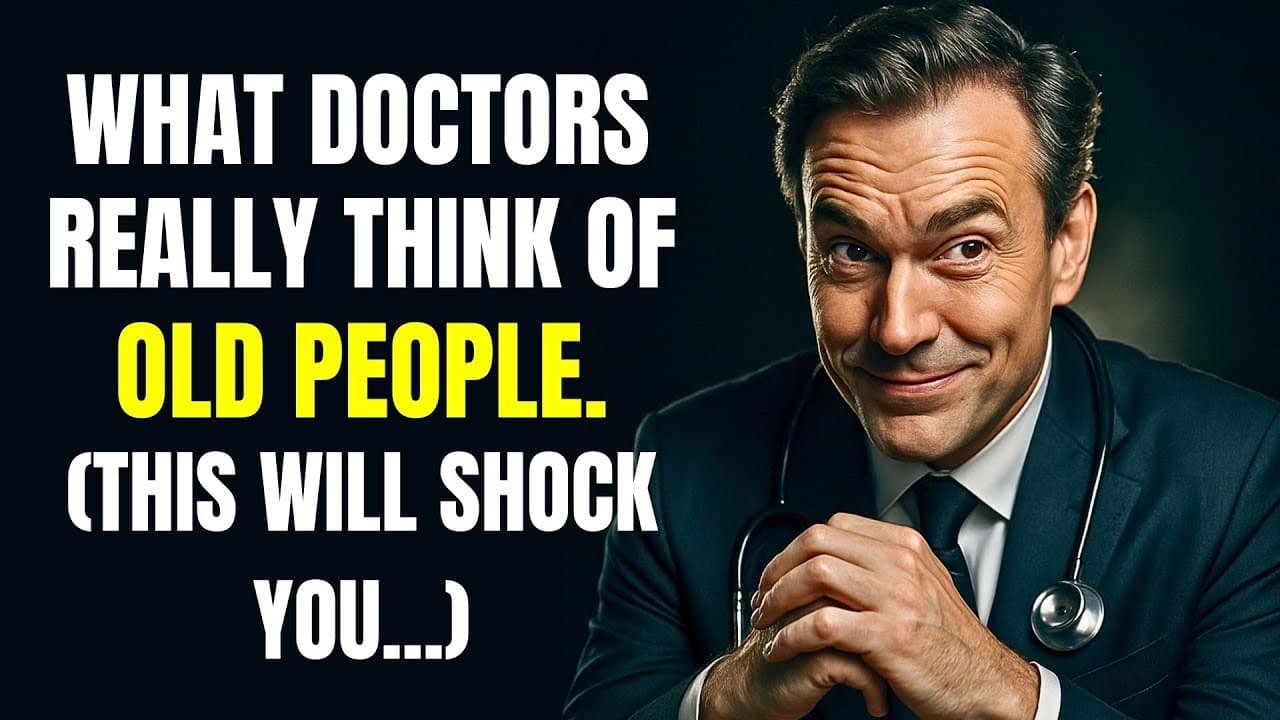
What Do Doctors Really Think of Older People? 5 Ugly Truths Every Senior Must Hear | Senior Health
TL;DR
Doctors may view older people as too complicated, unlikely to follow prescriptions, or less deserving of aggressive care, according to the page’s five “ugly truths.” The transcript cites a 2018 survey of 500 physicians, medication non-adherence above 50%, and examples of symptoms being dismissed. Read on to understand how complexity, rushed care, silence about side effects, and age bias can shape senior healthcare.
Transcript
You're about to hear what doctors really think of seniors. The truth they whisper in hallways but never say to your face. I've been in those rooms. I've seen the notes. And what I discovered left me furious. Behind the polished smiles and polite nods, there's a darker reality shaping how seniors are treated every single day. It's not just about med... Read More
Key Insights
- Doctors often view seniors as too complicated due to multiple health conditions, impacting the quality of care.
- Many doctors assume seniors won't adhere to prescriptions, leading to less aggressive treatment plans.
- Seniors frequently withhold symptoms out of fear or embarrassment, affecting doctors' ability to diagnose accurately.
- Short appointment times in primary care settings contribute to rushed and potentially inadequate care for seniors.
- Age bias in healthcare is real and results in seniors receiving fewer life-saving interventions compared to younger patients.
- Doctors may deprioritize seniors during emergencies, assuming their lives are less valuable.
- Understanding these biases allows seniors to advocate for themselves and demand better treatment.
- Awareness of ageism can lead to more informed and assertive interactions with healthcare providers.
Install to Summarize YouTube Videos and Get Transcripts
Explore YouTube Video Summarizer or Get YouTube Transcript Extractor
Questions & Answers
Q: What do doctors really think of older people?
The page says many doctors view older patients as too complicated to treat and expect them not to follow prescriptions. It also describes age bias that can result in rushed assessments, less aggressive care, fewer cutting-edge treatments, and dismissal of symptoms that do not fit neatly in a chart.
Q: Why are seniors sometimes seen as too complicated to treat?
Older patients often have several overlapping conditions, such as high blood pressure, diabetes, arthritis, and memory loss. The transcript says this complexity, combined with pressure to make fast decisions, can lead doctors to use quick fixes, referrals, or dismissals instead of investigating deeply.
Q: What did the 2018 physician survey say about treating seniors?
The transcript cites a 2018 Journal of General Internal Medicine study that surveyed 500 physicians. Nearly 60% reportedly admitted feeling frustrated or overwhelmed when treating seniors with multiple conditions.
Q: How can perceived complexity affect a senior’s diagnosis?
The transcript says doctors may skip advanced imaging, avoid risky but effective treatments, or rely on safer medications that do not solve the underlying problem. It also cites a 2020 Age and Ageing report claiming seniors with three or more chronic conditions were twice as likely to have symptoms misdiagnosed or ignored as middle-aged adults.
Q: What is therapeutic nihilism in senior healthcare?
The transcript defines therapeutic nihilism as the belief that treatment will not really help. In practice, this mindset may cause a doctor to dismiss an older patient’s problem, add another pill or referral, or conclude that nothing more can be done.
Q: Why might doctors expect seniors not to follow prescriptions?
The transcript claims that more than 50% of older adults do not take medications as prescribed. It attributes adherence difficulties to numerous pills, conflicting side effects, memory problems, and costs, which can cause doctors to assume that a patient will forget, skip, or resist treatment.
Q: How can hiding medication side effects put seniors at risk?
The transcript describes Dorothy, 68, who stopped taking blood pressure medication because it caused dizziness but did not tell her doctor. Her doctor assumed the medication had failed and doubled the dose; within weeks, she fainted in her kitchen and returned to the ER.
Q: How does age bias affect healthcare for seniors?
The page says seniors are less likely to receive life-saving interventions and cutting-edge treatments and more likely to be dismissed when symptoms do not fit the chart. Its summary also says age bias can lead to less aggressive care and different treatment during emergencies.
Summary & Key Takeaways
-
Doctors often see seniors as too complicated to treat due to multiple health conditions, which can lead to subpar care. This perception is supported by studies showing doctors' frustration with complex cases, resulting in quick fixes rather than thorough treatment.
-
Non-compliance with prescriptions is a common issue among seniors, leading doctors to assume failure and prescribe less effective treatments. This assumption can result in dangerous health outcomes, as doctors may not address underlying issues adequately.
-
Age bias in medicine results in seniors receiving less aggressive care, with studies showing they are less likely to receive life-saving interventions. This bias can have life-threatening consequences, but awareness allows seniors to demand equal treatment and advocate for their health.
Read in Other Languages (beta)
Share This Summary 📚
Summarize YouTube Videos and Get Video Transcripts with 1-Click
Try YouTube Summary with ChatGPT & Claude or YouTube Transcript Generator
Explore More Summaries from Seniors Circle 📚




Summarize YouTube Videos and Get Video Transcripts with 1-Click
Try YouTube Summary with ChatGPT & Claude or YouTube Transcript Generator