How Does Assembly Theory Redefine Evolution?
TL;DR
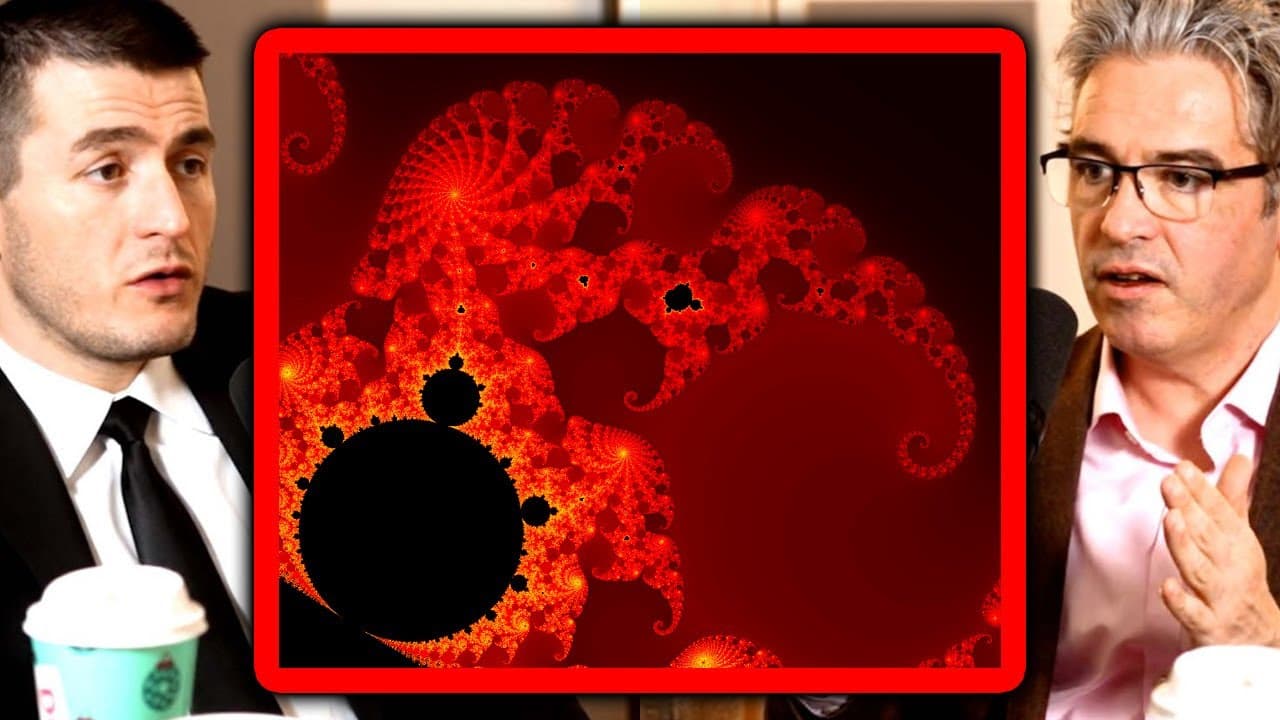
Assembly Theory challenges traditional views on evolution by tracing the process of emergence and focusing on an object's history rather than relying on computational measures like Kolmogorov complexity. This approach allows for insights into the depth of objects in time and can even apply to fields like drug discovery, where understanding molecular evolution becomes crucial.
Transcript
another piece of criticism or by way of question is how's assembly Theory or maybe assembly index different from kog complexity so for people who don't know kog complexity of an object is the length of a shortest computer program that produces the object as output yeah I'm I I seem to there seems to be a disconnect between the computational approac... Read More
Key Insights
- ❓ Assembly Theory offers a different perspective on evolution by considering the history and emergence of objects.
- 🎰 Unlike computational measures, Assembly Theory emphasizes causation and does not rely on a computational machine.
- 🍰 The shortest path inferred from an object provides valuable insights into its depth in time and the process of creation.
- ❓ Assembly Theory can be applied to drug discovery by focusing on molecule evolution as a proxy for protein evolution.
- 👻 It constrains the problem space and allows for targeted research and predictions.
- 🫵 Assembly Theory challenges traditional views in chemistry by considering assembly indexes and shortest paths in graphs.
- 🈸 The approach has multiple directions and potential applications that require further exploration.
- 🎙️ More videos with Lee Cronin:
Install to Summarize YouTube Videos and Get Transcripts
Explore YouTube Video Summarizer or Get YouTube Transcript Extractor
Questions & Answers
Q: How is Assembly Theory different from Kolmogorov complexity?
Assembly Theory focuses on tracing the process of emergence in evolution, while Kolmogorov complexity measures data compression and computational program length.
Q: What does Assembly Theory allow us to understand about objects?
Assembly Theory enables us to infer an object's history and its depth in time, providing insights into the process of creation and evolution.
Q: How does Assembly Theory contribute to drug discovery?
Assembly Theory suggests focusing on the molecule evolution rather than protein evolution, allowing for constrained drug discovery processes and predictions of future outcomes.
Q: Do we need to simulate all of chemistry to apply constraints in drug discovery?
No, Assembly Theory allows for the building of constraint spaces based on minimal constraints on the molecular graph, reducing the need for comprehensive knowledge of chemistry.
Summary & Key Takeaways
-
Assembly Theory is a computational approach that traces the process of how life and evolution emerged.
-
Unlike Kolmogorov complexity, Assembly Theory focuses on the object's history rather than data compression and computational measures.
-
Assembly Theory allows for the inference of an object's depth in time and the size of the factory that produced it.
Read in Other Languages (beta)
Share This Summary 📚
Summarize YouTube Videos and Get Video Transcripts with 1-Click
Try YouTube Summary with ChatGPT & Claude or YouTube Transcript Generator
Explore More Summaries from Lex Clips 📚





Summarize YouTube Videos and Get Video Transcripts with 1-Click
Try YouTube Summary with ChatGPT & Claude or YouTube Transcript Generator