Philosopher Philip Goff on Galileo Excluding Consciousness From Science
TL;DR
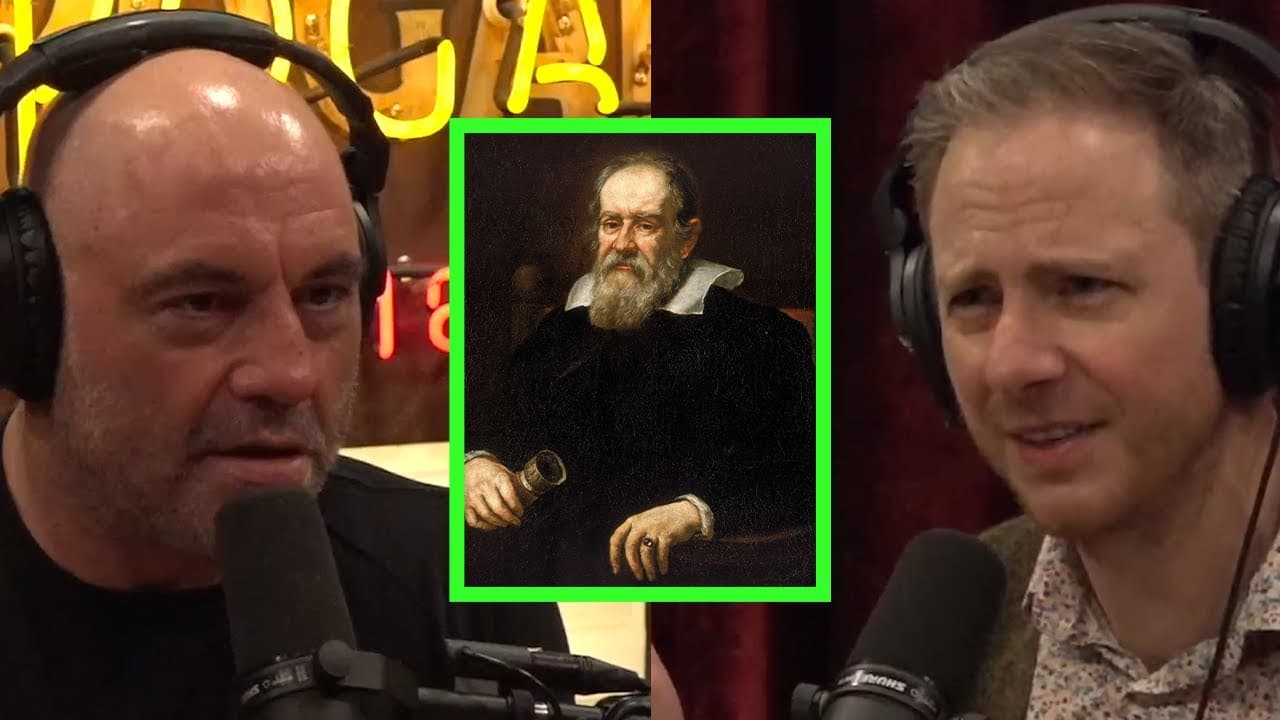
Galileo excluded consciousness from science by treating mathematics as science’s language and relocating qualities such as color, smell, taste, and sound from the physical world to the observer’s consciousness. In 1623, this division gave mathematical physics a narrow focus on measurable properties such as size, shape, location, and motion. Philip Goff argues that explaining consciousness now requires reconnecting science’s quantitative domain with qualitative experience. Read on to see why he believes panpsychism offers that bridge.
Transcript
the jurogan experience and you know i think we shouldn't be surprised that physical science has this difficulty of consciousness because the scientific paradigm we've been operating in for the last 500 years was designed by galileo to exclude consciousness um should i talk a bit about that yes so yeah so this is why i defended my book galileo's era... Read More
Key Insights
- 🌍 Galileo separated the physical world's quantitative properties from the qualitative domain of consciousness.
- 🔬 Mathematics became the language of science, excluding the qualities of experience.
- ❓ Materialism cannot fully explain consciousness due to the descriptive and explanatory limitations of a purely quantitative language.
- ✊ Our current period of history mistakenly believes in the complete explanatory power of materialism.
- 🧠 Chemical reactions in the brain are correlated with conscious experiences, but they do not provide a full explanation.
- 🫵 The panpsychist view suggests that consciousness and chemicals are both fundamental and interconnected.
- 🧠 The question of which is more fundamental, brain activity or consciousness, remains unanswered.
Install to Summarize YouTube Videos and Get Transcripts
Explore YouTube Video Summarizer or Get YouTube Transcript Extractor
Questions & Answers
Q: How did Galileo exclude consciousness from science?
Galileo proposed that qualities such as colors, smells, and tastes are not in the physical world but in the observer’s consciousness. He then limited physical science to quantitative properties such as size, shape, location, and motion, leaving qualitative consciousness outside its domain.
Q: Why was Galileo’s decision in 1623 important?
In 1623, Galileo decided that mathematics would be the language of science, helping initiate mathematical physics. To make that possible, he advanced a theory that removed qualities that mathematics could not capture from the physical world.
Q: Why did Galileo separate qualities from the physical world?
Qualities such as redness, smell, and taste could not be expressed in the purely quantitative language of mathematics. Galileo addressed that problem by locating those qualities in consciousness and retaining only mathematically describable properties in the physical world.
Q: What is the difference between Galileo’s quantitative and qualitative domains?
The quantitative domain contains the physical world’s mathematical properties, including size, shape, location, and motion. The qualitative domain contains conscious experiences such as colors, sounds, smells, and tastes, which Galileo placed outside science.
Q: Why did excluding consciousness help mathematical physics succeed?
Excluding consciousness gave science a narrow, specific focus on what mathematics could capture. Goff argues that mathematical physics succeeded so well precisely because it concentrated on quantitative properties rather than trying to explain qualitative experience.
Q: Can chemical reactions and brain activity fully explain conscious experience?
The physical account can describe a curry’s chemical composition, the brain changes it produces, a person’s reactions, stored information, and later behavior. Goff argues that this still does not explain why the resulting brain activity is accompanied by an inner sensation of spiciness.
Q: Why does Philip Goff reject the claim that materialism must explain consciousness?
Goff says it is ironic to infer that materialism must explain consciousness merely because physical science has explained so much. In his account, physical science achieved that success within a paradigm designed by Galileo to exclude consciousness.
Q: How does panpsychism bring consciousness into science?
Goff says science needs a new worldview that reunites the quantitative domain of physical science with the qualitative domain of human consciousness. He presents panpsychism as a way to bring together what Galileo separated.
Summary & Key Takeaways
-
Galileo separated the physical world from consciousness, focusing solely on the mathematical and quantitative properties that could be captured in scientific study.
-
The exclusion of consciousness allowed for the success of mathematical physics in explaining the physical world.
-
However, this exclusion has led to a period of history where people mistakenly believe that materialism can fully explain consciousness.
Read in Other Languages (beta)
Share This Summary 📚
Summarize YouTube Videos and Get Video Transcripts with 1-Click
Try YouTube Summary with ChatGPT & Claude or YouTube Transcript Generator
Explore More Summaries from PowerfulJRE 📚






Summarize YouTube Videos and Get Video Transcripts with 1-Click
Try YouTube Summary with ChatGPT & Claude or YouTube Transcript Generator