How the Global Power Vacuum Impacts Geopolitics
TL;DR
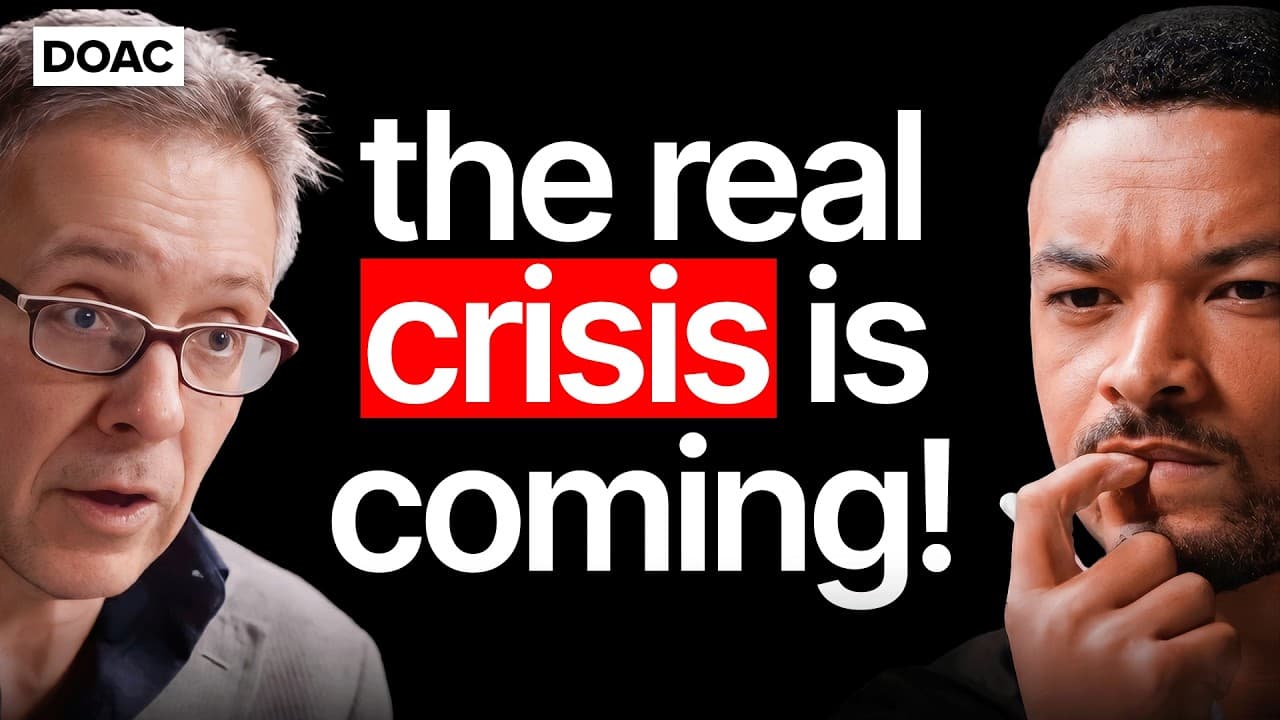
Ian Bremer discusses the increasing geopolitical risks, highlighting the US as a major driver of global uncertainty and China's long-term strategic investments in critical minerals. He emphasizes the potential systemic risks posed by AI and the need for global cooperation to manage technology's impact. Despite challenges, he sees opportunities for positive change if global governance adapts to technological advancements.
Transcript
These conversations aren't always easy, but nonetheless, they are important. So, every single year, Professor Ian Bremer, who's one of the world's leading political scientists, produces this risk report, and it highlights the top 10 biggest risks that everybody should be thinking about. And today, he's going to talk to me about the three that matte... Read More
Key Insights
- The US is the largest driver of geopolitical uncertainty, impacting global politics and economy.
- China's strategic investment in critical minerals positions it for long-term economic strength.
- AI presents systemic risks, requiring immediate global cooperation for safety.
- US political instability could lead to a significant shift in global power dynamics.
- The Iranian regime remains functional despite external pressures and conflicts.
- European economic challenges stem from regulatory and competitive shortcomings.
- Technological advancements, particularly in AI, could reshape global power structures.
- Global governance needs to adapt to manage the rapid pace of technological change.
Install to Summarize YouTube Videos and Get Transcripts
Explore YouTube Video Summarizer or Get YouTube Transcript Extractor
Questions & Answers
Q: How does the US contribute to global geopolitical uncertainty?
The US contributes to global geopolitical uncertainty by shifting its traditional roles in international trade, security, and diplomacy. Recent political developments have made the US less predictable, affecting global economic and political stability. This unpredictability influences other countries' policies, leading to a re-evaluation of alliances and economic strategies worldwide.
Q: What are China's strategic investments in critical minerals?
China has strategically invested in the global supply chain of critical minerals, such as lithium and rare earth elements, which are essential for modern technology and defense systems. This long-term investment ensures China's dominance in electric vehicles, battery production, and other high-tech industries, positioning it for sustained economic growth and geopolitical influence.
Q: What are the systemic risks posed by AI?
AI poses systemic risks by potentially exposing vulnerabilities in critical infrastructure, financial systems, and national security. Advanced AI models can identify and exploit software bugs, posing a threat to global economic stability and security. This necessitates immediate international cooperation to manage and mitigate these risks effectively.
Q: How might US political instability affect global power dynamics?
US political instability could lead to a power vacuum, where the US's traditional leadership role in global politics and security is diminished. This could encourage other nations, like China, to fill the void, reshaping international alliances and economic policies. The uncertainty may also lead to increased geopolitical tensions and conflicts.
Q: How does the Iranian regime maintain functionality despite external pressures?
The Iranian regime maintains functionality by decentralizing military decision-making and leveraging its geopolitical influence, such as control over the Strait of Hormuz. Despite external military and economic pressures, Iran's leadership adapts its strategies to maintain domestic control and regional influence, ensuring the regime's survival.
Q: What economic challenges does Europe face?
Europe faces economic challenges due to regulatory constraints, demographic shifts, and reduced competitiveness in technology and defense. These factors hinder economic growth and innovation, making it difficult for Europe to keep pace with global powers like the US and China. Strategic investments and policy reforms are needed to address these issues.
Q: How might technological advancements reshape global power structures?
Technological advancements, particularly in AI, have the potential to reshape global power structures by shifting economic and military capabilities. Countries leading in AI development can set global standards, influence international policies, and gain strategic advantages. This could alter traditional power hierarchies and necessitate new forms of global governance.
Q: What changes are needed in global governance to manage technological change?
Global governance must adapt to manage technological change by establishing international frameworks for cooperation on AI and other emerging technologies. This includes creating regulatory bodies to oversee technological developments, ensuring equitable access to technology, and fostering collaboration between nations to address shared challenges and prevent conflicts.
Summary & Key Takeaways
-
Ian Bremer outlines the major geopolitical risks, emphasizing the US's role in global uncertainty and China's strategic focus on critical minerals. He highlights AI's potential systemic risks and the need for international cooperation to manage these challenges effectively.
-
Bremer discusses the implications of US political instability and how it could shift global power dynamics. He stresses the importance of adapting global governance to address technological advancements and prevent potential conflicts.
-
The conversation also covers the economic and political challenges facing Europe and the Middle East, underscoring the need for strategic investments and cooperation to ensure stability and growth in a rapidly changing world.
Read in Other Languages (beta)
Share This Summary 📚
Summarize YouTube Videos and Get Video Transcripts with 1-Click
Try YouTube Summary with ChatGPT & Claude or YouTube Transcript Generator
Explore More Summaries from The Diary Of A CEO 📚




Summarize YouTube Videos and Get Video Transcripts with 1-Click
Try YouTube Summary with ChatGPT & Claude or YouTube Transcript Generator