Yale’s Free Tuition and the “$300B China College Connection”: Genuine Reform or PR?
TL;DR
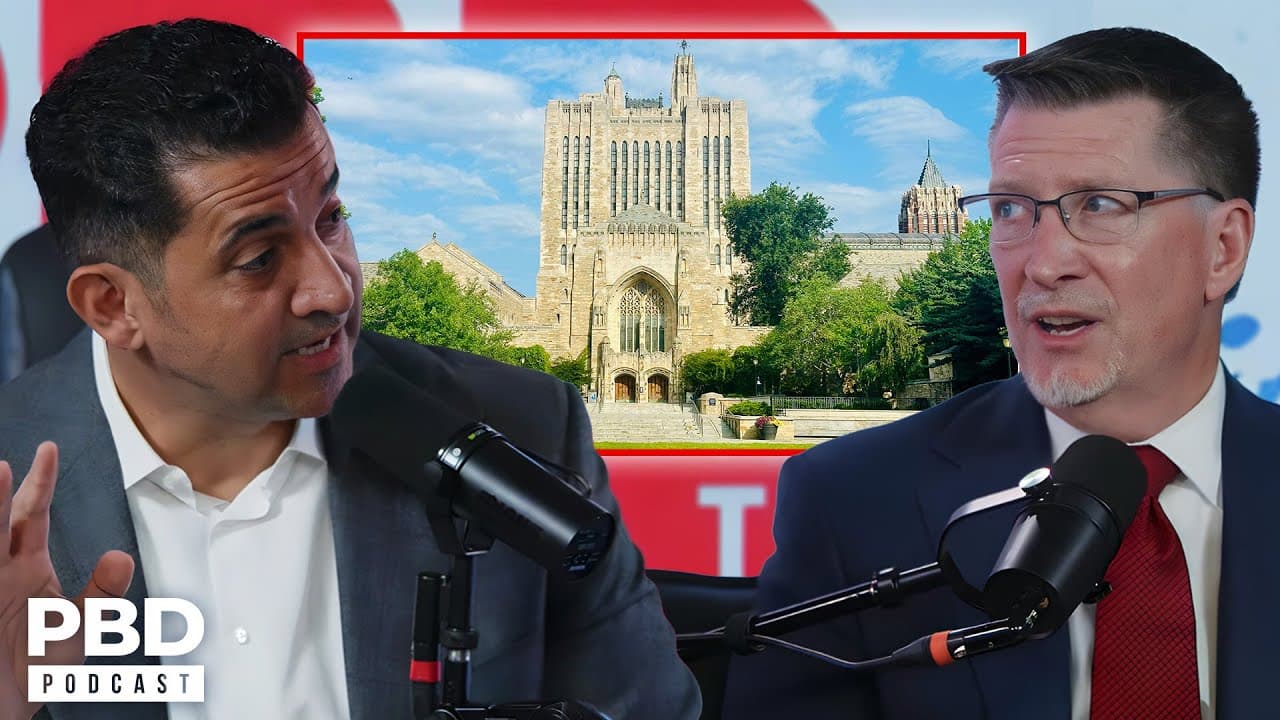
Yale’s free-tuition policy is presented as a meaningful benefit that may also serve as public relations amid criticism of Ivy League admissions and reliance on full-paying foreign students. Beginning in the 2026–2027 academic year, undergraduates from families earning below $200,000 will receive need-based scholarships meeting or exceeding tuition costs. Read on for the eligibility details, the hosts’ competing views, and their debated $300 billion calculation.
Transcript
Yale goes tuition free for families making below $200,000 a year income. Yale University is going tuition free for undergraduates families with incomes under 200,000 following recent moves by peers including Harvard University to broaden access. Enhanced financial aid will ensure that students from such families will receive need-based scholarship ... Read More
Key Insights
- Yale University will provide free tuition to families earning below $200,000 starting in the 2026-2027 academic year.
- This initiative follows similar actions by other Ivy League schools to increase accessibility.
- Critics argue that the move may be more of a PR strategy than genuine reform.
- There are ongoing concerns about racial discrimination in Ivy League admissions processes.
- The influx of international students from wealthy families is a significant revenue source for universities.
- Some believe higher education is losing value as alternative career paths become more viable.
- Florida's Bright Futures program offers free education to in-state students meeting certain criteria.
- There is a call for more focus on trade skills and practical education over traditional liberal arts degrees.
Install to Summarize YouTube Videos and Get Transcripts
Explore YouTube Video Summarizer or Get YouTube Transcript Extractor
Questions & Answers
Q: Is Yale’s free-tuition policy genuine reform or just PR?
The hosts agree that eliminating tuition for qualifying families is beneficial, but one remains skeptical of Yale’s motives. He describes the policy as possible “window dressing” or PR because Ivy League institutions also admit wealthy foreign students who can pay full price and continue to face criticism over admissions practices.
Q: Who qualifies for Yale’s free-tuition policy?
Undergraduate students from families earning below $200,000 a year will receive need-based scholarships that meet or exceed tuition costs. Yale also said families with typical assets and incomes below $100,000 will have all expected costs eliminated.
Q: When does Yale’s expanded financial-aid policy begin?
The changes will take effect in the 2026–2027 academic year. The policy follows recent moves by peer institutions, including Harvard University, to broaden access.
Q: Why does one host say Yale should have offered free tuition sooner?
He argues that Yale has substantial advantages and says the vast majority of its money does not come from tuition. He also criticizes the prospect of families earning $100,000 a year being burdened with $300,000 in debt.
Q: What admissions concerns do the hosts raise about Yale?
The discussion alleges that race and demographic targets have affected admissions requirements rather than applicants being evaluated blindly on merit. It also references legal challenges brought by Asian-American students and families who said they were being deprioritized.
Q: Why do wealthy foreign students matter to the hosts’ argument?
One host says Yale, Harvard, Princeton, and MIT had been accepting a larger percentage of foreign students from wealthy families who could pay full price. He argues that this revenue complicates the image of free tuition as a purely accessibility-driven reform.
Q: How do the hosts calculate the proposed $300 billion China college connection?
They begin with a figure of 600,000 Chinese students and discuss annual costs ranging from $50,000 to $75,000 per student. Using $75,000 produces $45 billion per year, and the hosts then describe $300 billion flowing into the college system over several years.
Q: How much of the projected $300 billion might reach top universities?
The hosts debate whether the top universities could receive 50% or a more conservative 20% of the projected total. At 20%, they calculate that $60 billion would go to top universities and characterize that as a substantial amount.
Summary & Key Takeaways
-
Yale University will offer free tuition to families earning under $200,000 annually starting in the 2026-2027 academic year. This move aims to increase accessibility and follows similar initiatives by other Ivy League schools. While the policy is seen as a positive step, some critics argue it may be more of a public relations strategy amid declining perceived value of higher education.
-
Concerns persist regarding racial discrimination in Ivy League admissions, particularly affecting Asian-American applicants. Critics also highlight the influx of wealthy international students as a significant revenue stream for these institutions, questioning the genuine intent behind the free tuition initiative.
-
As alternative career paths gain popularity, the perceived value of traditional higher education is decreasing. Programs like Florida's Bright Futures offer free education to in-state students meeting specific criteria, emphasizing the need for practical skills and trade education over traditional liberal arts degrees.
Read in Other Languages (beta)
Share This Summary 📚
Summarize YouTube Videos and Get Video Transcripts with 1-Click
Try YouTube Summary with ChatGPT & Claude or YouTube Transcript Generator
Explore More Summaries from Valuetainment 📚






Summarize YouTube Videos and Get Video Transcripts with 1-Click
Try YouTube Summary with ChatGPT & Claude or YouTube Transcript Generator