How to invest in stocks as a beginner in six hours
TL;DR
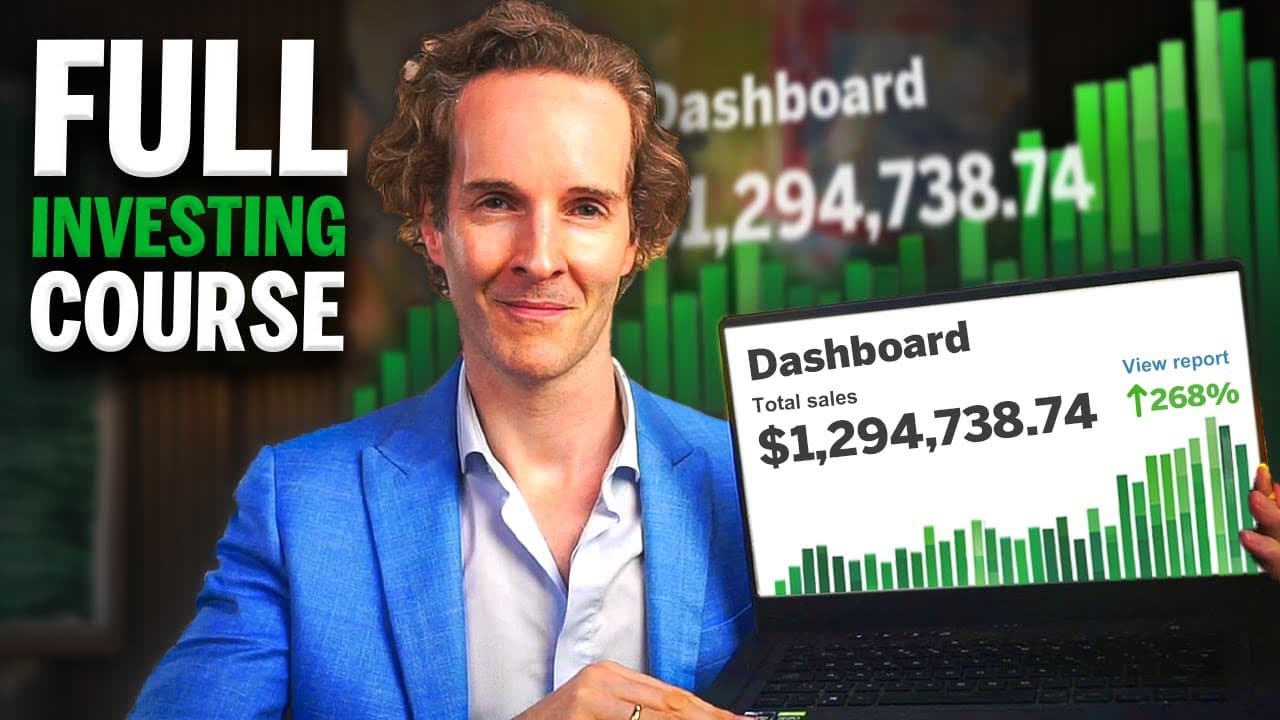
The video teaches the fundamentals of investing in stocks and other financial instruments in a six hour format. It explains what a stock market is, the distinction between primary and secondary markets, and the roles of exchanges, brokers, and data services. It also covers order types and why regulation matters for fairness and liquidity.
Transcript
Winston and I are super excited to have slaved away for about three and a half months to record this endless hours of editing it and three years studying economics working on a bank and everything else and actually giving you a free course that delivers real value and basically in the next six hours you will get the financial education that you sho... Read More
Key Insights
- Stakes in the video: the stock market is a market for buying and selling shares of publicly traded companies and other instruments like ETFs and bonds.
- Exchanges provide a regulated, fair environment and are built to facilitate trading with real time or near real time data and low fees.
- The primary market covers initial public offerings while the secondary market handles ongoing trading of listed shares and related activities.
- Liquidity is a core function of exchanges and they may suspend trading or delist if liquidity is insufficient, protecting investors.
- The US market model is influential and widely copied, with regulation shaping how trading is conducted.
- Market orders guarantee execution but not price, whereas limit orders set a maximum price for purchases or a minimum price for sales.
- Limit orders can be tailored to buy below a price or sell above a price, affecting whether trades execute and at what price.
- Brokers, portfolio managers, and investment banks participate in the market, facilitating trades, managing funds, and supporting IPOs and corporate actions.
- There is ongoing discussion about blockchain and cheaper, more efficient trading platforms, potentially altering how exchanges operate in the future.
Install to Summarize YouTube Videos and Get Transcripts
Explore YouTube Video Summarizer or Get YouTube Transcript Extractor
Questions & Answers
Q: A real search query question about the video (e.g. 'How to...', 'What is...', 'Why does...', 'When should...'). Question 1
What is the stock market and what does it do? The stock market is a market that trades shares of publicly listed companies and other instruments like ETFs and bonds. Exchanges provide a secure, regulated, and efficient environment for buyers and sellers to trade, offering data and low fees while maintaining fair access. This environment supports liquidity, price discovery, and the ability to raise capital through IPOs in the primary market and ongoing trading in the secondary market.
Q: What is the difference between the primary and secondary markets?
The primary market is where companies first go public through an IPO and set up the initial pricing and regulatory disclosures. The secondary market is where already listed shares are traded among investors after the IPO, and where companies can issue additional shares or bonds, or even buy back shares. This distinction helps investors know when capital is being raised and how ongoing trading occurs.
Q: Who are the main participants in the stock market?
Main participants include investors, speculators or traders, licensed stock brokers who execute trades, portfolio managers who invest on behalf of clients, investment banks that handle IPOs and mergers, and custodians who hold securities for safekeeping. Each group has a distinct role in enabling trading, advising, and safeguarding assets within the market.
Q: What role do stock exchanges play in financial data and liquidity?
Stock exchanges provide data access for live and historic information and are responsible for maintaining liquidity so that trades can occur efficiently. They may suspend trading or delist securities if liquidity diminishes. They also regulate the market to ensure fairness and standardize disclosures, benefiting both large and small investors.
Q: How do market and limit orders differ in practice?
A market order is an instruction to buy or sell immediately at the current price, guaranteeing execution but not price. A limit order sets a maximum purchase price or minimum sale price, allowing the order to fill only if the market price meets the limit, which may delay execution or leave the order unfilled.
Q: What future changes could affect trading costs and platforms?
The video suggests there could be lower transaction costs and more efficient trading through blockchain technologies or new exchange models. Competing exchanges or licenses to access blockchain data could change how data is priced and how quickly trades are settled, potentially reducing costs for individual investors.
Q: Why is regulation important in the stock market?
Regulation by bodies like stock exchanges and regulators creates a fair and orderly market, reduces fraud, and protects investors. It supports trust in the price discovery process, ensures timely disclosure of material information, and promotes ongoing liquidity by maintaining standardized rules for trading, reporting, and corporate actions.
Q: What practical steps can a beginner take to start investing according to the video?
Begin with a solid foundation of how the market works, including understanding asset classes, how companies are valued, and the differences between primary and secondary markets. Learn about order types, the role of brokers and data access, and the importance of diversification and risk management. Consider using an educational handbook linked in the description and study materials repeatedly to build confidence and competence.
Summary & Key Takeaways
-
The video introduces stocks, ETFs, and bonds as tradable instruments and explains the role of stock exchanges in providing a fair, regulated, and efficient marketplace for buyers and sellers.
-
It describes the primary market for IPOs and the secondary market where existing shares are traded, including how companies can issue additional shares or debt.
-
It discusses market structure, participants, and services provided by exchanges such as data access, liquidity maintenance, and regulatory oversight, with a view toward practical understanding for beginners.
Read in Other Languages (beta)
Share This Summary 📚
Summarize YouTube Videos and Get Video Transcripts with 1-Click
Try YouTube Summary with ChatGPT & Claude or YouTube Transcript Generator
Explore More Summaries from Felix Nikolas Prehn 📚
![⚠️[WATCH NOW] IF You Own Tesla, Palantir, Nvidia, Amd, SoFi, HIMS thumbnail](/_next/image?url=https%3A%2F%2Fi.ytimg.com%2Fvi%2F9TY1aEkEGC8%2Fhqdefault.jpg&w=750&q=75)


Summarize YouTube Videos and Get Video Transcripts with 1-Click
Try YouTube Summary with ChatGPT & Claude or YouTube Transcript Generator